Beginner-Friendly Recipe
Biscuit Crust Cheeseburger Bake
Biscuit Crust Cheeseburger Bake is a beginner-friendly shortcut recipe with cozy flavor, flexible swaps, and simple leftovers.
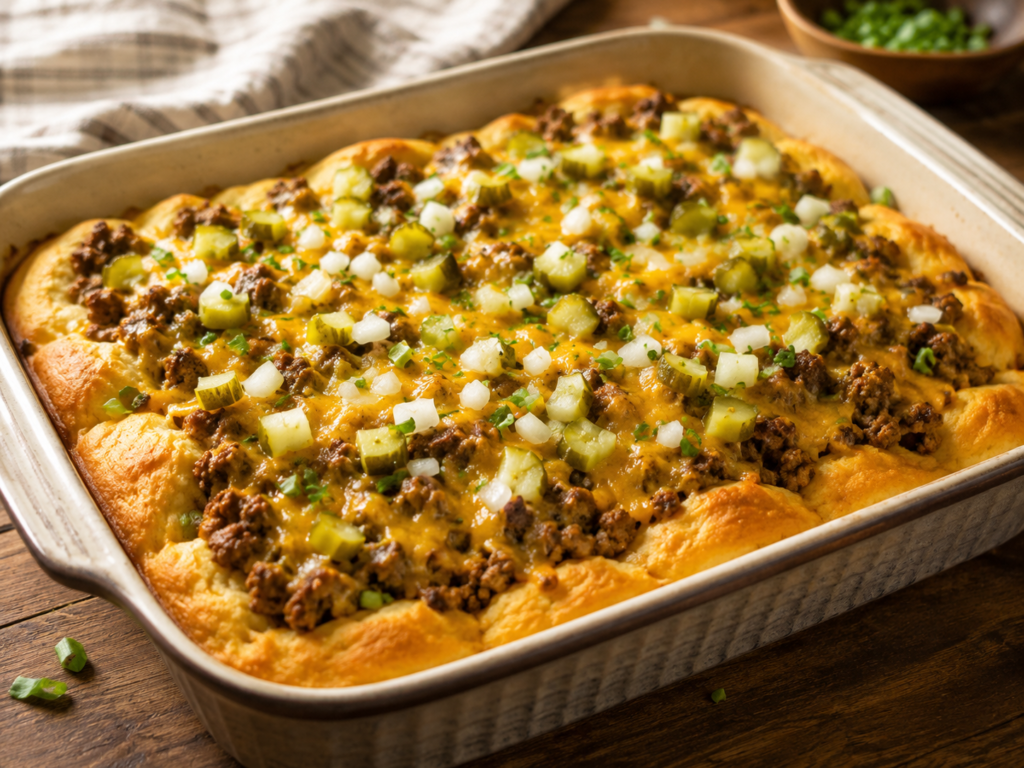
Quick Answer: Biscuit Crust Cheeseburger Bake combines a lightly prebaked refrigerated biscuit crust with seasoned ground beef and melted cheddar cheese. It delivers familiar cheeseburger flavor in a warm, sliceable casserole that is easy to serve for dinner.
Mistakenly Smart Note: Prebake the biscuit crust before adding the beef mixture. This gives the dough a head start and helps prevent a soft, underdone center beneath the filling.
Why This Biscuit Crust Cheeseburger Bake Works
This biscuit crust cheeseburger bake transforms familiar burger ingredients into a simple oven meal. Refrigerated biscuits provide a buttery base without requiring homemade dough, while browned ground beef creates a hearty filling.
Ketchup, yellow mustard, Worcestershire sauce, onion, garlic, and black pepper give the beef its cheeseburger-inspired flavor. Cheddar cheese melts over the top and helps hold the filling together once the casserole has rested.
The biscuit crust is briefly baked before the filling is added. That extra step matters because raw dough placed beneath a moist beef mixture may remain pale or doughy in the center.
It is also easy to customize. Chopped pickles, tomatoes, shredded lettuce, burger sauce, or diced onions can be added after baking so each serving tastes more like a favorite cheeseburger.
Ingredients Overview
You will need refrigerated biscuit dough, ground beef, onion, garlic, ketchup, yellow mustard, Worcestershire sauce, cheddar cheese, salt, and black pepper. A small amount of flour helps absorb excess moisture from the beef mixture so the biscuit crust does not become soggy.
Choose lean ground beef for a filling that is flavorful without producing too much grease. Sharp cheddar provides a stronger cheese flavor, although mild cheddar, Colby Jack, or a burger-style cheese blend can also work.
Pickles, tomatoes, lettuce, extra mustard, and burger sauce are optional toppings. Add fresh toppings only after the casserole has finished baking.
Use the printable recipe card to add the ingredients to your shopping list before you start.
Recipe Snapshot
- Preparation: Prebake the biscuit crust and brown the beef.
- Cooking method: Stovetop followed by oven baking.
- Texture: Buttery biscuit base, savory beef filling, and melted cheese.
- Best for: Weeknight dinners, casual family meals, and game-day food.
- Difficulty: Beginner-friendly.
Tips Before You Start
Press the biscuit seams together
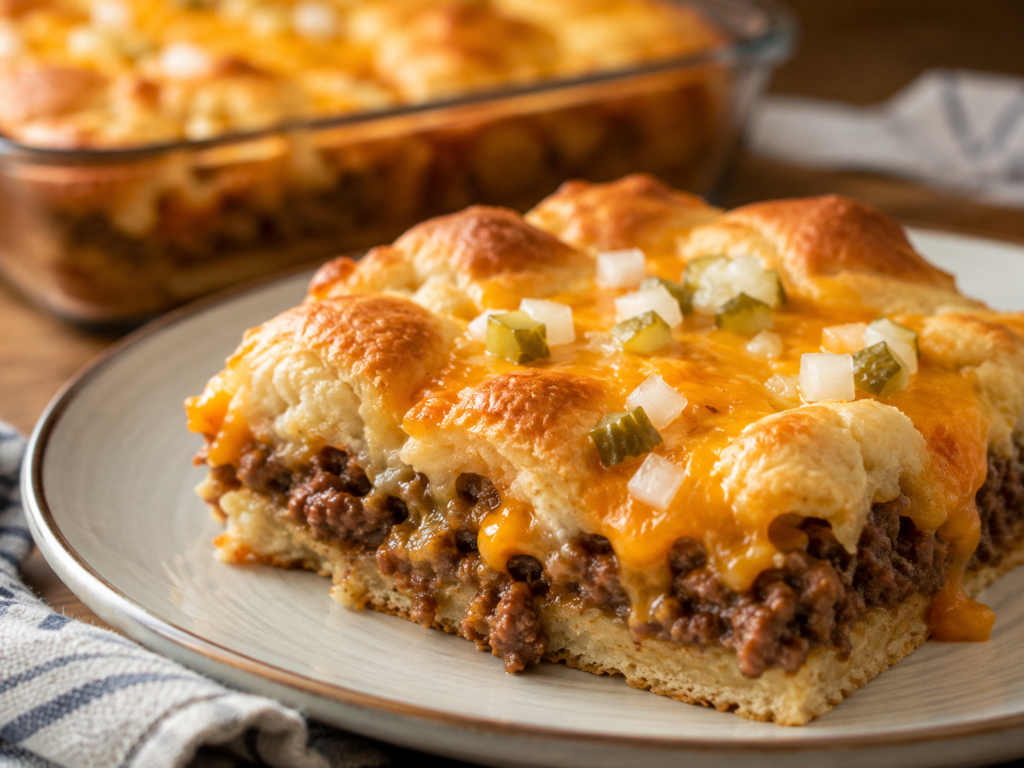
Flatten the biscuits before arranging them in the baking dish. Overlap the edges slightly and press the seams together so the base acts more like one crust instead of separate biscuit rounds.
Keep the crust an even thickness
Thick areas take longer to bake than thin ones. Press the dough evenly across the bottom of the dish and slightly up the sides, paying extra attention to the center.
Prebake before adding the filling
Bake the crust until it looks puffed and is beginning to turn light golden. It does not need to be completely cooked because it will return to the oven with the filling.
Drain the ground beef well
Excess grease can soak into the biscuit layer. After browning the beef, carefully drain the fat before adding the ketchup, mustard, and seasonings.
Cook excess moisture out of the filling
The beef mixture should be moist enough to stay tender but not watery. Let it simmer briefly after adding the condiments so any loose liquid can reduce.
Let the casserole rest
The cheese and filling are very soft when they first leave the oven. Resting the bake for several minutes makes it easier to cut and gives the biscuit crust time to settle.
Easy Swaps and Meal Ideas
Change the ground meat
Ground turkey or ground chicken can replace the beef. Because lean poultry may cook drier, avoid overcooking it and consider adding an extra tablespoon of ketchup to the filling.
Use a different cheese
Cheddar provides classic cheeseburger flavor, but American cheese, Colby Jack, pepper Jack, or a shredded Mexican-style blend can also be used.
Add bacon
Fold cooked, crumbled bacon into the beef mixture or sprinkle it over the cheese before baking for a bacon cheeseburger variation.
Make it spicy
Add diced jalapeno, crushed red pepper, hot sauce, or pepper Jack cheese. Drain pickled peppers well before adding them so they do not make the crust wet.
Add vegetables
Finely diced bell pepper or mushrooms can cook with the onion. Continue cooking until their released moisture has evaporated before adding the remaining filling ingredients.
Serve it like a loaded burger
Top individual slices with shredded lettuce, chopped tomato, diced pickles, red onion, burger sauce, ketchup, or mustard. Adding these ingredients after baking keeps them fresh and crisp.
What to serve with cheeseburger bake
Serve the casserole with roasted vegetables, a green salad, coleslaw, baked beans, corn, potato wedges, or fresh fruit. A crisp side helps balance the rich beef, cheese, and biscuit crust.
How This Recipe Comes Together
Begin by heating the oven and greasing the baking dish. Separate the refrigerated biscuits, flatten each one, and arrange them in the bottom of the dish. Press the edges together to create an even crust.
Prebake the biscuit layer until it is puffed and lightly colored. If the center rises unevenly, gently press it down with the back of a spoon before adding the filling.
While the crust bakes, cook the ground beef and onion in a skillet. Break the beef into small crumbles so it spreads evenly over the crust. Add the garlic near the end of browning so it does not burn.
Drain away excess grease, then stir in the flour, ketchup, mustard, Worcestershire sauce, salt, and pepper. Simmer the mixture briefly until it is thick enough to spoon without releasing watery liquid.
Spread the beef mixture over the prebaked biscuit crust and cover it with shredded cheddar. Return the dish to the oven until the crust is cooked through and the cheese is melted and bubbling.
Biscuit Crust Cheeseburger Bake
Method
- Preheat the oven to 375°F. Lightly grease a 9-by-13-inch baking dish with butter or cooking spray.
- Separate the refrigerated biscuits. Flatten each biscuit into a circle approximately 4 inches wide using your hands, a rolling pin, or the bottom of a glass.
- Arrange the flattened biscuits across the bottom of the prepared baking dish. Overlap the edges slightly, then press the seams together to form an even crust. Press the dough about 1/2 inch up the sides of the dish.
- Bake the biscuit crust for 8 to 10 minutes, or until it is puffed and beginning to turn light golden. Remove it from the oven. If the center has risen significantly, gently press it down with the back of a spoon.
- While the crust prebakes, place the ground beef and diced onion in a large skillet over medium-high heat.
- Cook for 7 to 9 minutes, breaking the beef into small crumbles, until the onion is tender and no pink remains. Add the garlic during the final 30 seconds.
- Carefully drain excess grease from the skillet.
- Return the skillet to medium-low heat. Sprinkle the flour over the beef and stir for 30 seconds.
- Add the ketchup, mustard, Worcestershire sauce, salt, and black pepper. Stir until evenly combined.
- Cook the filling for 2 to 3 minutes, stirring often, until it is moist but no longer watery. Remove the skillet from the heat.
- Spread the beef mixture evenly over the prebaked biscuit crust.
- Sprinkle the shredded cheddar cheese over the beef.
- Return the uncovered baking dish to the oven. Bake for 15 to 18 minutes, or until the cheese is melted, the biscuit edges are golden, and the ground beef filling reaches at least 160°F.
- Remove the casserole from the oven and let it rest for 5 to 10 minutes.
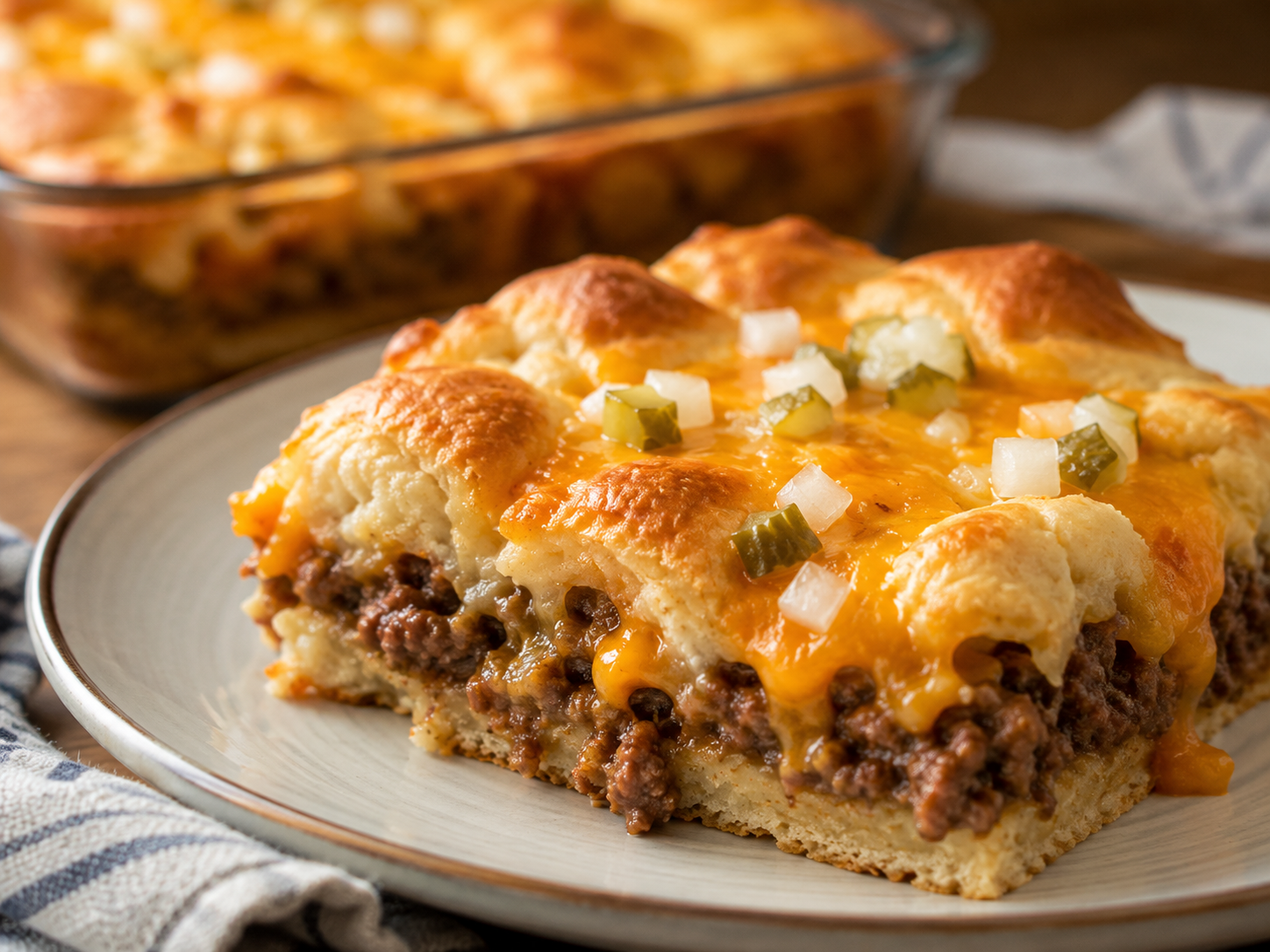
- Sprinkle with chopped pickles, if using. Cut into eight portions and serve with lettuce, tomato, burger sauce, ketchup, or mustard as desired.
Notes
Flatten the biscuits evenly and press all seams together before prebaking.
If the beef mixture looks watery, simmer it for another minute before assembling the casserole.
Add lettuce, tomatoes, pickles, and sauces after baking for the freshest texture.
Ground beef should reach at least 160°F.
Refrigerate leftovers within two hours and use them within three to four days.
Reheat leftovers to 165°F.
Nutrition note: Nutrition varies by biscuit brand, ground beef fat percentage, cheese, toppings, portion size, and cooking method.
Tried this recipe?
Let us know how it was!Nutrition Information Disclaimer
Nutrition information is provided as an estimate only and may vary based on the ingredients, brands, portion sizes, substitutions, and preparation methods used. Optional toppings and serving suggestions may not be included in the calculation. For the most accurate information, calculate nutrition using the specific ingredients and amounts you use.
Allergy notice: Always check ingredient labels and avoid substitutions that may introduce allergens. This recipe has not been verified as allergen-free.
Storage and Reheating
Let leftovers cool briefly, then transfer them to shallow airtight containers and refrigerate them promptly. Store fresh toppings such as lettuce and tomato separately from the casserole.
For best quality, refrigerate leftovers for up to three to four days. The biscuit crust will soften as it absorbs moisture from the filling, but it should still reheat well.
To reheat a single serving, place it on a microwave-safe plate and heat it in short intervals until hot throughout. Covering it loosely can help keep the beef and cheese from drying out.
For a firmer crust, reheat portions in a 350°F oven or toaster oven. Place the casserole on a baking sheet or in a small baking dish and cover it loosely with foil until heated through. Remove the foil for the final few minutes if you want the edges crisper.
The baked casserole can be frozen, although the biscuit crust may be softer after thawing. Wrap individual cooled portions tightly, freeze them in an airtight container, and thaw them overnight in the refrigerator before reheating.
Food Safety Note
Cook ground beef to an internal temperature of at least 160°F. Check the temperature in a thick portion of the beef mixture with a food thermometer rather than relying only on color.
Refrigerate perishable leftovers within two hours, or within one hour when the surrounding temperature is above 90°F. Reheat leftovers to 165°F before serving.
Common Mistakes to Avoid
Skipping the crust prebake
Adding the moist beef filling directly to raw biscuit dough can leave the center underdone. Give the biscuit layer several minutes in the oven before assembling the casserole.
Leaving gaps between the biscuits
Large spaces allow the filling to reach the bottom of the dish and can make servings difficult to lift. Flatten the dough and press the edges together to form a continuous base.
Using an undrained beef mixture
Grease and excess liquid can make the biscuit crust heavy and soggy. Drain the browned beef and let the filling thicken before spreading it over the crust.
Adding wet toppings before baking
Tomatoes and pickles release liquid as they heat. Add them after baking unless they are drained thoroughly and used sparingly.
Overbaking the casserole
Once the biscuit crust is cooked and the cheese has melted, remove the casserole from the oven. Excessive baking can dry out the beef and make the exposed biscuit edges too dark.
Cutting it immediately
The hot filling may slide away from the crust when cut too soon. Let the casserole rest for about five to ten minutes for neater portions.
Frequently Asked Questions
Can I use homemade biscuit dough?
Yes. Roll the dough into an even layer that fits the bottom of the baking dish and prebake it as directed. A very thick homemade crust may require additional baking time.
Can I use crescent roll dough instead?
Yes, although it will create a thinner and flakier base. Press the seams together, prebake it briefly, and watch it closely because crescent dough may brown faster than biscuit dough.
Can I prepare the beef filling ahead of time?
Yes. Cook and cool the filling, then refrigerate it in a covered container for up to one day. Reheat it until warm before spreading it over the prebaked crust so the casserole heats evenly.
Can I assemble the entire casserole ahead?
It is better to prepare the components separately. A fully assembled casserole can become soggy while it waits because the biscuit dough absorbs moisture from the filling.
Why is the biscuit crust still doughy?
The dough may have been pressed too thickly, the crust may not have been prebaked long enough, or the beef mixture may have contained too much liquid. Oven temperature differences can also affect the baking time.
How do I know when the biscuit crust is done?
The exposed edges should be golden, and the center should no longer look wet or raw when a portion is lifted. Check that the beef filling has also reached a safe internal temperature.
Can I make this in a smaller baking dish?
Yes, but the crust and filling will be thicker and may require more baking time. Avoid packing the biscuit dough into a very thick layer, and check the center carefully before serving.
Can I leave out the onions?
Yes. Omit them or replace them with a small amount of onion powder. The filling will still have plenty of flavor from the mustard, ketchup, Worcestershire sauce, and cheese.
Final Notes
Biscuit Crust Cheeseburger Bake is an easy way to turn basic ground beef and refrigerated dough into a comforting family meal. The most important steps are prebaking the crust, draining the beef, and keeping the filling thick rather than watery.
Serve it plain for a simple casserole or set out burger toppings so everyone can customize a slice. Because biscuit brands, baking dishes, and ovens vary, use the listed time as a guide and check the center before serving.
Trusted Resources
Helpful Recipe Resources
Trusted Food, Cooking, and Recipe References
Mistakenly Delicious uses AI-assisted workflows, but useful recipes still need common sense, food safety checks, and reliable cooking references. These resources can help with ingredients, nutrition, safe temperatures, and the AI workflow behind this site.
Ingredient Data
USDA FoodData Central
A useful reference for checking ingredient and nutrition data when reviewing recipes.
Visit Resource →Cooking Help
Nutrition.gov Cooking Tips
Beginner-friendly guidance for meal prep, cooking basics, shopping, and planning.
Visit Resource →Food Safety
Safe Cooking Temperatures
A helpful food safety chart for checking safe internal temperatures for chicken, meat, seafood, and leftovers.
Visit Resource →Creator Workflow
TechnofluxAI
The AI workflow and creator systems site behind Mistakenly Delicious.
Visit TechnofluxAI →