Beginner-Friendly Recipe
Loaded Baked Potato Pasta Salad
Loaded Baked Potato Pasta Salad is a beginner-friendly shortcut recipe with cozy flavor, flexible swaps, and simple leftovers.
Quick Answer
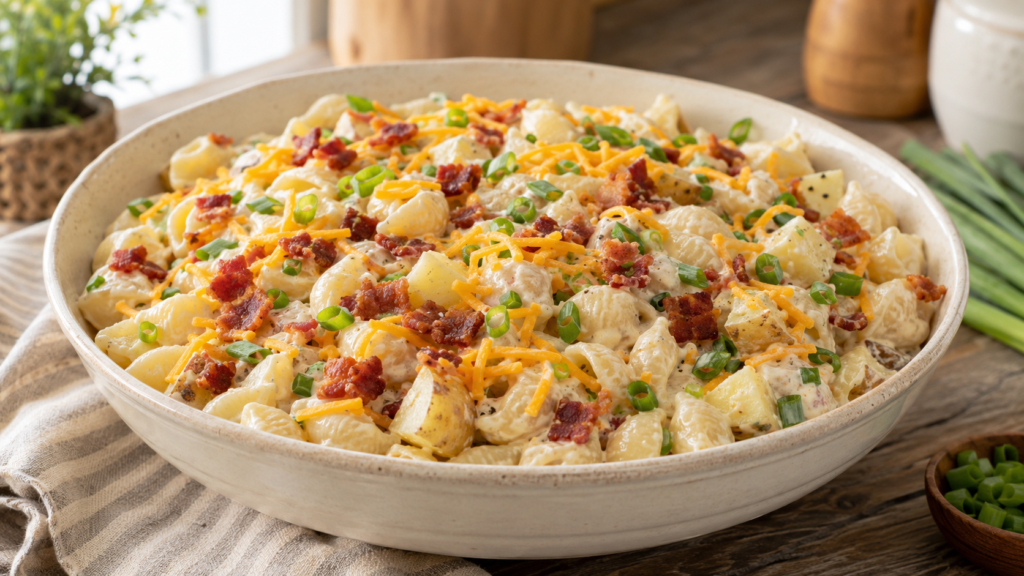
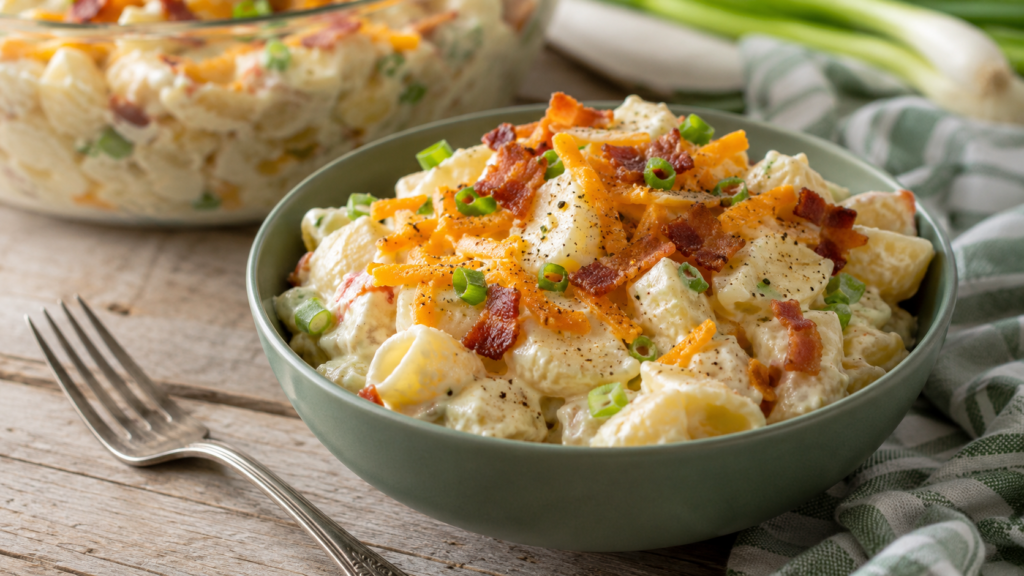
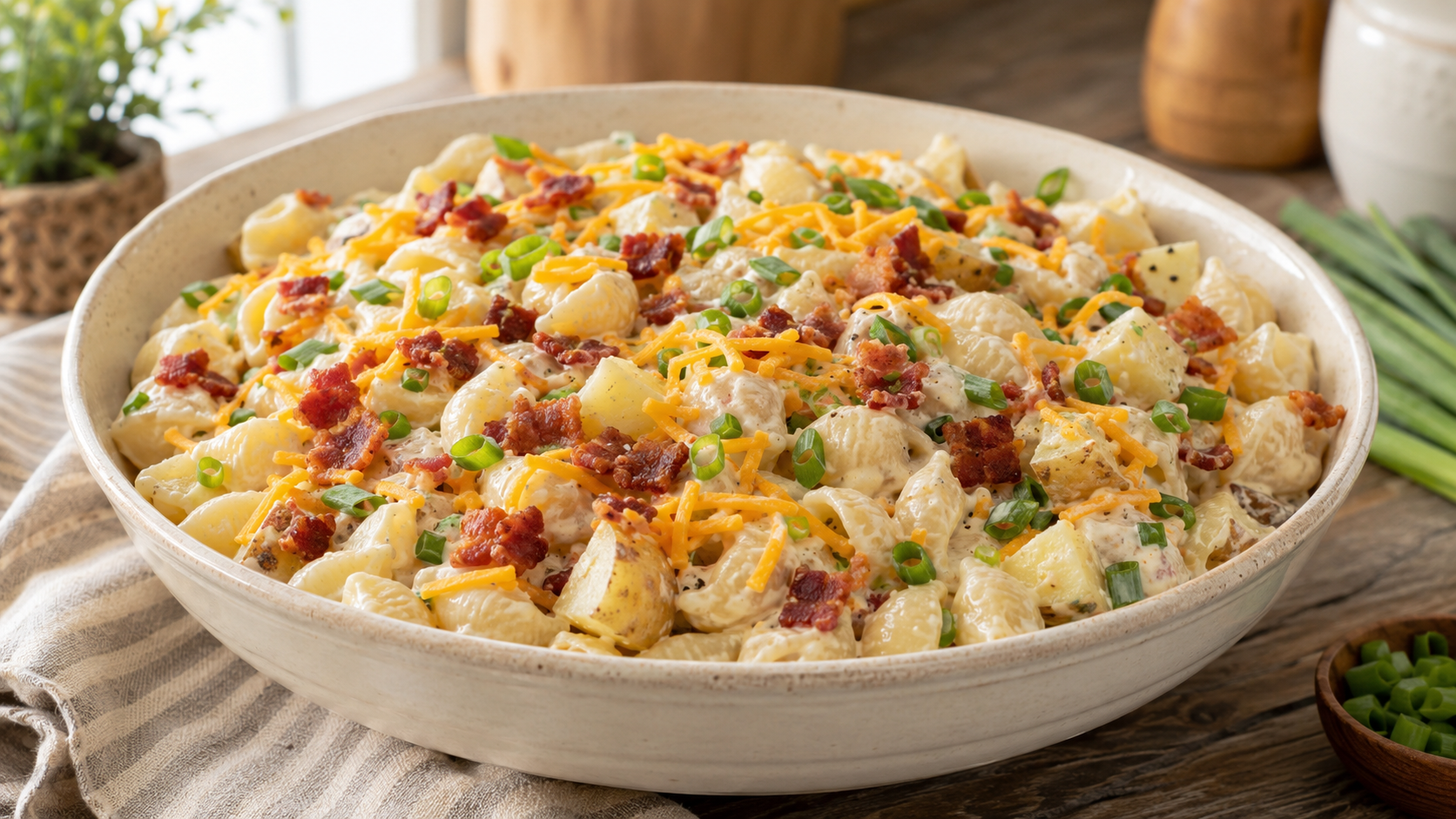
Loaded baked potato pasta salad is a creamy side dish made with tender pasta, bite-size potatoes, crisp bacon, cheddar cheese, and green onions. A sour cream dressing brings everything together with the familiar flavor of a fully loaded baked potato.
To make it, cook the potatoes and pasta separately until tender. After both have cooled, fold them into the dressing with the bacon, cheese, and green onions. Chill the salad before serving so the flavors have time to blend.
This hearty pasta salad works well for cookouts, potlucks, family dinners, and make-ahead lunches. It is rich enough to feel satisfying, but the tangy dressing keeps it from tasting too heavy.
Why This Recipe Works
This recipe combines two familiar side dishes without making the preparation complicated. Pasta gives the salad a firm, scoopable base, while potatoes add the soft and comforting texture people expect from a loaded baked potato.
Sour cream adds tang, mayonnaise keeps the dressing smooth, and a small amount of milk loosens it enough to coat the pasta. Meanwhile, bacon, cheddar, and green onions provide the salty, savory toppings associated with a classic loaded potato.
Most of the work can also be completed ahead of time. Once chilled, the salad is easy to carry to a party or serve directly from the refrigerator.
Ingredients Overview
You will need short pasta, baby gold or red potatoes, bacon, cheddar cheese, green onions, sour cream, mayonnaise, milk, Dijon mustard, garlic powder, salt, and black pepper. The full measurements are in the recipe card below.
Use the recipe card to print the recipe or add the ingredients to your shopping list.
Tips Before You Start
Cut the potatoes evenly
Keep the potato pieces close to the same size so they finish cooking at the same time. Pieces around three-quarters of an inch work well because they are easy to eat without disappearing into the pasta.
Salt both cooking pots
Pasta and potatoes absorb seasoning as they cook. Lightly salting both pots builds flavor throughout the salad instead of relying on the dressing to do all the work.
Cook the pasta just past firm
Pasta becomes firmer after refrigeration. Cook it until tender but not mushy, rather than leaving it very firm in the center.
Save some toppings
Set aside a little bacon, cheddar, and green onion before mixing the salad. Adding them to the top just before serving gives the finished bowl better color and texture.
Easy Swaps
Pasta: Rotini, shells, elbows, and bow ties can all hold the creamy dressing. Choose a shape that is easy to scoop and eat.
Potatoes: Baby gold potatoes have a creamy texture, while red potatoes hold their shape especially well. Russet potatoes can work, although they may break apart more easily.
Bacon: Cooked turkey bacon may be used for a lighter smoky topping. Check the package directions and labels when dietary restrictions are a concern.
Cheese: Mild, medium, or sharp cheddar will work. For the smoothest texture, grate a block of cheese instead of using heavily coated pre-shredded cheese.
Dressing: Plain Greek yogurt can replace part of the sour cream. The flavor will be slightly tangier, so taste the dressing before adding extra mustard.
For gluten-free preparation, use a suitable gluten-free pasta and check the labels on the bacon, mustard, cheese, and other packaged ingredients.
What to Serve With Loaded Baked Potato Pasta Salad
This creamy salad pairs well with grilled chicken, burgers, barbecue sandwiches, baked beans, corn on the cob, or a crisp green salad. It can also be served as part of a casual buffet with sliced tomatoes, pickles, and fresh fruit.
Because the salad is rich, simple grilled or roasted proteins make especially useful pairings. A fresh vegetable side can add contrast without creating much extra work.
How This Recipe Comes Together
First, cook the potatoes in salted water until they are tender enough to pierce with a fork but still hold their shape. Drain them carefully and spread them out so steam can escape.
Next, boil the pasta until tender. Drain it, rinse briefly with cool water, and allow excess moisture to drip away. Too much water left on the pasta can weaken the dressing.
While the pasta and potatoes cool, whisk together the sour cream, mayonnaise, milk, Dijon mustard, garlic powder, salt, and pepper. The dressing should be creamy and easy to stir, but it should not look watery.
Finally, fold in the cooled pasta, potatoes, bacon, cheddar, and green onions. Chill the salad before serving, then stir it again and adjust the seasoning or consistency as needed.
Storage and Reheating
Store the pasta salad in a covered container in the refrigerator. For the best quality, enjoy it within three to four days.
The pasta and potatoes will absorb dressing as the salad rests. Before serving leftovers, stir in a small spoonful of milk or sour cream when the mixture looks dry.
This salad is intended to be served cold or lightly chilled, so reheating is not recommended. Freezing is also a poor choice because potatoes and dairy-based dressing can become grainy or watery after thawing.
Food Safety Note
Keep the salad refrigerated until shortly before serving. Return it to the refrigerator within two hours, or within one hour when the outdoor temperature is above 90°F.
Common Mistakes
Overcooking the potatoes
Very soft potatoes can collapse while the salad is mixed. Begin checking them early and drain them as soon as a fork enters with little resistance.
Adding dressing to warm ingredients
Warm pasta and potatoes can thin the dressing and melt the cheese. Cooling both ingredients first helps the salad stay creamy.
Leaving too much water on the pasta
Water trapped inside pasta shapes can dilute the dressing. Shake the colander well and let the pasta drain before mixing.
Adding all the bacon too early
Bacon softens as it sits in a creamy salad. Mix some into the dish for flavor, but save the rest for the top when you want a crisp finish.
Serving without a final stir
The dressing settles and thickens during chilling. Stir the salad before serving, then add a small splash of milk if it needs loosening.
Loaded Baked Potato Pasta Salad
Method
- Cook the potatoes. Place the cut potatoes in a medium saucepan and cover them with cold water by about 1 inch. Add half of the cooking-water salt. Bring the water to a boil, then reduce it to a steady simmer. Cook for 8 to 12 minutes, or until the potatoes are tender when pierced with a fork but still hold their shape.
- Drain and cool the potatoes. Pour the potatoes into a colander and let them drain well. Spread them on a plate or small baking sheet so they can cool without continuing to steam in a pile.
- Cook the pasta. Bring a large pot of water to a boil and add the remaining cooking-water salt. Cook the pasta according to the package directions until tender but not mushy. Because the pasta will firm as it chills, avoid leaving it very firm in the center.
- Cool the pasta. Drain the pasta and rinse it briefly under cool running water to stop the cooking. Shake the colander thoroughly, then let the pasta drain while you prepare the dressing.
- Make the dressing. In a large mixing bowl, whisk together the sour cream, mayonnaise, milk, Dijon mustard, garlic powder, fine salt, and black pepper until smooth.
- Reserve the garnish. Set aside about one-fourth of the bacon, cheddar cheese, green onions, and chives for topping the finished salad.
- Combine the salad. Add the cooled pasta and potatoes to the dressing. Add the remaining bacon, cheddar, green onions, and chives. Fold everything together gently until evenly coated, taking care not to crush the potatoes.
- Chill. Cover the bowl and refrigerate the pasta salad for at least 30 minutes. A longer chilling time of 1 to 2 hours will allow the flavors to blend more fully.
- Adjust and serve. Stir the salad before serving. When the dressing has become too thick, add milk 1 tablespoon at a time until it reaches the desired consistency. Taste and adjust the salt and pepper as needed.
- Add the toppings. Sprinkle the reserved bacon, cheddar, green onions, and chives over the salad immediately before serving.
Notes
Cook the potatoes until tender, but do not let them become soft enough to crumble.
Allow the pasta and potatoes to cool before mixing them with the dressing.
The salad may be prepared one day ahead. Reserve some bacon and green onions for serving.
Stir in a small amount of milk or sour cream when refrigerated leftovers appear dry.
Keep the salad refrigerated and return it to refrigeration within two hours, or within one hour when the temperature is above 90°F.
Nutrition can vary depending on the exact ingredients, brands, portion size, and cooking method used.
Cooking times can vary depending on the pasta shape, potato size, and appliance. Tried This Recipe CTA: Tried this loaded baked potato pasta salad? Leave a rating and share what you served with it.
Tried this recipe?
Let us know how it was!Nutrition Information Disclaimer
Nutrition information is provided as an estimate only and may vary based on the ingredients, brands, portion sizes, substitutions, and preparation methods used. Optional toppings and serving suggestions may not be included in the calculation. For the most accurate information, calculate nutrition using the specific ingredients and amounts you use.
Allergy notice: Always check ingredient labels and avoid substitutions that may introduce allergens. This recipe has not been verified as allergen-free.
Frequently Asked Questions
Can I make loaded baked potato pasta salad ahead of time?
Yes. Prepare it up to one day ahead and store it covered in the refrigerator. For the best texture, reserve some bacon and green onions to add shortly before serving.
Should I peel the potatoes?
Peeling is optional when using baby gold or red potatoes. Their thin skins add color and help the pieces hold together. Scrub them well before cutting.
Can I use leftover baked potatoes?
Yes, provided they were stored safely and are still firm enough to cut. Chill the potatoes first, cut them into small pieces, and fold them into the salad gently.
Why did my pasta salad become dry?
Pasta and potatoes continue absorbing dressing in the refrigerator. Stir in a spoonful of milk, sour cream, or mayonnaise until the salad becomes creamy again.
Can I leave out the mayonnaise?
You can replace it with additional sour cream or plain Greek yogurt. However, the dressing may taste tangier and become slightly less smooth.
Can I serve this at a picnic?
Yes, but keep it properly chilled in a cooler or over ice. Do not allow the dairy-based salad to remain at room temperature for an extended period.
Does loaded baked potato pasta salad contain actual potatoes?
This version does. Tender potato pieces give the salad a true loaded baked potato texture instead of relying only on bacon, cheese, and sour cream flavors.
Final Notes
Loaded baked potato pasta salad is a practical choice when you want a familiar, crowd-friendly side with a little more substance than ordinary pasta salad. The combination of potatoes, pasta, bacon, cheddar, and tangy dressing works especially well for potlucks and casual family meals.
For the best result, cool the cooked ingredients before mixing, chill the finished salad, and save a few toppings for serving. Use the recipe card to add this recipe to your shopping list before you cook.
Trusted Resources
Helpful Recipe Resources
Trusted Food, Cooking, and Recipe References
Mistakenly Delicious uses AI-assisted workflows, but useful recipes still need common sense, food safety checks, and reliable cooking references. These resources can help with ingredients, nutrition, safe temperatures, and the AI workflow behind this site.
Ingredient Data
USDA FoodData Central
A useful reference for checking ingredient and nutrition data when reviewing recipes.
Visit Resource →Cooking Help
Nutrition.gov Cooking Tips
Beginner-friendly guidance for meal prep, cooking basics, shopping, and planning.
Visit Resource →Food Safety
Safe Cooking Temperatures
A helpful food safety chart for checking safe internal temperatures for chicken, meat, seafood, and leftovers.
Visit Resource →Creator Workflow
TechnofluxAI
The AI workflow and creator systems site behind Mistakenly Delicious.
Visit TechnofluxAI →