Beginner-Friendly Recipe
Easy Vegetable Soup for Beginners
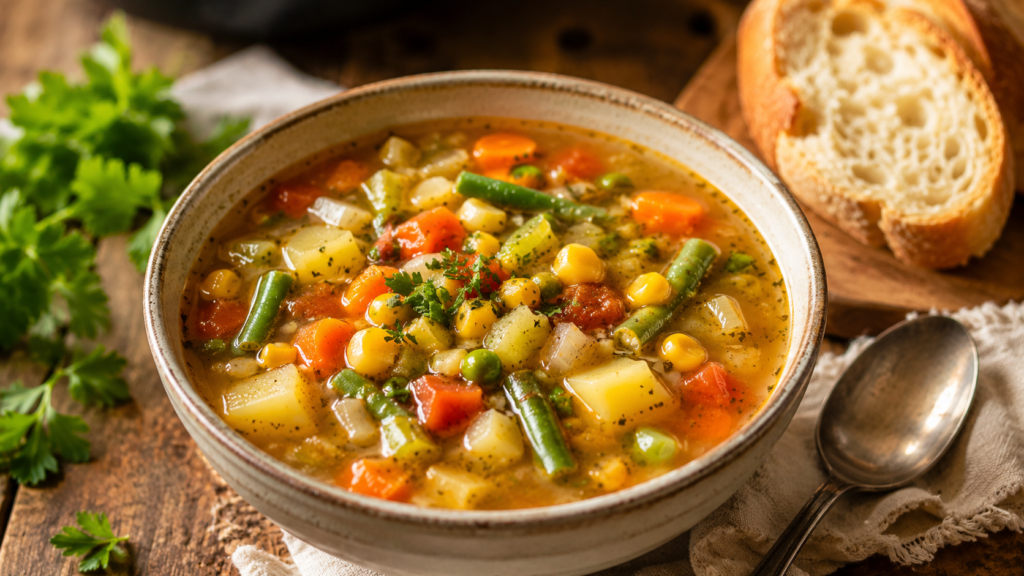
This easy vegetable soup for beginners is a simple, cozy pot of soup made with basic vegetables, broth, and pantry seasonings. It is a good recipe for new cooks because the steps are calm, flexible, and easy to fix if something tastes too plain or looks too thick.
You do not need perfect knife skills or fancy ingredients. Start with onion, carrots, celery, potatoes, canned tomatoes, broth, and frozen vegetables. Let everything simmer until the vegetables are tender, then taste and adjust.
This is the kind of beginner recipe that teaches useful cooking habits: soften the vegetables first, season in layers, simmer until tender, and taste before serving.
Mistakenly Smart Note
Vegetable soup gets better when you season it in stages. Add a little salt early to help the vegetables taste good, then taste again at the end before adding more.
Quick Answer
Easy vegetable soup for beginners is a one-pot soup made by softening onion, carrots, and celery, then simmering them with potatoes, tomatoes, broth, seasonings, and frozen vegetables. The beginner-friendly trick is to cut the vegetables into similar sizes so they cook evenly.
Why This Recipe Works
This soup works because it starts with a simple flavor base. Onion, carrots, and celery cook first, which gives the broth a better taste than just boiling everything at once.
Potatoes make the soup feel filling. Canned tomatoes add brightness. Frozen vegetables make the recipe easier and keep the prep time short.
The recipe is also flexible. You can use vegetable broth or chicken broth, fresh or frozen vegetables, and almost any small pasta, rice, or beans if you want to make it heartier.
Ingredients Overview
The full ingredient amounts are in the recipe card below. Here is what each ingredient does so beginner cooks know why it matters.
- Olive oil: Helps soften the vegetables and start the flavor base.
- Onion: Adds gentle sweetness and savory flavor.
- Carrots: Add color, sweetness, and texture.
- Celery: Adds classic soup flavor.
- Garlic: Adds quick savory flavor near the end of the saute step.
- Potatoes: Make the soup more filling and cozy.
- Canned diced tomatoes: Add acidity and body to the broth.
- Broth: Vegetable broth keeps it meatless. Chicken broth also works if that is what you have.
- Frozen mixed vegetables: Keep the recipe beginner-friendly and budget-friendly.
- Italian seasoning: Adds easy dried herb flavor.
- Bay leaf: Optional, but helpful for a classic soup taste.
- Lemon juice or vinegar: A small splash at the end brightens the soup.
Equipment
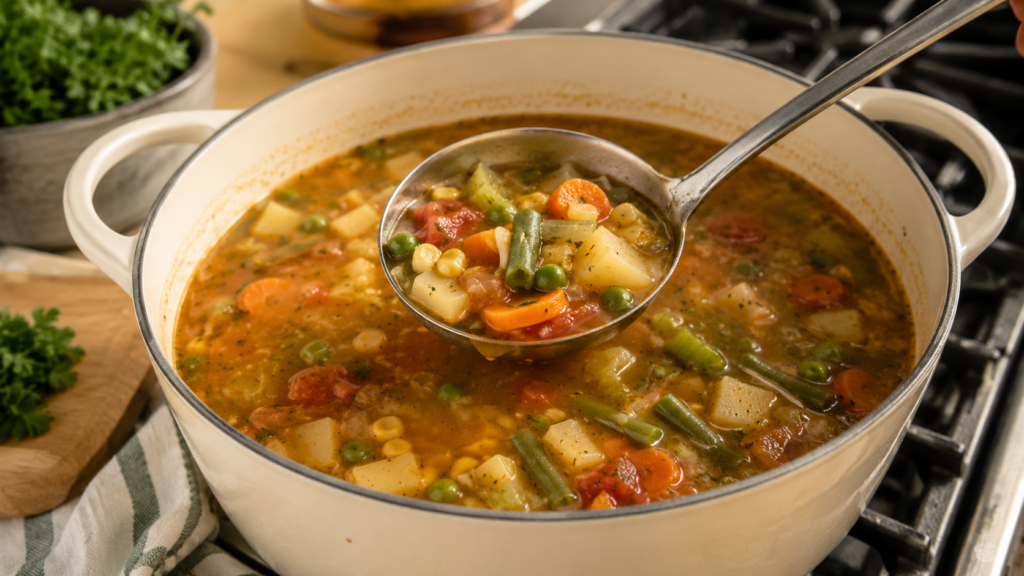
- Large soup pot or Dutch oven
- Cutting board
- Chef’s knife
- Wooden spoon
- Measuring cups and spoons
- Ladle
Beginner Tips Before You Start
Cut the carrots, celery, and potatoes into bite-size pieces. They do not have to be perfect, but similar sizes help them cook at the same speed.
Use a pot that looks a little bigger than you think you need. Soup bubbles and needs room for stirring.
Do not rush the onion, carrot, and celery step. Cooking them for a few minutes before adding broth gives the soup more flavor.
Taste near the end, not just at the beginning. Broth, canned tomatoes, and frozen vegetables can all change how salty the soup tastes.
How to Make It
1. Soften the base vegetables
Warm the olive oil in a large pot over medium heat. Add the onion, carrots, and celery. Cook for 6 to 8 minutes, stirring often, until the onion looks softer and slightly translucent.
2. Add the garlic and seasonings
Stir in the garlic, Italian seasoning, salt, and pepper. Cook for about 30 seconds. Garlic burns quickly, so do not walk away during this step.
3. Add potatoes, tomatoes, and broth
Add the potatoes, diced tomatoes with their juices, broth, and bay leaf if using. Stir well and scrape the bottom of the pot so nothing sticks.
4. Simmer until tender
Bring the soup to a gentle boil, then reduce the heat to a simmer. Cook for 15 to 20 minutes, or until the potatoes and carrots are tender when pierced with a fork.
5. Add frozen vegetables
Stir in the frozen mixed vegetables. Simmer for 5 more minutes, or until they are hot and tender.
6. Taste and finish
Remove the bay leaf. Taste the soup and add more salt or pepper if needed. Stir in lemon juice or vinegar if the soup tastes flat.
7. Serve warm
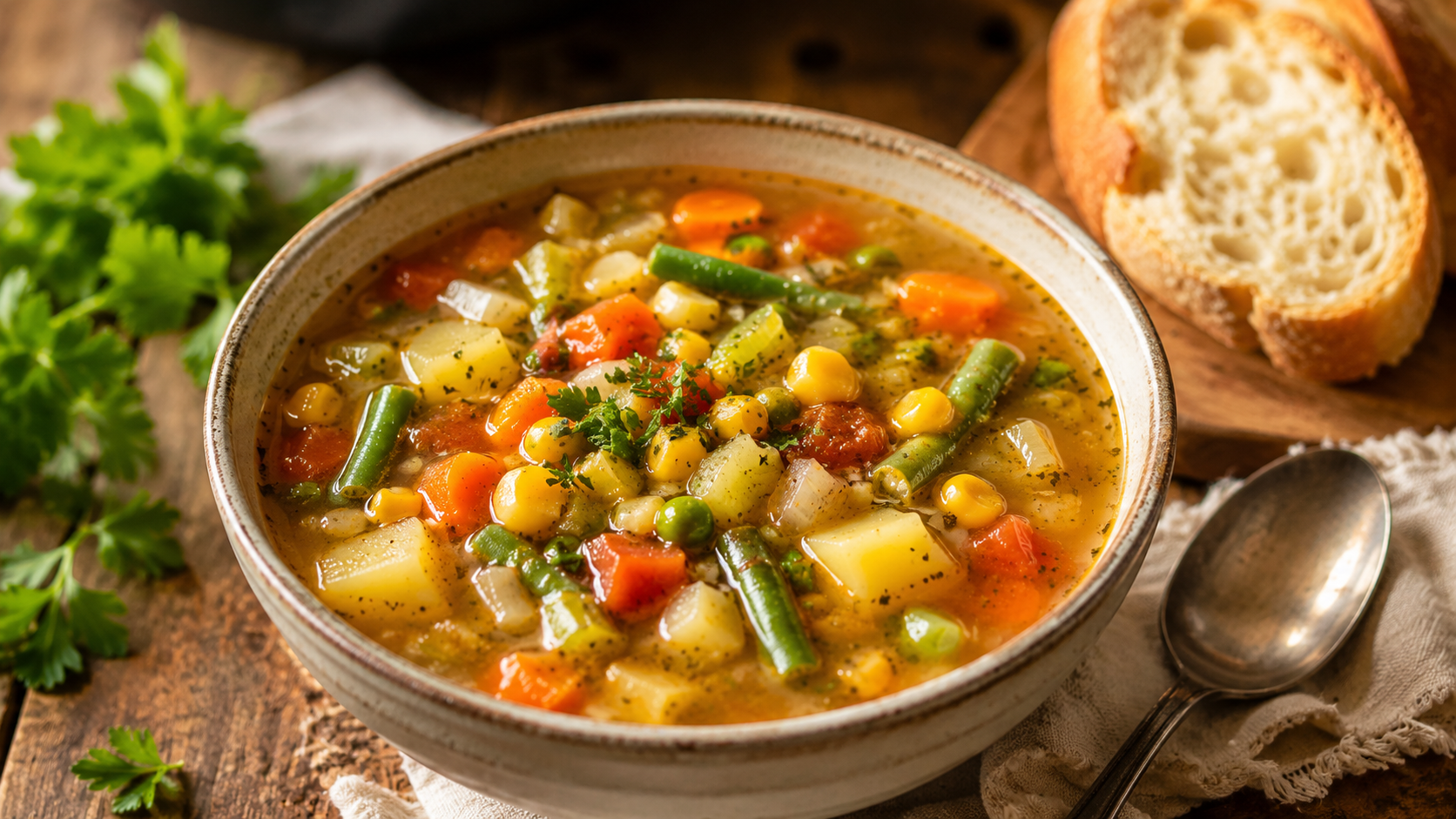
Ladle the soup into bowls. Add parsley, grated Parmesan, crackers, or bread if you like.
Dinner Debug / Common Problems
My soup tastes bland.
Add a little salt, then taste again. If it still tastes flat, add a splash of lemon juice or vinegar. Acid can make vegetable soup taste brighter without making it sour.
My vegetables are still hard.
Keep simmering the soup until the potatoes and carrots are fork-tender. If the broth level gets low, add a splash more broth or water.
My soup is too thick.
Add more broth or water, 1/2 cup at a time, until it looks right to you.
My soup is too thin.
Let it simmer uncovered for a few extra minutes. You can also mash a few potato pieces against the side of the pot to thicken the broth slightly.
My soup tastes too acidic.
Canned tomatoes can make soup taste sharp. Add a pinch of sugar, a little more broth, or a small pat of butter to soften the flavor.
My garlic burned.
Burned garlic tastes bitter. If it is only a little browned, keep going. If it is dark and smells harsh, it is better to wipe out the pot and restart the garlic step.
Substitutions and Swaps
Vegetable Swaps
Use zucchini, green beans, corn, peas, spinach, kale, cabbage, sweet potatoes, or butternut squash. Add softer vegetables like zucchini or spinach near the end so they do not overcook.
Frozen Vegetable Option
Frozen mixed vegetables are a great beginner shortcut. You do not need to thaw them first. Add them near the end so they stay tender instead of mushy.
Broth Options
Vegetable broth keeps the soup vegetarian. Chicken broth gives a savory flavor if you are not keeping it meatless. Low-sodium broth is helpful because you can control the salt more easily.
Make It Heartier
Add drained canned beans, cooked pasta, cooked rice, lentils, or shredded rotisserie chicken. If adding pasta or rice, cook it separately when possible so it does not soak up all the broth in storage.
Tomato-Free Option
Leave out the diced tomatoes and add extra broth. Add a squeeze of lemon at the end for brightness.
Easy Vegetable Soup for Beginners
Method
- Heat the olive oil in a large soup pot or Dutch oven over medium heat.
- Add the onion, carrots, and celery. Cook for 6 to 8 minutes, stirring often, until the onion softens.
- Add the garlic, Italian seasoning, salt, and black pepper. Stir for 30 seconds.
- Add the potatoes, diced tomatoes with their juices, vegetable broth, and bay leaf if using. Stir well.
- Increase the heat and bring the soup to a gentle boil.
- Reduce the heat to medium-low and simmer for 15 to 20 minutes, or until the potatoes and carrots are fork-tender.
- Stir in the frozen mixed vegetables. Simmer for 5 more minutes, or until the vegetables are hot and tender.
- Remove the bay leaf.
- Taste the soup. Add more salt or pepper if needed.
- Stir in lemon juice or apple cider vinegar if the soup tastes flat.
- Ladle into bowls and garnish with parsley if desired.
- Recipe Notes
- Cut the potatoes and carrots into similar-size pieces so they cook evenly.
- Frozen vegetables do not need to be thawed before adding.
- If the soup is too thick, add more broth or water.
- If the soup tastes bland, add a little more salt or a small splash of lemon juice.
- For a heartier soup, add canned beans, cooked pasta, cooked rice, or shredded chicken.
Notes
Store leftover soup in airtight containers in the refrigerator for 3 to 4 days.
Reheating
Reheat on the stove over medium-low heat until hot, stirring occasionally. Add broth or water if the soup thickened. For microwave reheating, cover loosely and heat in short intervals, stirring between each one. Reheat leftovers to 165 F.
Freezing
Freeze cooled soup in freezer-safe containers for up to 3 months. Leave a little space at the top of the container because soup expands as it freezes. For best texture, freeze without pasta or rice.
Nutrition Note
Nutrition will vary based on broth, vegetables, added beans, pasta, rice, toppings, and serving size. Calculate nutrition in WP Recipe Maker using the exact ingredients and brands used before publishing.
Tried this recipe?
Let us know how it was!Nutrition Information Disclaimer
Nutrition information is provided as an estimate only and may vary based on the ingredients, brands, portion sizes, substitutions, and preparation methods used. Optional toppings and serving suggestions may not be included in the calculation. For the most accurate information, calculate nutrition using the specific ingredients and amounts you use.
Allergy notice: Always check ingredient labels and avoid substitutions that may introduce allergens. This recipe has not been verified as allergen-free.
What to Serve With It
Serve this easy vegetable soup with bread, crackers, grilled cheese, garlic toast, a simple salad, or a baked potato.
For a more filling dinner, add beans or pasta to the soup and serve it with crusty bread on the side.
Storage and Reheating
Let the soup cool slightly, then store it in airtight containers in the refrigerator. If you added pasta or rice, store it separately from the broth when possible so it does not get too soft.
Reheat vegetable soup on the stove over medium-low heat, stirring occasionally, until hot. Add a splash of broth or water if it thickened in the refrigerator.
To microwave, use a microwave-safe bowl, cover loosely, and heat in short intervals, stirring between each one.
Food Safety Note
Refrigerate leftover soup within 2 hours. Reheat leftovers to 165 F, and bring soups and sauces back to a rolling boil when reheating on the stove. Perishable foods should not sit at room temperature for more than 2 hours, or 1 hour if the temperature is above 90 F.
FAQ
Can beginners make vegetable soup?
Yes. Vegetable soup is one of the best beginner recipes because the steps are flexible. Soften the vegetables, add broth, simmer until tender, and taste before serving.
Can I use frozen vegetables in vegetable soup?
Yes. Frozen vegetables work well in vegetable soup. Add them near the end of cooking so they heat through without becoming mushy.
Do I have to peel the potatoes?
No. You can leave the skins on if the potatoes are clean and the skin is thin. Peel them if you prefer a softer texture.
How do I make vegetable soup taste better?
Start by cooking onion, carrot, and celery before adding broth. At the end, taste for salt and add a small splash of lemon juice or vinegar if the soup tastes flat.
Can I make this soup without tomatoes?
Yes. Leave out the tomatoes and add extra broth. You may want to add lemon juice at the end for brightness.
Can I add pasta or rice?
Yes. Cook pasta or rice separately and add it to each bowl if you plan to store leftovers. This keeps it from soaking up too much broth.
Can I freeze vegetable soup?
Yes. Vegetable soup freezes well, especially without pasta or rice. Potatoes may soften slightly after freezing, but the soup will still be usable.
How long does vegetable soup last in the fridge?
Use refrigerated leftover soup within 3 to 4 days for best quality and food safety.
Final Notes
This easy vegetable soup for beginners is a practical recipe to keep in your dinner rotation. It is flexible, budget-friendly, and forgiving if you need to swap vegetables or adjust the broth.
The best beginner habit is to taste near the end. A little salt, pepper, or lemon juice can turn a plain pot of soup into something warm, balanced, and satisfying.
Helpful Recipe Resources
Trusted Food, Cooking, and Recipe References
Mistakenly Delicious uses AI-assisted workflows, but useful recipes still need common sense, food safety checks, and reliable cooking references. These resources can help with ingredients, nutrition, safe temperatures, and the AI workflow behind this site.
Ingredient Data
USDA FoodData Central
A useful reference for checking ingredient and nutrition data when reviewing recipes.
Visit Resource →Cooking Help
Nutrition.gov Cooking Tips
Beginner-friendly guidance for meal prep, cooking basics, shopping, and planning.
Visit Resource →Food Safety
Safe Cooking Temperatures
A helpful food safety chart for checking safe internal temperatures for chicken, meat, seafood, and leftovers.
Visit Resource →Creator Workflow
TechnofluxAI
The AI workflow and creator systems site behind Mistakenly Delicious.
Visit TechnofluxAI →