Beginner-Friendly Recipe
French Onion Beef Noodle Bake
French Onion Beef Noodle Bake is a beginner-friendly shortcut recipe with cozy flavor, flexible swaps, and simple leftovers.
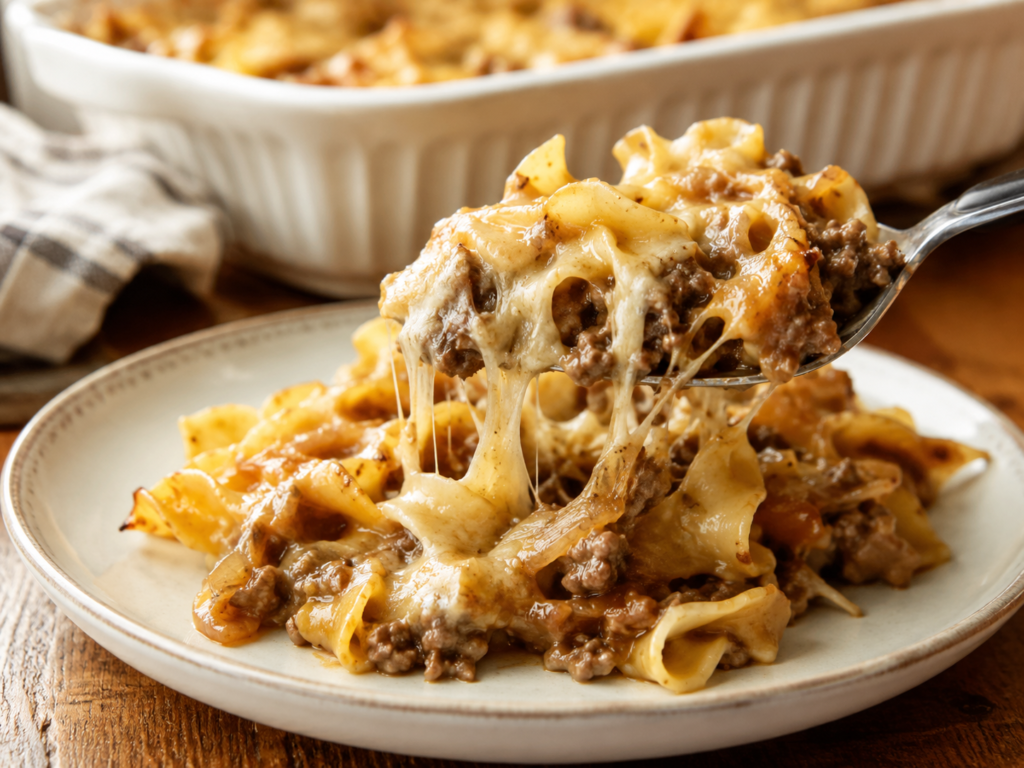
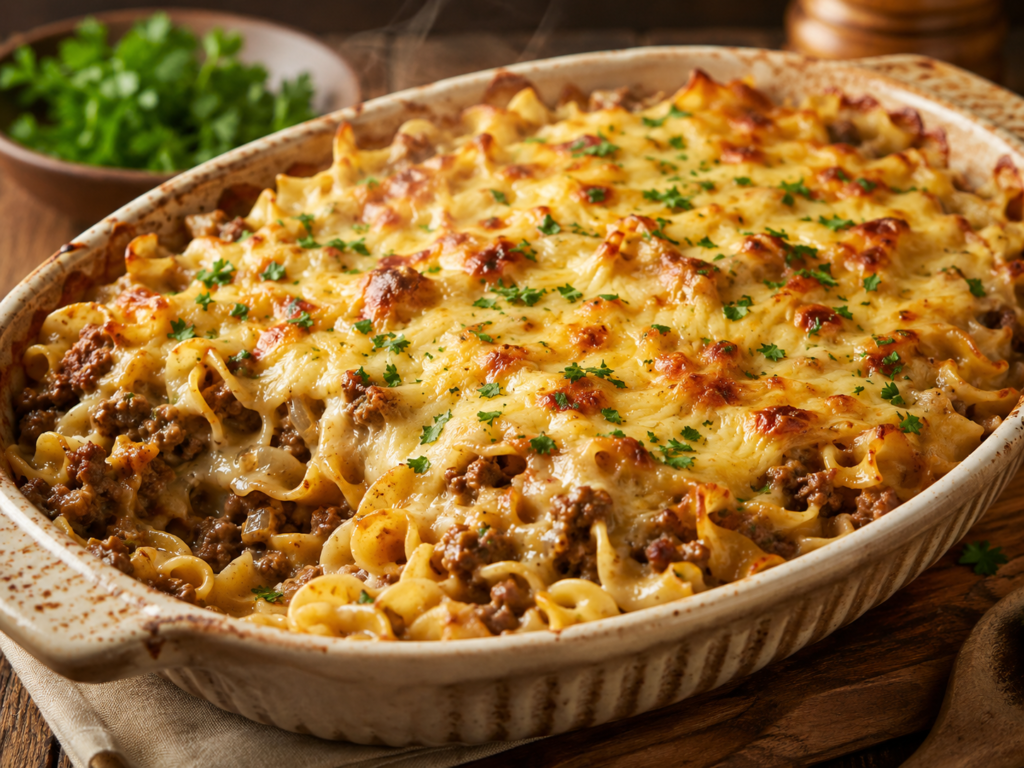
French Onion Beef Noodle Bake turns the familiar flavors of French onion soup into a hearty, beginner-friendly casserole. Savory ground beef, tender egg noodles, slowly softened onions, and a creamy beef sauce are finished with a layer of melted cheese.
Mistakenly Smart Note
Give the onions enough time to soften and turn golden before building the sauce. They do not need to become deeply caramelized, but rushing this step can leave the casserole with sharp onion flavor instead of the mellow sweetness associated with French onion dishes.
Quick Answer
French Onion Beef Noodle Bake is an easy casserole made with ground beef, egg noodles, golden onions, beef broth, sour cream, and melted Swiss-style cheese.
First, cook the noodles just until slightly firm. Meanwhile, brown the beef and soften the onions. Next, make a simple savory sauce in the skillet, combine everything in a baking dish, and bake until the cheese is melted and the edges are bubbling.
This recipe is useful when you want a comforting ground beef dinner that can be assembled ahead of time. It also uses familiar grocery-store ingredients and does not require canned cream soup.
Jump to the recipe card and printable shopping list.
Ingredients Overview
You will need ground beef, wide egg noodles, yellow onions, garlic, beef broth, Worcestershire sauce, thyme, sour cream, flour, butter, and shredded cheese. The full measurements are in the recipe card below.
Why This French Onion Beef Noodle Bake Works
The onions provide mellow sweetness, while beef broth and Worcestershire sauce build a savory base without requiring a long list of seasonings. Sour cream gives the sauce a smooth, lightly tangy finish and helps coat the noodles.
Wide egg noodles are sturdy enough to hold the beef and sauce. In addition, cooking them slightly less than the package directions helps prevent them from becoming overly soft while the casserole bakes.
A combination of Swiss-style cheese and mozzarella creates both flavor and a smooth melted topping. Gruyere may be used for a stronger French onion flavor, although regular Swiss cheese is often easier to find and more budget-friendly.
Tips Before You Start
Slice the onions evenly
Thin, evenly sized slices soften at approximately the same rate. Thick pieces may remain firm after the smaller pieces have already browned.
Use a large skillet
The onions need room to cook rather than steam. A large skillet also leaves enough space to brown the beef and prepare the sauce without transferring everything between several pans.
Undercook the noodles slightly
Drain the noodles when they are still a little firmer than you would normally serve them. They will continue absorbing moisture as the casserole bakes.
Remove the skillet from the heat before adding sour cream
Let the sauce stop bubbling before stirring in the sour cream. Gentle heat helps it blend smoothly and reduces the chance of separation.
Taste before adding extra salt
Beef broth, Worcestershire sauce, and cheese can all contribute salt. Therefore, adjust the final seasoning only after the sauce has been combined.
Easy Swaps
- Ground beef: Ground turkey may be used, although the finished flavor will be lighter. Cook ground poultry to its appropriate safe temperature.
- Egg noodles: Use another short pasta, such as rotini or bow ties. Follow its package timing and drain it while still slightly firm.
- Swiss cheese: Gruyere adds a deeper, nuttier flavor. Provolone or mozzarella will produce a milder casserole.
- Sour cream: Plain full-fat Greek yogurt can work, but it should also be stirred in away from direct heat.
- Fresh thyme: Replace it with a smaller amount of dried thyme.
- Gluten-free option: Use gluten-free noodles, broth, flour, and Worcestershire sauce. Check every package label because ingredients vary by brand.
Meal Ideas and Serving Suggestions
This rich casserole pairs well with a simple vegetable or crisp salad. Try roasted green beans, steamed broccoli, glazed carrots, or a mixed green salad with a tart vinaigrette.
For a French onion-inspired finish, add chopped parsley or a small amount of fresh thyme after baking. A piece of crusty bread can also help scoop up the creamy sauce.
Because the casserole already contains beef, noodles, sauce, and cheese, a light side is usually enough to complete the meal.
How This Recipe Comes Together
Begin by boiling the egg noodles until they are just shy of tender. Drain them well so extra water does not thin the sauce.
While the noodles cook, brown the ground beef and break it into small pieces. Transfer the cooked beef to a plate, leaving only a small amount of fat in the skillet.
Next, melt the butter and cook the sliced onions over moderate heat. Stir them periodically until they are soft and golden. Garlic and thyme go in near the end so they become fragrant without burning.
Flour briefly cooks with the onions before the broth and Worcestershire sauce are added. Once the sauce thickens, remove the skillet from the heat and stir in the sour cream.
Finally, combine the sauce, beef, and noodles in the baking dish. Cover the top with cheese and bake until the center is hot and the sauce is bubbling around the edges.
Common Mistakes
Cooking the noodles until completely soft
Fully cooked noodles can become mushy in the oven. Stop cooking them one or two minutes before the package’s standard al dente time.
Using high heat for the onions
High heat can burn the edges before the centers soften. Medium or medium-low heat produces a more even golden color.
Adding sour cream to a rapidly boiling sauce
Boiling can make the sauce appear grainy or separated. Move the skillet away from the burner first, then stir in the sour cream gradually.
Leaving excess liquid with the beef
Drain an unusually large amount of grease before preparing the sauce. Otherwise, the finished casserole may feel oily.
Baking the casserole uncovered for too long
Extended baking can dry the noodles and make the cheese tough. Bake only until the filling is hot and the topping has melted.
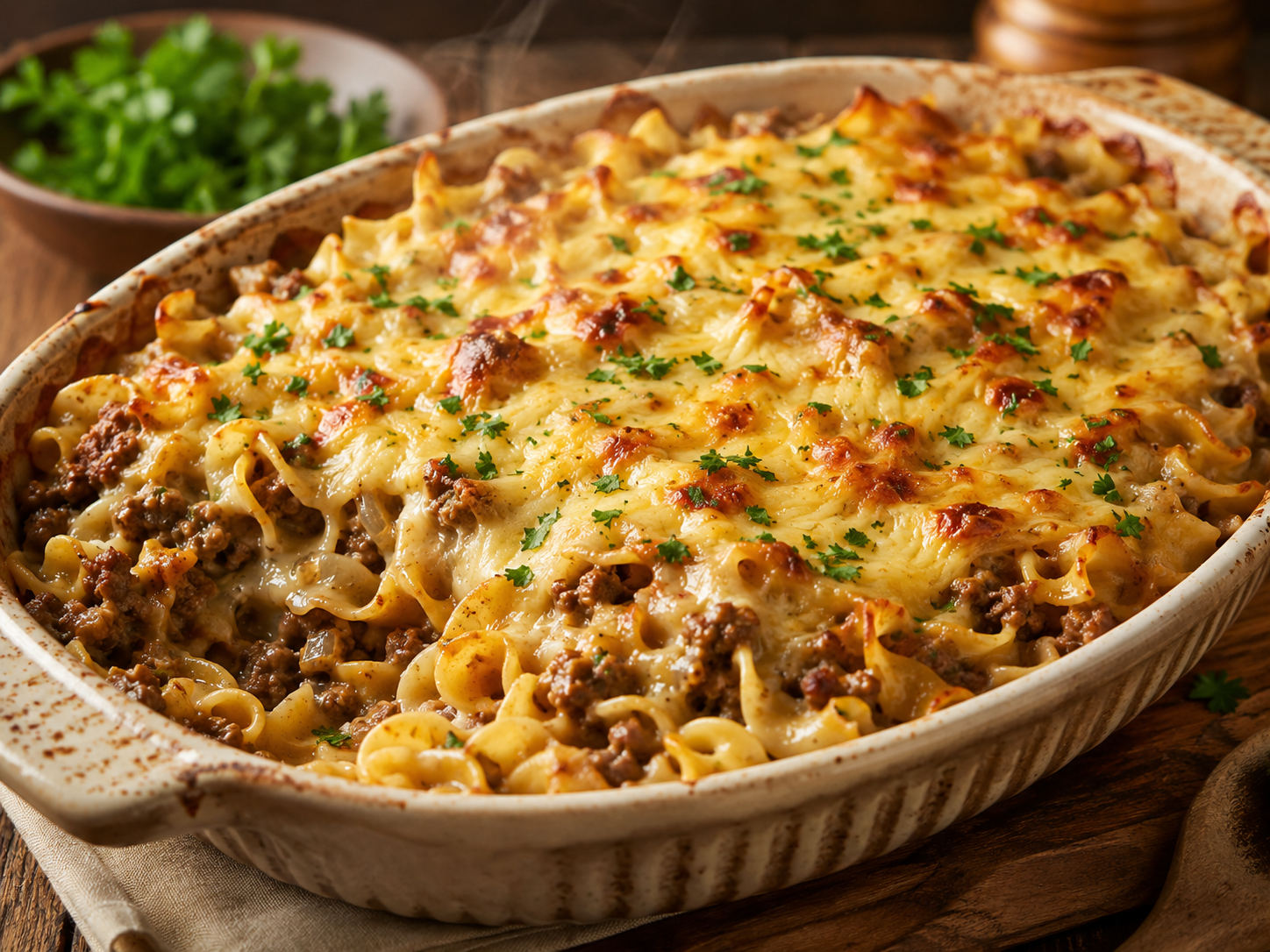
French Onion Beef Noodle Bake
Method
- Heat the oven to 350°F. Lightly grease a 9-by-13-inch baking dish.
- Bring a large pot of water to a boil. Cook the egg noodles for one or two minutes less than the package’s al dente time. Drain well and set aside.
- While the noodles cook, heat the olive oil in a large skillet over medium heat. Add the ground beef and cook for 6 to 8 minutes, breaking it into small pieces. Continue cooking until no raw portions remain and the beef reaches 160°F. Transfer the beef to a plate and carefully drain excess grease.
- Return the skillet to medium heat and add the butter. Once melted, add the sliced onions. Cook for 20 to 25 minutes, stirring every few minutes, until the onions are soft and golden. Reduce the heat if the edges begin to burn.
- Add the garlic and thyme. Cook for about 30 seconds, stirring constantly, until fragrant.
- Sprinkle the flour over the onions. Stir and cook for 1 minute so the flour loses its raw taste.
- Gradually pour in the beef broth while stirring. Add the Worcestershire sauce, black pepper, and salt. Bring the mixture to a gentle simmer and cook for 3 to 5 minutes, stirring frequently, until the sauce lightly coats the spoon.
- Remove the skillet from the heat. Allow the sauce to stop bubbling, then gradually stir in the sour cream until smooth. Taste and adjust the seasoning if needed.
- Add the cooked beef and drained noodles to the sauce. Fold gently until everything is evenly coated.
- Transfer the mixture to the prepared baking dish. Sprinkle the Swiss or Gruyere cheese evenly over the top, followed by the mozzarella.
- Bake uncovered for 18 to 22 minutes, until the cheese has melted, the edges are bubbling, and the center reaches 165°F.
- Let the casserole rest for 5 minutes. Garnish with parsley, if desired, and serve warm.
Notes
Tried this recipe?
Let us know how it was!Nutrition Information Disclaimer
Nutrition information is provided as an estimate only and may vary based on the ingredients, brands, portion sizes, substitutions, and preparation methods used. Optional toppings and serving suggestions may not be included in the calculation. For the most accurate information, calculate nutrition using the specific ingredients and amounts you use.
Allergy notice: Always check ingredient labels and avoid substitutions that may introduce allergens. This recipe has not been verified as allergen-free.
Nutrition Disclaimer: Nutritional information is provided as an estimate only and may vary depending on the specific ingredients, brands, portion sizes, and preparation methods used. For the most accurate results, calculate nutrition using the exact products and quantities in your recipe. This information is not intended as medical or dietary advice.
Storage and Reheating
Transfer leftovers to shallow, covered containers and refrigerate them promptly. For best quality, use the refrigerated casserole within three to four days.
Reheat individual portions in the microwave with a loose cover. Adding a spoonful of beef broth or water before heating can help restore moisture to the noodles.
For a larger portion, place the casserole in an oven-safe dish, cover it with foil, and reheat at 350°F until hot throughout. Remove the foil near the end only when you want to refresh the cheese topping.
The casserole may also be frozen in an airtight freezer-safe container. However, sour cream sauces can change slightly in texture after thawing. Thaw frozen portions in the refrigerator before reheating for the most even result.
Food Safety Note
Cook ground beef to a safe internal temperature of 160°F as measured with a food thermometer. Refrigerate perishable leftovers within two hours and reheat leftovers thoroughly to 165°F. Clean utensils and surfaces that touched raw beef before using them with cooked food.
Frequently Asked Questions
Can I assemble the casserole ahead of time?
Yes. Assemble it, cover the dish, and refrigerate it before baking. Because the casserole will begin cold, it may need additional oven time. Bake until the center is thoroughly heated and the edges are bubbling.
Do I have to caramelize the onions completely?
No. For this weeknight version, cook them until soft and golden. Deeper caramelization adds flavor but also increases the preparation time considerably.
Can I use condensed French onion soup?
It can be used in a different shortcut version, but it is not a direct replacement for only the beef broth in this recipe. Condensed soup changes the salt level, thickness, and amount of liquid, so additional adjustments would be needed.
What cheese is best for French onion flavor?
Gruyere provides the most distinctive nutty flavor. Swiss cheese is a practical substitute, while mozzarella helps create a mild and evenly melted topping.
Why did my casserole turn out dry?
The noodles may have been overcooked, the sauce may have reduced too far, or the casserole may have stayed in the oven too long. Keep the noodles firm, measure the liquid, and remove the dish once the filling is hot and bubbling.
Can I freeze it before baking?
You can, although the sauce and noodles may be slightly softer after thawing. For the best texture, assemble the casserole one day ahead and refrigerate it rather than freezing it.
Final Notes
French Onion Beef Noodle Bake is a practical way to turn ground beef and noodles into a comforting family meal. Letting the onions soften properly and keeping the noodles slightly firm are the two most important steps for a flavorful casserole with a creamy texture.
Shopping tip: Use the recipe card to add this recipe to your shopping list before you cook.
Trusted Resources
Helpful Recipe Resources
Trusted Food, Cooking, and Recipe References
Mistakenly Delicious uses AI-assisted workflows, but useful recipes still need common sense, food safety checks, and reliable cooking references. These resources can help with ingredients, nutrition, safe temperatures, and the AI workflow behind this site.
Ingredient Data
USDA FoodData Central
A useful reference for checking ingredient and nutrition data when reviewing recipes.
Visit Resource →Cooking Help
Nutrition.gov Cooking Tips
Beginner-friendly guidance for meal prep, cooking basics, shopping, and planning.
Visit Resource →Food Safety
Safe Cooking Temperatures
A helpful food safety chart for checking safe internal temperatures for chicken, meat, seafood, and leftovers.
Visit Resource →Creator Workflow
TechnofluxAI
The AI workflow and creator systems site behind Mistakenly Delicious.
Visit TechnofluxAI →