Beginner-Friendly Recipe
Frozen Veggie Fried Rice Muffins
Frozen Veggie Fried Rice Muffins is a beginner-friendly shortcut recipe with cozy flavor, flexible swaps, and simple leftovers.
Frozen Veggie Fried Rice Muffins turn everyday ingredients into portable, savory rice cups that are easy to pack, freeze, and reheat. Each muffin has tender rice, colorful vegetables, lightly crisp edges, and familiar fried rice flavor.
This recipe is especially useful when you have cooked rice in the refrigerator and a partially used bag of frozen vegetables in the freezer. Instead of reheating another bowl of rice, you can turn those ingredients into a make-ahead lunch, after-school snack, or simple meal-prep option.
Mistakenly Smart Note
Do not skip pressing the rice mixture firmly into the muffin cups. Compacting it removes loose spaces and helps the muffins hold their shape after baking.
Quick Answer
Frozen Veggie Fried Rice Muffins are baked savory rice cups made with cooked rice, thawed mixed vegetables, eggs, cheese, and fried rice seasonings. They bake in a standard muffin pan and can be refrigerated or frozen for convenient meals later.
Ingredients Overview
The recipe begins with cooked and cooled rice. Long-grain white rice works well, but brown rice can also be used for a slightly firmer, nuttier result.
A basic frozen vegetable blend keeps preparation quick. A mixture containing peas, carrots, and corn adds color, sweetness, and texture without requiring extra chopping. Thawing and drying the vegetables helps prevent watery muffins.
Eggs and shredded cheese bind the rice together. The eggs set as the muffins bake, while the cheese adds flavor and helps create lightly golden edges.
Soy sauce, toasted sesame oil, green onions, garlic, and ginger provide the familiar savory flavor associated with fried rice.
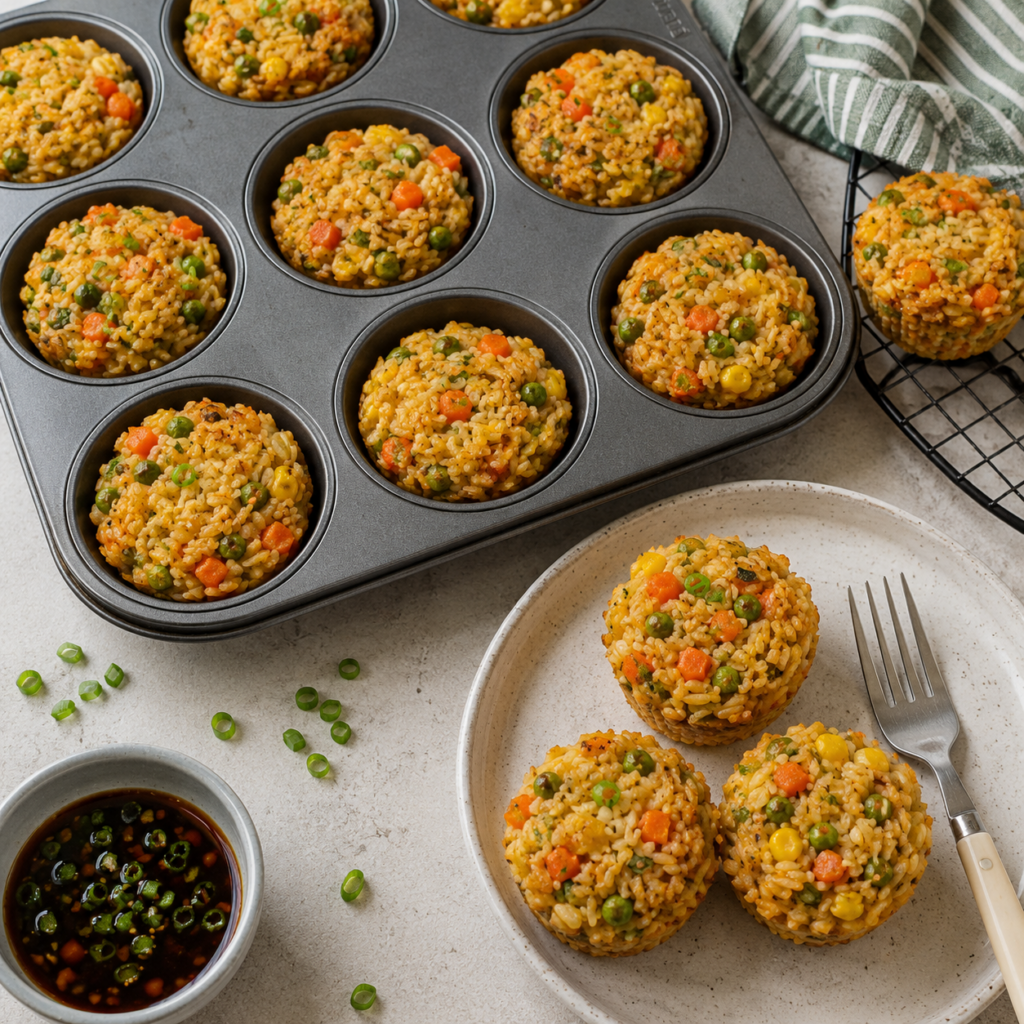
Why This Recipe Works
- Cooked rice provides structure: Cooled rice is less steamy and sticky than freshly cooked rice, helping the muffins develop a better texture.
- Eggs and cheese hold everything together: The binders surround the grains and vegetables, then firm as they bake.
- Frozen vegetables save preparation time: There is no need to peel, dice, or precook several different vegetables.
- A muffin pan creates portable portions: The individual cups are easy to serve, pack, refrigerate, and freeze.
Tips for Fried Rice Muffins That Hold Together
- Use cooked rice that has cooled before mixing it with the eggs.
- Thaw the frozen vegetables and pat away excess moisture.
- Break up large clumps of cold rice before adding the other ingredients.
- Coat the muffin pan thoroughly, including the upper edges of each cup.
- Press each portion firmly into the pan instead of loosely spooning it in.
- Let the baked muffins rest before removing them so the binders have time to set.
Meal Ideas and Easy Swaps
Serve two or three muffins with sliced cucumbers, fruit, edamame, or a simple green salad. For a heartier meal, pair them with baked tofu, grilled chicken, or a bowl of soup.
Brown rice can replace white rice, although the muffins may have a slightly chewier texture. Monterey Jack, mozzarella, or a dairy-free shredded cheese can be used instead of cheddar.
For additional protein, fold in a small amount of finely diced cooked chicken, ham, or baked tofu. Avoid adding too many extras because an overfilled mixture may not bind properly.
Use gluten-free tamari in place of soy sauce when preparing the muffins for a gluten-free meal.
How This Recipe Comes Together
The seasonings and eggs are whisked together first so their flavor is evenly distributed. The cooled rice, dry thawed vegetables, cheese, and green onions are then folded into the egg mixture.
Once everything is evenly combined, the mixture is divided among greased muffin cups and pressed down firmly. Baking sets the eggs, melts the cheese, and creates lightly browned edges. A brief cooling period makes the muffins easier to lift from the pan without breaking.
Frozen Veggie Fried Rice Muffins
Method
- Preheat the oven to 375°F. Generously coat all 12 cups of a standard muffin pan with nonstick cooking spray.
- Place the thawed vegetables on a clean kitchen towel or several layers of paper towel. Pat them dry to remove as much excess moisture as possible.
- In a large mixing bowl, whisk together the eggs, soy sauce, toasted sesame oil, garlic powder, ground ginger, and black pepper.
- Break up any large clumps in the cooled rice. Add the rice, dried vegetables, shredded cheese, and green onions to the egg mixture.
- Fold the ingredients together until the rice and vegetables are evenly coated and no dry pockets of rice remain. Let the mixture stand for 5 minutes.
- Divide the mixture evenly among the prepared muffin cups, using approximately 1/3 cup for each muffin.
- Use the back of a spoon or the bottom of a small measuring cup to press each portion firmly into the pan.
- Bake for 20 to 24 minutes, or until the muffins are set in the centers and lightly golden around the edges. The center of an egg-based muffin should reach 160°F.
- Place the pan on a cooling rack and let the muffins rest in the pan for 10 minutes.
- Run a thin silicone spatula or butter knife around the edges. Gently lift the muffins from the pan and serve warm.
Notes
Freshly cooked rice: Spread it on a shallow tray so it cools more quickly, then refrigerate it promptly before using.
Frozen vegetables: A blend containing peas, carrots, corn, and green beans works well. Large vegetable pieces should be chopped after thawing.
Prevent sticking: Apply cooking spray generously. A well-greased nonstick or silicone muffin pan provides the easiest release.
Cheese options: Mild cheddar, Monterey Jack, mozzarella, or a suitable dairy-free shredded cheese may be used.
Gluten-free option: Replace soy sauce with certified gluten-free tamari.
Lunchbox note: Keep the muffins cold with an insulated lunch bag and frozen ice pack until mealtime.
Freezing: Freeze cooled muffins on a lined tray before transferring them to a freezer-safe container. This prevents them from sticking together.
Estimated Nutrition Per serving of 2 muffins: Calories: 260
Carbohydrates: 29 g
Protein: 12 g
Fat: 10 g
Saturated Fat: 5 g
Fiber: 3 g
Sugar: 3 g
Sodium: 390 mg Nutrition values are estimates and will vary with the rice, vegetables, cheese, and soy sauce used.
Tried this recipe?
Let us know how it was!Nutrition Information Disclaimer
Nutrition information is provided as an estimate only and may vary based on the ingredients, brands, portion sizes, substitutions, and preparation methods used. Optional toppings and serving suggestions may not be included in the calculation. For the most accurate information, calculate nutrition using the specific ingredients and amounts you use.
Allergy notice: Always check ingredient labels and avoid substitutions that may introduce allergens. This recipe has not been verified as allergen-free.
Storage and Reheating
Allow the muffins to cool before transferring them to a covered container. Refrigerate them for up to 3 to 4 days.
For longer storage, arrange the cooled muffins on a parchment-lined tray and freeze until firm. Transfer them to a freezer-safe bag or container and freeze for up to 2 months. Separating layers with parchment paper makes individual muffins easier to remove.
Reheat refrigerated muffins in the microwave in short intervals until hot throughout. They can also be warmed in a covered baking dish in the oven. Frozen muffins may be thawed overnight in the refrigerator or reheated directly from frozen with additional time.
Food Safety Note
Because these muffins contain eggs, cook the centers to at least 160°F. Refrigerate cooked muffins within 2 hours and keep them at 40°F or colder. Reheat leftovers to 165°F before serving.
Common Mistakes
Using Wet Frozen Vegetables
Water released by thawed vegetables can make the rice mixture loose and prevent the muffins from setting properly. Pat the vegetables dry before mixing.
Using Hot Rice
Very hot rice can begin cooking the eggs before the mixture reaches the oven. Use cooled or chilled rice for a more even texture.
Not Greasing the Pan Enough
The cheese and egg mixture can stick to an untreated pan. Coat the bottoms, sides, and upper edges of the muffin cups thoroughly.
Filling the Cups Without Pressing
Loosely packed rice leaves gaps inside the muffins. Pressing each portion firmly helps the ingredients bake into a stable cup.
Removing the Muffins Immediately
The muffins are more delicate while piping hot. Letting them cool briefly in the pan gives the eggs and cheese time to firm.
Frequently Asked Questions
Can I use freshly cooked rice?
Yes, but cool it before mixing. Spread the rice in a shallow layer so steam can escape, then refrigerate it promptly until it is no longer warm.
Can I make these without cheese?
A dairy-free shredded cheese can be substituted. Completely omitting the cheese may produce softer muffins that are more likely to crumble.
Can I use brown rice?
Yes. Cooked brown rice gives the muffins a chewier texture and slightly nuttier flavor. Make sure it is fully cooked and cooled before use.
Why did my rice muffins fall apart?
The most common causes are excess moisture, loosely packed muffin cups, insufficient baking, or removing the muffins before they have rested.
Can I add meat?
Yes. A modest amount of finely chopped, fully cooked chicken, turkey, or ham can be folded into the mixture. Large amounts can interfere with binding.
Are fried rice muffins good for meal prep?
Yes. Their individual size makes them easy to portion, refrigerate, freeze, and pack. Keep packed muffins properly chilled until they are ready to be reheated or eaten.
Final Notes
Frozen Veggie Fried Rice Muffins are a practical way to transform cooked rice and freezer vegetables into something that feels completely different from leftovers. Their compact size makes them useful for busy mornings, packed lunches, snacks, and make-ahead meals.
The most important details are simple: dry the vegetables, cool the rice, grease the pan, and press the mixture firmly. Those small steps help produce savory rice muffins with tender centers, golden edges, and a shape that stays intact.
Trusted Resources
- USDA Food Safety and Inspection Service – Shell Eggs from Farm to Table
- USDA Food Safety and Inspection Service – Safe Minimum Internal Temperature Chart
- FoodSafety.gov – Leftover storage and reheating guidance
Helpful Recipe Resources
Trusted Food, Cooking, and Recipe References
Mistakenly Delicious uses AI-assisted workflows, but useful recipes still need common sense, food safety checks, and reliable cooking references. These resources can help with ingredients, nutrition, safe temperatures, and the AI workflow behind this site.
Ingredient Data
USDA FoodData Central
A useful reference for checking ingredient and nutrition data when reviewing recipes.
Visit Resource →Cooking Help
Nutrition.gov Cooking Tips
Beginner-friendly guidance for meal prep, cooking basics, shopping, and planning.
Visit Resource →Food Safety
Safe Cooking Temperatures
A helpful food safety chart for checking safe internal temperatures for chicken, meat, seafood, and leftovers.
Visit Resource →Creator Workflow
TechnofluxAI
The AI workflow and creator systems site behind Mistakenly Delicious.
Visit TechnofluxAI →