Beginner-Friendly Recipe
Small Kitchen Projects That Teach Big Cooking Skills
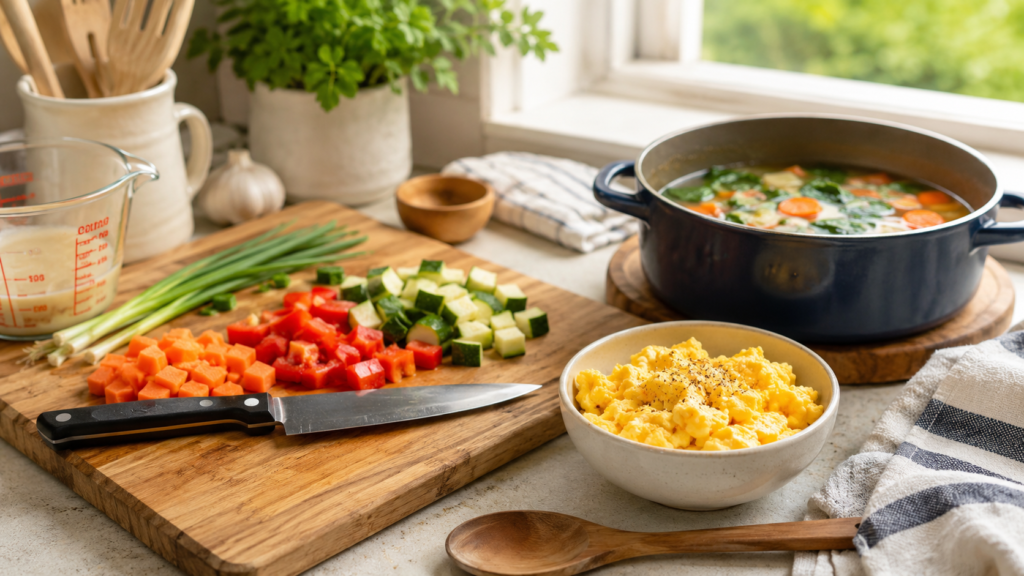
Small kitchen projects that teach big cooking skills are one of the easiest ways to become more confident in the kitchen. You do not have to cook a complicated dinner to get better. Sometimes the best practice comes from making eggs, roasting vegetables, simmering soup, or learning how to season a simple sauce.
Beginner cooks often feel pressure to make a full meal perfectly. That can make cooking feel stressful. These small projects keep things simple so you can focus on one skill at a time.
Think of this as a calm cooking practice list. Each project teaches something useful, like timing, heat control, knife skills, seasoning, texture, or doneness.
Mistakenly Smart Note
You do not need to master everything at once. Pick one small project, cook it slowly, notice what changes, and write down what you would adjust next time.
Quick Answer
The best small kitchen projects that teach big cooking skills are simple foods that help you practice one clear technique. Scrambled eggs teach heat control, roasted vegetables teach browning, soup teaches seasoning, rice teaches timing, and a basic sauce teaches texture. These skills make everyday cooking easier.
Why This Works for Beginner Cooks
Small projects lower the pressure. Instead of worrying about a full dinner, you can focus on one cooking habit and see the result right away.
This is how many useful cooking skills are built. You learn what medium heat looks like. You notice how vegetables soften. You taste how salt changes flavor. You see how food browns when it has enough space in the pan.
These small lessons carry over into bigger meals. Once you understand heat, timing, seasoning, and texture, recipes start to feel less confusing.
Beginner Skill Projects Overview
Use these projects as practice, not as tests. You can make one a day, one a week, or whenever you want a low-pressure kitchen win.
- Scrambled eggs: Teaches low heat, stirring, and texture control.
- Roasted vegetables: Teaches knife cuts, spacing, browning, and doneness.
- Simple vegetable soup: Teaches simmering, seasoning, and tasting as you cook.
- Basic rice: Teaches measuring, timing, resting, and steam control.
- Garlic butter pasta: Teaches sauce texture, pasta water, and quick timing.
- Sheet pan dinner: Teaches ingredient timing and oven confidence.
- Simple salad dressing: Teaches balance, acidity, salt, and whisking.
Equipment
You do not need a fully stocked kitchen to start. These basic tools are enough for most beginner cooking projects.
- Cutting board
- Chef’s knife or small sharp knife
- Medium skillet
- Large pot
- Sheet pan
- Mixing bowl
- Measuring cups and spoons
- Wooden spoon or spatula
- Colander
- Food thermometer, especially for meat projects
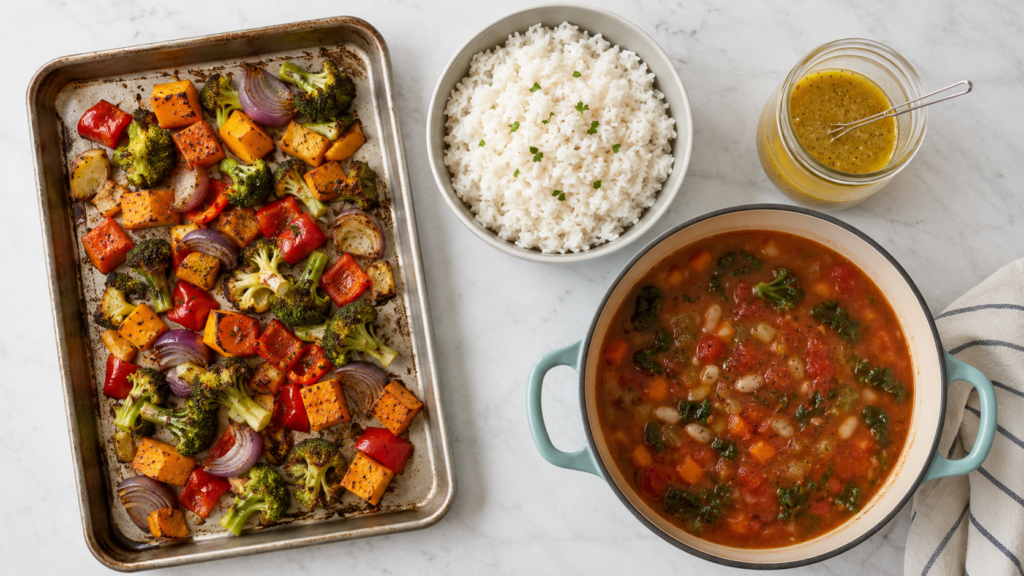
Beginner Tips Before You Start
Start with one project, not the whole list. The goal is to practice, not to create a perfect kitchen day.
Read the steps before you begin. Set out your ingredients and tools first. This keeps you from searching for a spoon while something is already cooking.
Use medium or medium-low heat more often than high heat. Many beginner mistakes happen because the pan gets too hot too fast.
Taste when it is safe to taste. A small pinch of salt, a splash of lemon juice, or a few extra minutes of cooking can change a dish in a useful way.
How to Make It: 7 Small Kitchen Projects
1. Make Soft Scrambled Eggs
Skill it teaches: heat control.
Whisk 2 eggs with a pinch of salt. Melt a little butter in a nonstick skillet over medium-low heat. Add the eggs and stir slowly with a spatula. Remove them from the heat while they still look slightly glossy.
This teaches you that food keeps cooking from leftover heat. It also shows why lower heat gives you more control.
2. Roast a Pan of Vegetables
Skill it teaches: browning and doneness.
Cut carrots, potatoes, broccoli, or cauliflower into similar-size pieces. Toss with oil, salt, and pepper. Spread them on a sheet pan with space between the pieces. Roast at 425 F until browned and tender.
This teaches that crowded pans steam instead of brown. It also helps you learn what fork-tender feels like.
3. Simmer a Simple Vegetable Soup
Technique it teaches: seasoning and timing.
Cook onion, carrot, and celery in a little oil until softened. Add broth, potatoes, tomatoes, and seasonings. Simmer until the vegetables are tender. Taste at the end and adjust salt or add a splash of lemon juice.
This teaches how flavor builds in layers and why tasting at the end matters.
4. Cook a Pot of Rice
it teaches: measuring, steam, and patience.
Rinse 1 cup of rice until the water runs mostly clear. Add it to a pot with the right amount of water for the rice type you are using. Cover, simmer gently, then let it rest off the heat before fluffing.
This teaches that lifting the lid too often releases steam and can change the texture.
5. Make Garlic Butter Pasta
it teaches: quick sauce timing.
Cook pasta in salted water. Save a little pasta water before draining. Melt butter in a skillet, add garlic briefly, then toss in the pasta with a splash of pasta water. Stir until glossy.
This teaches how starchy pasta water helps a simple sauce cling to noodles.
6. Build a Basic Sheet Pan Dinner
Skill it teaches: cooking foods with different timing.
Start with a protein, a vegetable, and a starch. Cut longer-cooking ingredients smaller and quicker-cooking ingredients larger. Spread everything out on a sheet pan and roast until cooked through.
Use a food thermometer for meat, poultry, or fish. This takes the guesswork out of doneness.
7. Shake a Simple Salad Dressing
it teaches: flavor balance.
Add 3 tablespoons oil, 1 tablespoon vinegar or lemon juice, a pinch of salt, pepper, and a small spoonful of mustard or honey to a jar. Shake until combined. Taste and adjust.
This teaches how fat, acid, salt, and sweetness balance each other.
Dinner Debug / Common Problems
Everything is cooking too fast.
Lower the heat. Move the pan off the burner for a minute if needed. Heat control is one of the most useful beginner cooking skills.
My food tastes bland.
Add a small pinch of salt, stir, and taste again. If it still tastes flat, try a splash of lemon juice or vinegar.
My vegetables are mushy.
They may have cooked too long or been cut too small. Next time, cut them a little bigger and check earlier.
food is browned outside but hard inside.
The heat may be too high. Lower the temperature and give the inside more time to cook.
pan is crowded.
Use a bigger pan or cook in batches. Food needs space to brown.
I keep forgetting ingredients.
Set everything out before you start. This habit is simple, but it makes cooking feel much calmer.
Substitutions and Swaps
These projects are flexible. Use what you have and focus on the skill, not on making the exact same version every time.
Egg Swaps
If you do not want eggs, practice heat control with a grilled cheese sandwich or quesadilla instead. Use medium-low heat so the inside warms before the outside burns.
Vegetable Swaps
Use carrots, potatoes, broccoli, cauliflower, zucchini, green beans, cabbage, or sweet potatoes. Firmer vegetables need more time. Softer vegetables cook faster.
Broth Swaps
Use vegetable broth, chicken broth, bouillon, or water with extra seasoning. Low-sodium broth is helpful because you can control the salt.
Grain Swaps
Practice with white rice, brown rice, quinoa, couscous, or small pasta. Check the package directions because cooking times and liquid amounts change.
Sauce Swaps
Try butter, olive oil, pasta water, tomato sauce, cream, or a simple vinaigrette. Notice how each one changes texture and flavor.
What to Serve With These Projects
These small kitchen projects can become simple meals. Serve scrambled eggs with toast, roasted vegetables with rice, soup with bread, or garlic butter pasta with a side salad.
For an easy dinner, combine one protein, one vegetable, and one starch. That could be eggs, roasted broccoli, and toast. It could also be beans, rice, and soup.
Storage and Reheating
Store cooked vegetables, soup, rice, and pasta in airtight containers in the refrigerator. Let hot food cool slightly before storing, but do not leave it out for more than 2 hours.
Reheat soup on the stove or in the microwave until hot. Add a splash of water or broth if it thickened in the refrigerator.
Reheat rice with a small splash of water and cover it so steam can soften it again. Reheat roasted vegetables in the oven or air fryer if you want them to taste less soft.
Scrambled eggs are best fresh, but leftovers can be reheated gently in the microwave at reduced power.
Food Safety Note
Use a food thermometer when cooking meat, poultry, seafood, or reheating leftovers. Refrigerate perishable leftovers within 2 hours. Reheat leftovers to 165 F.
FAQ
What are the best small kitchen projects for beginners?
The best small kitchen projects for beginners are scrambled eggs, roasted vegetables, simple soup, rice, pasta, sheet pan meals, and salad dressing. Each one teaches a basic cooking skill without requiring a complicated recipe.
How can I get better at cooking without making full meals?
Practice one skill at a time. Make rice to practice timing, eggs to practice heat control, roasted vegetables to practice browning, and soup to practice seasoning.
What cooking skill should beginners learn first?
Heat control is one of the best skills to learn first. Knowing when to lower the heat helps prevent burning, drying out food, and overcooking.
Why does my food taste bland?
Food often tastes bland when it needs salt, acid, or more cooking time. Add a small pinch of salt first, then taste again. If it still tastes flat, add lemon juice or vinegar.
How do I know when vegetables are done?
Most vegetables are done when they are easy to pierce with a fork but not falling apart. Roasted vegetables should also have some browned edges.
What should I cook if I am nervous in the kitchen?
Start with something low-pressure, like scrambled eggs, toast, rice, roasted vegetables, or soup. Pick one project and focus on learning from it.
Do I need expensive tools to learn cooking?
No. A knife, cutting board, skillet, pot, sheet pan, spoon, and measuring tools are enough for many beginner cooking projects.
How often should I practice cooking?
Practice as often as feels realistic. Even one small project each week can help you build confidence and understand timing, texture, and seasoning.
Final Notes
Small kitchen projects that teach big cooking skills are useful because they make cooking feel less overwhelming. You are not trying to become perfect in one dinner. You are learning how food changes with heat, salt, time, and texture.
Pick one project, cook it carefully, and notice what happens. That is how beginner cooking starts to feel more natural.