Kitchen Confidence for Beginner Cooks
Estimated reading time: 14 minutes
Mistakenly Smart Note
AI helped organize this kitchen confidence guide, but the real goal is practical: simple cooking advice, common-sense tips, beginner-friendly recipes, and food safety reminders that actually help in a real kitchen.
Quick Answer
Kitchen confidence means feeling comfortable enough to cook simple meals, follow basic recipes, make small ingredient swaps, fix minor mistakes, and know when food is safely cooked. You do not need to be a perfect cook. You need a few reliable skills, beginner-friendly recipes, and practice in a real kitchen.
Table of contents
- Quick Answer
- Kitchen Confidence Starts Before the Recipe
- What Is Kitchen Confidence?
- Why Beginner Cooks Lose Confidence
- Start With Easy Recipes That Build Skills
- The 5-Part Kitchen Confidence Formula
- Beginner Cooking Skills That Make Everything Easier
- Simple Meals That Build Kitchen Confidence
- How to Recover From Common Kitchen Mistakes
- Ingredient Swaps Build Confidence
- Food Safety Is Part of Kitchen Confidence
- What to Keep in Your Kitchen for Easy Confidence
- How to Practice Without Getting Overwhelmed
- FAQ
- Final Takeaway
AI-assisted. Human-reviewed. Dinner-ready.
Kitchen Confidence Starts Before the Recipe
A lot of beginner cooks think they need more recipes.
Sometimes that is true.
Most of the time, what they really need is more confidence.
Kitchen confidence is what helps you open the fridge, look at a few basic ingredients, and think, “Okay, I can make something with this.”
It also helps when a recipe does not go perfectly. The onions brown faster than expected. The pasta water boils over. The garlic starts smelling a little too toasted. One ingredient is missing, and dinner still needs to happen.
That is real-life cooking.
At Mistakenly Delicious, kitchen confidence does not mean fancy cooking. It means simple meals, clear steps, practical swaps, and enough common sense to keep going when dinner gets a little messy.
Because it will.
That is normal.
What Is Kitchen Confidence?
Kitchen confidence is the ability to cook without feeling lost the whole time.
It does not mean you know every technique. It does not mean every meal turns out beautiful. Nobody gets a trophy for never burning toast, overcooking pasta, or forgetting the garlic bread in the oven.
Real kitchen confidence means you can read a recipe and understand the basic flow. You can prep ingredients before cooking, use simple tools safely, season food without overthinking it, and make basic ingredient swaps when needed.
It also means you can check when food is done, store leftovers safely, and recover from small mistakes without feeling like dinner is ruined.
That is the real goal.
Not perfection.
Progress.
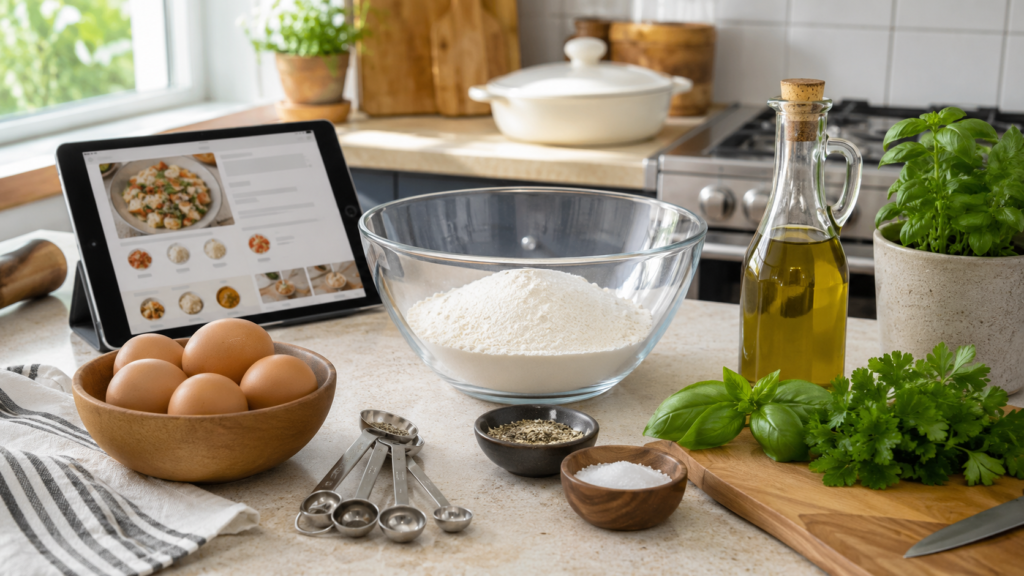
Need help planning your first few confidence-building meals? Use the printable shopping list to organize your ingredients before you cook.
Why Beginner Cooks Lose Confidence
Most people do not lose kitchen confidence because they are bad at cooking.
They lose confidence because recipes often assume too much.
A beginner recipe might say “cook until golden,” but not explain what golden actually looks like. Another recipe might say “season to taste,” but leave you wondering whether that means a pinch of salt or half the shaker.
Even “medium heat” can be confusing. Your stove’s medium heat might behave nicely, while someone else’s acts like a tiny volcano.
After one recipe goes badly, cooking can start to feel risky.
The truth is, cooking is a skill made from small repeatable actions. Once you understand a few basics, recipes start feeling less intimidating.
You begin to notice patterns.
Pasta needs salted water.
Garlic burns quickly.
A crowded pan steams instead of browns.
Chicken needs to be cooked through.
Leftovers need to be cooled, stored, and reheated safely.
Most meals need salt, texture, and something that adds flavor.
That is kitchen confidence.
It is not magic. It is pattern recognition with dinner at the end.
Start With Easy Recipes That Build Skills
The fastest way to build kitchen confidence is not to cook complicated recipes.
Start with simple recipes that teach useful skills.
A good beginner recipe should help you learn one or two things at a time. When a recipe has too many new ingredients, tools, and techniques, it can become frustrating fast.
Good confidence-building meals include:
Scrambled eggs
Simple pasta
Rice bowls
Quesadillas
Sheet pan potatoes
Air fryer chicken tenders
Ground beef and rice skillet
Bean and cheese burritos
Easy oatmeal bowls
Simple mug cakes
These recipes may look basic, but they teach important kitchen skills.
Scrambled eggs teach heat control. Pasta teaches timing. Rice bowls teach meal building. Quesadillas teach pan cooking. Sheet pan meals teach roasting. Air fryer recipes teach texture and doneness. Skillet meals teach seasoning and layering flavor.
That is how real kitchen confidence grows.
One small win at a time.
The 5-Part Kitchen Confidence Formula
When you do not know what to cook, use this simple formula:
Base + protein + vegetable + flavor + texture = real meal
That is it.
You do not always need a complicated recipe. A simple structure can get you most of the way there.
1. Choose a Base
Your base makes the meal filling.
Good beginner bases include:
Rice
Pasta
Potatoes
Tortillas
Bread
Oats
Salad greens
Noodles
2. Add a Protein
Protein helps the meal feel satisfying.
Beginner-friendly proteins include:
Eggs
Beans
Chicken
Ground beef
Ground turkey
Tuna
Yogurt
Cheese
Lentils
3. Add a Vegetable
Vegetables can be fresh, frozen, or canned.
Easy options include:
Frozen peas
Frozen broccoli
Bagged salad
Carrots
Canned corn
Canned tomatoes
Bell peppers
Onions
Potatoes
Spinach
4. Add Flavor
Flavor does not need to be complicated.
Start with:
Salt
Pepper
Garlic powder
Onion powder
Paprika
Italian seasoning
Chili powder
Soy sauce
Salsa
Hot sauce
Broth
Lemon juice
Cheese
5. Add Texture
Texture makes simple food feel more finished.
Try:
Crispy potatoes
Toasted tortillas
Crushed crackers
Toasted breadcrumbs
Fresh lettuce
Shredded cheese
Chopped nuts
Air-fried vegetables
Once you understand this formula, cooking becomes less mysterious.
Rice + eggs + frozen peas + soy sauce + crispy edges = fried rice.
Tortilla + beans + cheese + salsa + toasted outside = quesadilla.
Potatoes + eggs + onions + hot sauce + crisp edges = breakfast hash.
Pasta + tuna + peas + butter + breadcrumbs = pantry pasta.
That is kitchen confidence in action.
Beginner Cooking Skills That Make Everything Easier
You do not need to learn every cooking skill at once. Start with the basics that show up again and again.
Read the Whole Recipe First
Before you start cooking, read the full recipe.
This helps you catch hidden steps like preheating the oven, using cooked rice, chilling dough, cutting chicken into small pieces, saving pasta water, or letting food rest before slicing.
A quick read-through makes the recipe feel less chaotic.
Prep Before the Heat Is On
Chop, measure, open cans, and gather tools before you start cooking.
Once the pan is hot, things move faster.
No one wants to be frantically searching for garlic powder while the butter is turning suspiciously brown.
Use Medium Heat More Often
High heat feels faster, but it can ruin beginner meals quickly.
Medium heat gives you more control. It helps food cook more evenly and gives you time to adjust.
Use high heat when a recipe clearly calls for it. Otherwise, medium is usually a safer starting point.
Season in Small Steps
Seasoning is one of the biggest confidence builders.
Start small. Taste when it is safe to taste, then add more if needed.
Salt brings out flavor. Garlic powder and onion powder add savory depth. Paprika adds color and warmth. Acid, like lemon juice or vinegar, can brighten food that tastes flat.
You do not need a giant spice rack to make good food.
Learn How to Check Doneness
Cooking time is a guide, not a guarantee.
Food thickness, pan size, oven temperature, air fryer model, and ingredient size can all change how long something takes.
For chicken, Mistakenly Delicious follows the safety rule that chicken should reach 165°F internal temperature. Food safety notes are especially important for meat, poultry, eggs, dairy, and leftovers.
A basic instant-read thermometer is one of the best kitchen confidence tools you can buy.
Simple Meals That Build Kitchen Confidence
Here are easy meal types that help beginner cooks practice without getting overwhelmed.
Quesadillas
Quesadillas are great for beginners because they are flexible and forgiving.
Use tortillas, cheese, beans, chicken, vegetables, or leftovers. Cook in a skillet until the outside is crisp and the cheese melts.
Skill learned: pan heat, flipping, and using leftovers.
Pasta Bowls
Pasta is a beginner classic for a reason.
Boil pasta, save a little pasta water, then mix it with butter, sauce, cheese, vegetables, tuna, chicken, or ground meat.
Skill learned: timing, sauces, and seasoning.
Rice Bowls
Rice bowls are one of the easiest ways to turn leftovers into a meal.
Start with rice, then add protein, vegetables, and sauce.
Skill learned: meal building, reheating, and flavor combinations.
Sheet Pan Meals
Sheet pan meals are beginner-friendly because the oven does most of the work.
Try potatoes, sausage, chicken, carrots, onions, broccoli, or bell peppers.
Skill learned: roasting, spacing food, and checking texture.
Air Fryer Recipes
Air fryer recipes can help beginners get crispier results without deep frying.
Avoid overcrowding the basket, and always check that meat is cooked through.
Skill learned: timing, texture, and doneness.
Simple Soups
Soup is forgiving because you can adjust it as it cooks.
Start with broth, canned tomatoes, beans, vegetables, rice, pasta, chicken, or seasonings.
Skill learned: simmering, tasting, and adjusting flavor.
How to Recover From Common Kitchen Mistakes
Kitchen confidence grows when you realize mistakes are usually fixable.
Food Tastes Bland
Add a little salt first. Then consider garlic powder, onion powder, pepper, lemon juice, hot sauce, salsa, cheese, or broth.
Bland food usually needs salt, acid, fat, or seasoning.
Food Is Too Salty
Add more unsalted ingredients if possible.
For soups, add broth, water, rice, potatoes, beans, or vegetables. pasta, add more pasta or sauce. And For bowls, add a plain base like rice or potatoes.
Food Is Too Dry
Add moisture.
Depending on the recipe, try broth, sauce, butter, olive oil, yogurt, sour cream, salsa, pasta water, or a little milk.
Food Is Too Spicy
Add something creamy, starchy, or slightly sweet.
Rice, potatoes, bread, yogurt, sour cream, cheese, or a small amount of honey can help balance heat.
Food Is Burned
If only the bottom is burned, do not scrape the burnt part into the rest of the food.
Move the unburned portion to a clean pan or dish. Taste it, then decide whether it can be saved with sauce, seasoning, or a fresh side.
And then forgive yourself.
Every cook has created at least one “well, that was educational” dinner.
Ingredient Swaps Build Confidence
One of the biggest beginner cooking breakthroughs is learning that recipes are not always as fragile as they seem.
Some recipes need exact measurements, especially baking. Many everyday meals, though, can handle simple swaps.
Common beginner swaps include:
Rice instead of pasta
Pasta instead of rice
Ground turkey instead of ground beef
Canned beans instead of meat
Frozen vegetables instead of fresh
Greek yogurt instead of sour cream
Tortillas instead of bread
Chicken broth instead of water for more flavor
Garlic powder instead of fresh garlic
Onion powder instead of chopped onion
Ingredient swaps help you cook with what you have, waste less food, and avoid unnecessary grocery trips.
That is a huge part of kitchen confidence.
Food Safety Is Part of Kitchen Confidence
Confidence does not mean guessing.
It means knowing the basics well enough to cook safely.
Important beginner safety habits include washing hands before cooking, keeping raw meat separate from ready-to-eat foods, using clean cutting boards and utensils, and checking safe internal temperatures when needed.
Chicken should reach 165°F. Leftovers should be refrigerated promptly and reheated until hot all the way through. For casseroles and leftovers, 165°F is also the safe target when checked with a food thermometer.
Do not rely on cooking time alone. Appliance strength, ingredient size, and food thickness can all change the timing.
Food safety does not need to be scary. It just needs to be part of the routine.
Mistakenly Delicious keeps safety notes practical because real-life cooks need clear guidance, especially with chicken, meat, poultry, eggs, dairy, and leftovers.
What to Keep in Your Kitchen for Easy Confidence
You do not need a professional kitchen setup.
A beginner kitchen can do a lot with a few basics.
Helpful Tools
Skillet
Saucepan
Sheet pan
Mixing bowl
Cutting board
Sharp knife
Measuring cups
Measuring spoons
Spatula
Wooden spoon
Can opener
Instant-read thermometer
Storage containers
Helpful Ingredients
Rice
Pasta
Potatoes
Eggs
Beans
Tortillas
Oats
Canned tomatoes
Frozen vegetables
Chicken or ground meat
Cheese
Butter or oil
Salt
Pepper
Garlic powder
Onion powder
Paprika
Italian seasoning
Soy sauce
Salsa
With these tools and ingredients, you can make a lot of beginner meals without needing a complicated plan.
How to Practice Without Getting Overwhelmed
The best way to build kitchen confidence is to repeat simple meals.
Do not cook something new every night.
That sounds fun online, but in real life it can be exhausting.
Instead, pick three beginner meals and repeat them until they feel easy.
For example, choose one pasta meal, one rice bowl, and one skillet dinner.
Once those feel comfortable, add one new recipe.
This is how cooking starts to feel normal instead of stressful.
You are not failing because you repeat meals.
You are building skill.
Beginner Recipe Guide
Start with the hub pages below, or jump straight into an easy recipe, budget meal, air fryer idea, quick dessert, or beginner cooking tip.
Start Here: Hub Pages
Easy Dinner Recipes
- Quick and Easy Weeknight Dinners
- Easy Garlic Butter Chicken Bites
- Creamy Chicken Pasta for Beginners
- Chicken Taco Rice Bowls
- One-Pot Tomato Pasta
- Sheet Pan Sausage and Potatoes
- Easy Egg Fried Rice
- What to Make With Ground Beef and Rice
- Easy Chicken Breast Dinner Ideas
- Simple Chicken Thigh Dinners
- Easy Pork Chop Dinner
- Simple Beef Stroganoff for Beginners
- Easy Pasta Recipes for Beginners
- Simple Lasagna for Beginner Cooks
- Easy Mac and Cheese for Beginners
- Easy Vegetable Soup for Beginners
- Canned Chicken Recipes for Beginners
Budget Meals
- Budget-Friendly Meal Ideas
- Budget Tuna Pasta Bake
- Budget Ground Beef and Rice Skillet
- Cheap Pantry Meals for Beginner Cooks
- Budget Meal Planning for Beginners
- Cheap Dinners with Rice and Beans
- Affordable Meals with Eggs
- Cheap Potato Dinners
- What to Cook When You Are Low on Groceries
- Simple Pantry Soup
- How to Make Cheap Meals Taste Better
Air Fryer Recipes
Quick Desserts and Beginner Baking
Beginner Cooking Guides and Kitchen Tips
FAQ
How do I get more confident in the kitchen?
Start with simple recipes, read the full recipe before cooking, prep ingredients first, use medium heat, practice basic meals repeatedly, and learn how to check when food is done safely.
What should a beginner cook first?
A beginner should start with forgiving meals like scrambled eggs, quesadillas, pasta, rice bowls, air fryer potatoes, sheet pan meals, and simple skillet dinners.
Why do I feel nervous when cooking?
Cooking can feel stressful when recipes assume you already know basic techniques. Confidence grows when you learn small skills like prepping ingredients, controlling heat, seasoning food, and checking doneness.
What is the easiest way to learn cooking?
The easiest way to learn cooking is to repeat simple meals. Pick a few beginner recipes and make them several times until the steps feel familiar.
Do I need expensive tools to cook well?
No. A beginner cook can do a lot with a skillet, saucepan, sheet pan, cutting board, knife, measuring tools, spatula, mixing bowl, and instant-read thermometer.
Final Takeaway
Kitchen confidence is not about becoming a perfect cook.
It is about knowing enough to start.
Begin with simple recipes. Learn basic skills. Keep a few reliable ingredients around. Use swaps when needed. Check food safely. Repeat meals until they feel easier.
Every confident cook started as a beginner who had to figure out what “medium heat” meant.
You are allowed to learn as you go.
That is the whole point.
Helpful Recipe Resources
Trusted Food, Cooking, and Recipe References
Mistakenly Delicious uses AI-assisted workflows, but useful recipes still need common sense, food safety checks, and reliable cooking references. These resources can help with ingredients, nutrition, safe temperatures, and the AI workflow behind this site.
Ingredient Data
USDA FoodData Central
A useful reference for checking ingredient and nutrition data when reviewing recipes.
Visit Resource →Cooking Help
Nutrition.gov Cooking Tips
Beginner-friendly guidance for meal prep, cooking basics, shopping, and planning.
Visit Resource →Food Safety
Safe Cooking Temperatures
A helpful food safety chart for checking safe internal temperatures for chicken, meat, seafood, and leftovers.
Visit Resource →Creator Workflow
TechnofluxAI
The AI workflow and creator systems site behind Mistakenly Delicious.
Visit TechnofluxAI →About Mistakenly Delicious
AI-Assisted Recipes for Real-Life Kitchens
Mistakenly Delicious creates beginner-friendly recipes, ingredient swaps, kitchen tips, and easy meal ideas with help from AI-assisted workflows. Every post is designed to be practical, readable, and useful for real home cooks.
Recipes may be created with AI assistance, but they should always be reviewed for ingredient logic, cooking times, food safety notes, substitutions, and real-world usefulness before publishing.