Beginner-Friendly Recipe
Easy Baked Spaghetti
A practical, beginner-friendly easy baked spaghetti recipe with clear steps, useful substitutions, and dependable storage tips.
How This Recipe Comes Together
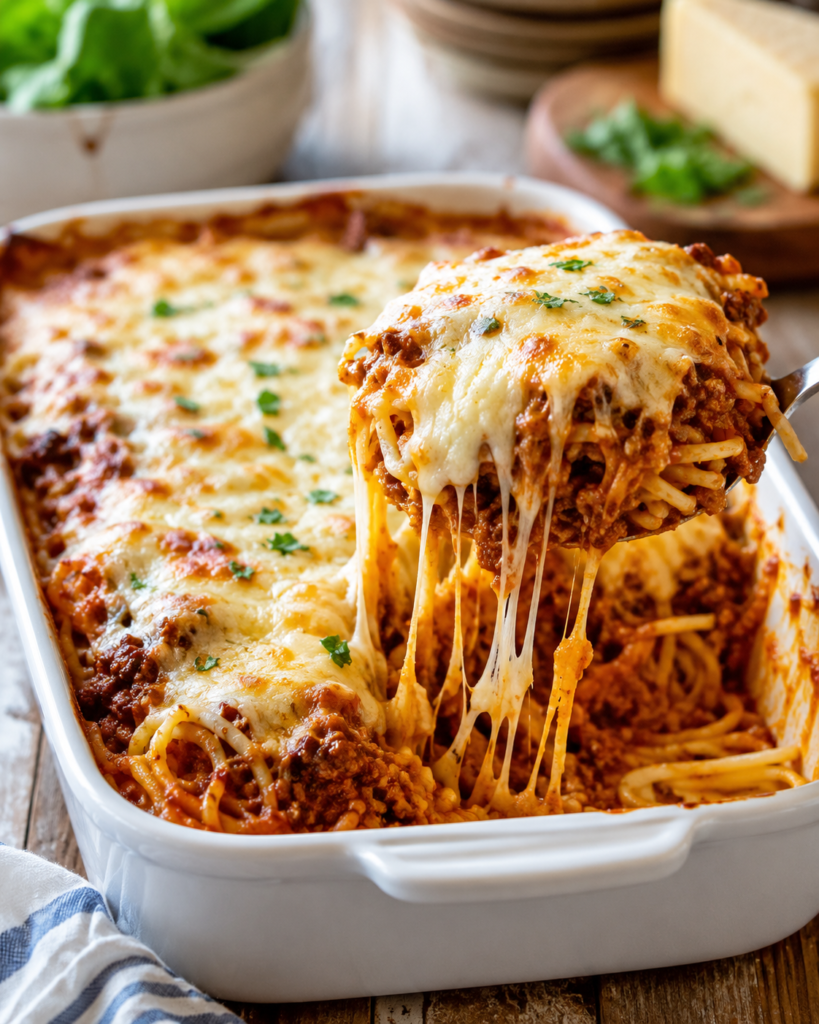
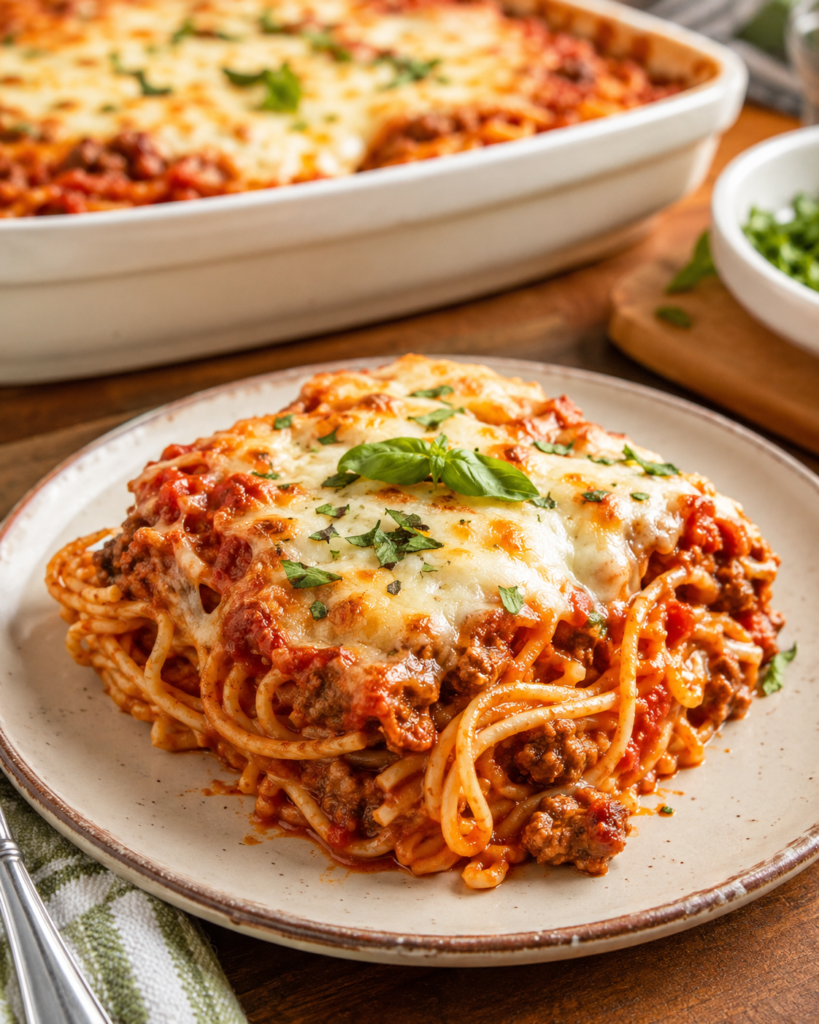
The preparation is divided into three simple parts: cooking the pasta, preparing the meat sauce, and mixing the creamy cheese layer. Once those components are ready, everything is layered in a baking dish and finished in the oven.
Begin the sauce by softening the onion and browning the ground beef. Garlic and Italian seasoning are added after the beef is cooked so their flavors remain noticeable without burning. Marinara is then stirred into the skillet and warmed until the sauce is evenly combined.
While the sauce simmers, combine the ricotta with egg, Parmesan, and seasoning. The egg helps bind the creamy layer as it bakes. The drained spaghetti is coated with some of the sauce before the casserole is assembled.
A thin layer of sauce protects the bottom of the baking dish. Half of the sauced spaghetti is added next, followed by the ricotta mixture, mozzarella, the remaining spaghetti, and the rest of the meat sauce. A final layer of mozzarella and Parmesan creates the bubbling, lightly browned top.
Covering the casserole during the first part of baking keeps the pasta moist and allows the center to heat evenly. Removing the foil near the end gives the cheese time to melt and develop golden spots.
Storage and Reheating
Refrigerating Leftovers
Transfer cooled leftovers to shallow, airtight containers and refrigerate them promptly. For best quality and food safety, use refrigerated baked spaghetti within three to four days.
Freezing
Freeze individual portions in freezer-safe containers for convenient lunches or dinners. For the best texture, use frozen portions within about two to three months. Thaw overnight in the refrigerator before reheating whenever possible.
Reheating
Cover a portion before reheating so the pasta does not dry out. Add a spoonful of marinara or water if the spaghetti appears dry. Reheat leftovers until hot throughout and they reach 165 degrees F.
Food Safety Note
Cook ground beef to a minimum internal temperature of 160 degrees F as measured with a food thermometer. Refrigerate the assembled casserole before baking if it will not go into the oven immediately. Perishable food and leftovers should not remain at room temperature for longer than two hours.
Common Mistakes to Avoid
Cooking the Spaghetti Completely Before Baking
Fully cooked pasta can become too soft after spending additional time in the oven. Drain it while it is still firmer than you would normally serve it.
Using Too Little Sauce
The pasta absorbs moisture while baking. Coating the noodles thoroughly and spreading sauce between the layers helps keep the casserole moist.
Adding Watery Vegetables Directly to the Casserole
Mushrooms, zucchini, spinach, and similar vegetables release moisture as they cook. Saute them first and allow excess liquid to evaporate before adding them to the sauce.
Skipping the Resting Time
The casserole will be very loose immediately after it leaves the oven. A short rest allows the cheese layer and sauce to settle so the spaghetti can be served more neatly.
Baking a Cold Casserole Without Extra Time
A casserole assembled and refrigerated in advance will take longer to heat than one baked immediately. Keep it covered during the initial baking period and confirm that the center is thoroughly hot before serving.
Easy Baked Spaghetti
Ingredients
Equipment
Method
- Preheat the oven to 375 degrees F. Lightly grease a 9-by-13-inch baking dish.
- Bring a large pot of salted water to a boil. Add the spaghetti and cook it for about two minutes less than the package's recommended al dente time. Drain well.
- While the pasta cooks, heat the olive oil in a large skillet over medium heat. Add the diced onion and cook for 3 to 4 minutes, or until softened.
- Add the ground beef to the skillet. Cook for 6 to 8 minutes, breaking it into small pieces, until browned and cooked to an internal temperature of 160 degrees F. Drain excess fat if necessary.
- Stir in the garlic, 1 teaspoon Italian seasoning, 1/2 teaspoon salt, and black pepper. Cook for 30 seconds. Add the marinara and bring the mixture to a gentle simmer. Cook for 3 to 5 minutes, then remove the skillet from the heat.
- In a medium bowl, combine the ricotta, egg, 1/3 cup Parmesan, 1/2 teaspoon Italian seasoning, and 1/4 teaspoon salt.
- Reserve approximately 1 1/2 cups of the meat sauce. Add the drained spaghetti to the remaining sauce in the skillet and toss until evenly coated.
- Spread about half of the reserved sauce across the bottom of the prepared baking dish. Add half of the sauced spaghetti. Spread the ricotta mixture over the pasta and sprinkle with 1 cup of mozzarella. Add the remaining spaghetti, reserved sauce, remaining 1 cup mozzarella, and 1/4 cup Parmesan.
- Lightly coat the underside of a sheet of foil with nonstick cooking spray and cover the baking dish. Bake for 25 minutes.
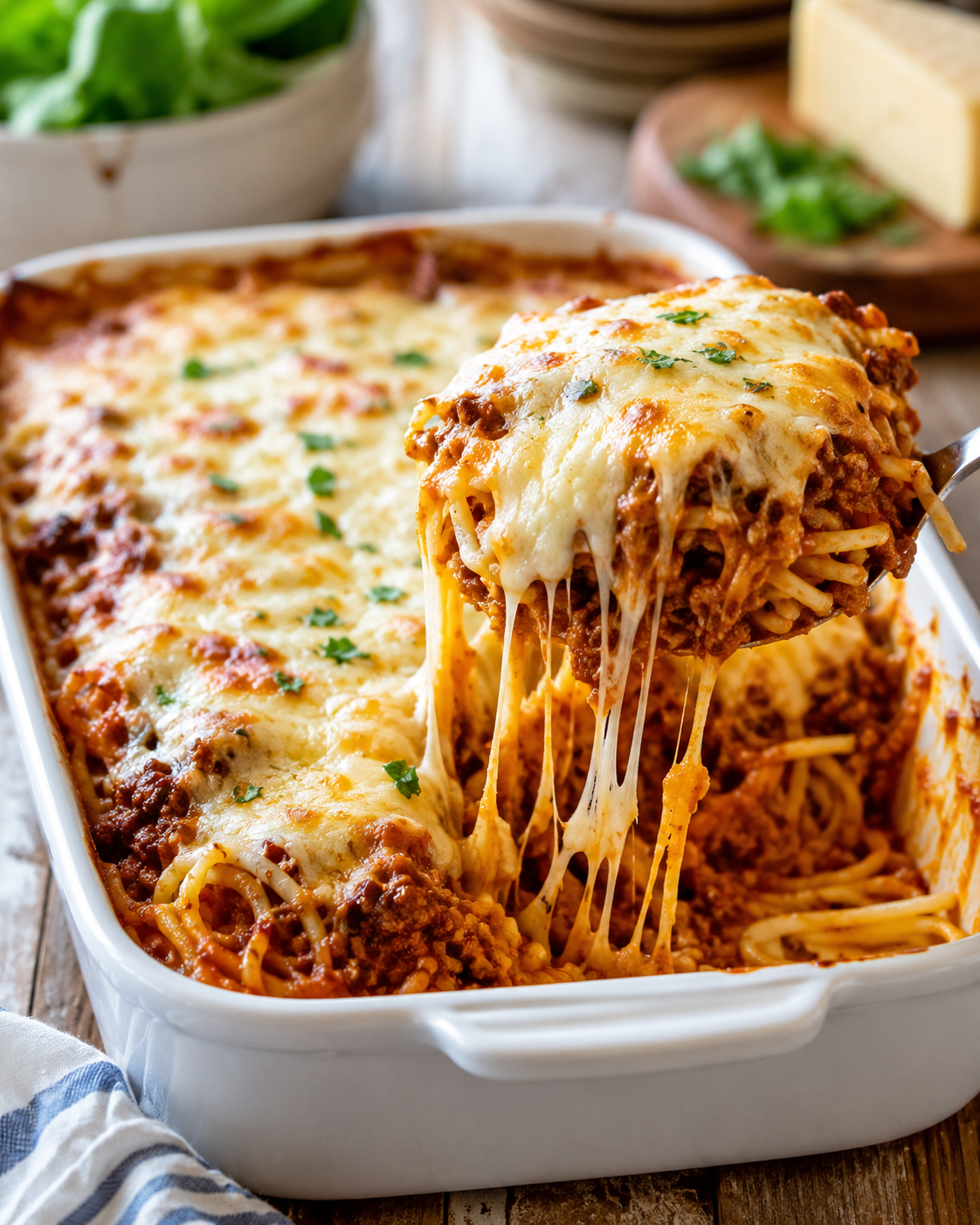
- Remove the foil and bake for another 15 to 20 minutes, or until the sauce is bubbling and the cheese is melted with lightly golden spots.
- Remove the baked spaghetti from the oven and let it rest for 10 minutes. Garnish with chopped parsley, if desired, before serving.
Nutrition
Notes
Ground turkey, mild Italian sausage, or a combination of meats can replace the ground beef.
Small-curd cottage cheese can replace the ricotta. Drain excess liquid before using it.
For additional vegetables, sauté chopped mushrooms, spinach, bell pepper, or zucchini before adding the marinara.
When baking directly from the refrigerator, allow approximately 10 to 15 minutes of additional covered cooking time.
Check that leftovers reach 165 degrees F when reheated.
Nutrition Estimate Serving Size: 1/8 of casserole Calories: 520 Total Fat: 19 g Saturated Fat: 9 g Cholesterol: 90 mg Sodium: 940 mg Total Carbohydrates: 49 g Dietary Fiber: 4 g Total Sugars: 8 g Protein: 36 g
Tried this recipe?
Let us know how it was!Easy Baked Spaghetti FAQ
Could I Assemble Baked Spaghetti Ahead of Time?
Yes. Assemble the casserole, cover it tightly, and refrigerate it for up to 24 hours before baking. A chilled casserole may need approximately 10 to 15 additional minutes in the oven. Keep it covered until the center is hot, then uncover it to finish melting and browning the cheese.
Could I Use Cottage Cheese Instead of Ricotta?
Yes. Use the same amount of cottage cheese in place of the ricotta. Small-curd cottage cheese provides the most even texture. Drain off visible excess liquid before mixing it with the egg and Parmesan.
Can I Use a Different Pasta Shape?
Yes. Ziti, penne, rigatoni, or rotini can be used. Select a sturdy pasta shape and cook it slightly less than the package directions so it does not become too soft in the oven.
Why Did My Baked Spaghetti Turn Out Dry?
Dry baked spaghetti is usually caused by overcooked pasta, too little sauce, an uncovered baking dish, or excessive baking time. Make sure the noodles are thoroughly coated and keep the casserole covered during the first part of baking.
Can I Freeze the Entire Casserole Before Baking?
Yes. Assemble it in a freezer-safe baking dish, wrap it tightly, and freeze it before baking. Thaw it in the refrigerator before placing it in the oven. Do not move a cold glass baking dish directly from the freezer into a hot oven because sudden temperature changes may damage the dish.
How Do I Keep the Foil From Sticking to the Cheese?
Lightly coat the underside of the foil with nonstick cooking spray or tent the foil so it does not touch the cheese. Remove it carefully during the final portion of baking.
What Size Baking Dish Should I Use?
A standard 9-by-13-inch baking dish provides enough room for the pasta, sauce, and cheese layers. A deep dish is especially helpful if your pan has low sides.
Final Notes
This easy baked spaghetti delivers the cozy flavor of a slow, Sunday-style pasta dinner in a practical casserole. The combination of savory meat sauce, creamy ricotta, and melted mozzarella makes it filling enough for a main course while keeping the preparation approachable.
Serve it immediately for a family meal, assemble it ahead for a busy evening, or divide the leftovers into portions for later. A simple salad or vegetable side is all you need to complete the dinner.