
Beginner-Friendly Recipe
Spaghetti Aglio e Olio
A practical, beginner-friendly spaghetti aglio e olio recipe with clear steps, useful substitutions, and dependable storage tips.
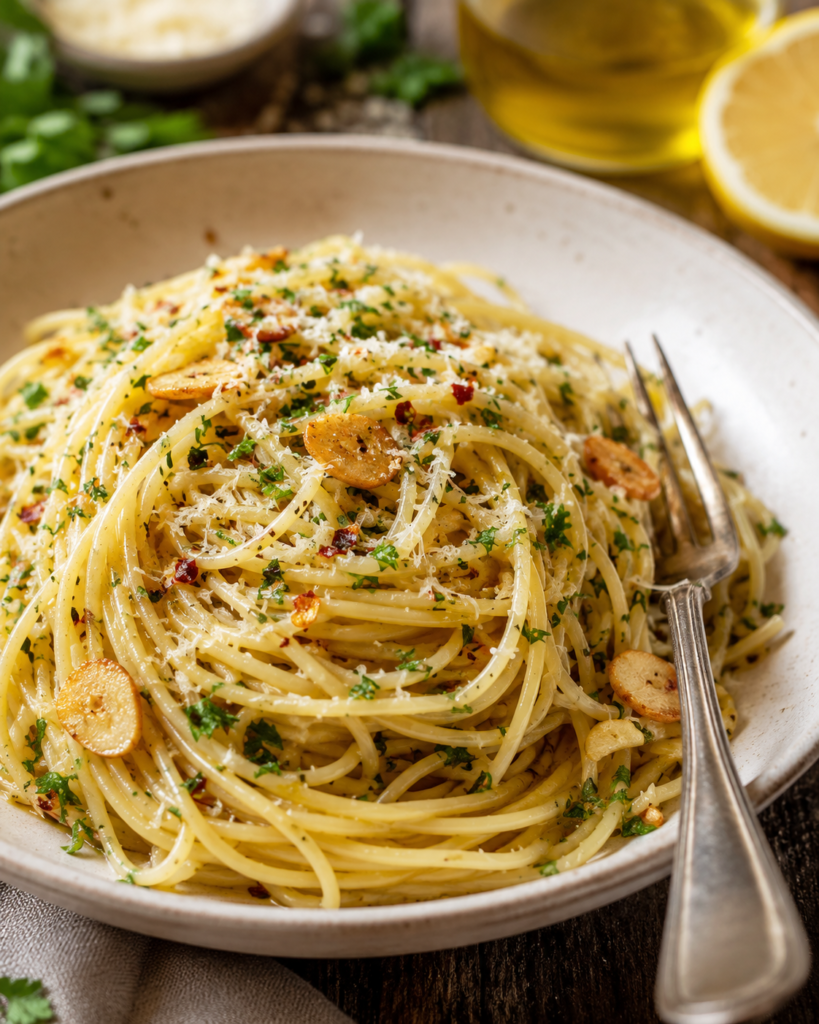
Spaghetti aglio e olio proves that a memorable pasta dinner does not need a long ingredient list. This classic dish combines spaghetti, fresh garlic, olive oil, red pepper flakes, parsley, and pasta water. The result tastes rich, savory, and gently spicy without relying on a heavy sauce.
Because the recipe moves quickly, preparation matters. Have the garlic sliced, parsley chopped, and seasonings measured before the pasta finishes cooking. Once the spaghetti reaches the right texture, the sauce comes together in only a few minutes.
Quick Answer
To make spaghetti aglio e olio, cook spaghetti until just shy of al dente. Meanwhile, gently warm sliced garlic in olive oil until pale golden. Add red pepper flakes, toss in the pasta, and stir in reserved pasta water until the sauce becomes smooth and glossy. Finish with parsley and serve immediately.
Spaghetti Aglio e Olio Ingredients Overview
The ingredient list is short, so every choice influences the final flavor. Spaghetti provides the classic texture, although another long pasta can work in a pinch. Choose a good everyday extra-virgin olive oil with a pleasant flavor rather than an expensive finishing oil.
Fresh garlic gives the dish its signature aroma. Thin, even slices cook at a similar rate and reduce the chance of burned edges. Red pepper flakes bring gentle heat, while fresh parsley adds color and a clean herbal finish.
Salted pasta water is equally important. In addition to seasoning the noodles, the starchy water connects the pasta and oil. Lemon zest, Parmesan, or toasted breadcrumbs can be added, although none of them are required for the traditional-style version.
View the printable recipe and shopping list.
Why This Spaghetti Aglio e Olio Works
Starchy Water Creates a Light Sauce
Olive oil alone can slide off the spaghetti and collect in the pan. However, a splash of starchy pasta water helps the oil spread across the noodles. Vigorous tossing then creates a silky coating with a smoother texture.
Gentle Heat Protects the Garlic
Garlic changes quickly from fragrant to bitter. Therefore, the slices should cook over low or medium-low heat. Pale gold is the goal because the garlic continues to cook after the pasta enters the skillet.
The Pasta Finishes in the Skillet
Removing the spaghetti shortly before it reaches al dente leaves room for additional cooking. The noodles absorb flavor while they finish in the garlic oil and pasta water. As a result, the sauce tastes integrated rather than poured on top.
Simple Garnishes Add Balance
Fresh parsley brightens the rich olive oil, while red pepper flakes provide contrast. Additionally, a small amount of lemon zest can sharpen the flavors without turning the dish into lemon pasta.
Tips for the Best Results
- Prepare everything first: The sauce cooks quickly, so slice the garlic and chop the parsley before draining the pasta.
- Slice the garlic evenly: Similar-sized pieces cook at the same rate and are less likely to burn.
- Start with a cool skillet: Add the garlic and olive oil before turning on the heat. This approach allows their flavors to develop gradually.
- Watch the garlic closely: Remove the skillet from the heat briefly if the slices begin browning too fast.
- Reserve plenty of pasta water: Scoop out at least one cup before draining so you can adjust the sauce.
- Keep the spaghetti moving: Tossing helps distribute the oil, garlic, seasonings, and starchy water.
- Serve it right away: The sauce is most fluid and glossy immediately after cooking.
Serving Ideas and Easy Variations
Spaghetti aglio e olio works well as a simple main course with salad, roasted vegetables, or warm bread. For a heartier dinner, serve it beside grilled chicken, shrimp, salmon, or Italian-style roasted vegetables.
Several easy additions can change the meal without hiding its garlic flavor. For example, stir in baby spinach, sautéed mushrooms, peas, or chopped broccoli. Cooked shrimp can also be tossed into the skillet during the final minute.
For more texture, finish each serving with toasted breadcrumbs. Parmesan or Pecorino Romano adds a salty finish, although the pasta remains flavorful without cheese. Meanwhile, lemon zest offers freshness without adding much liquid.
Gluten-free spaghetti can replace regular pasta. Because gluten-free noodles release and absorb starch differently, add the reserved cooking water gradually. Continue tossing until the sauce lightly coats each strand.
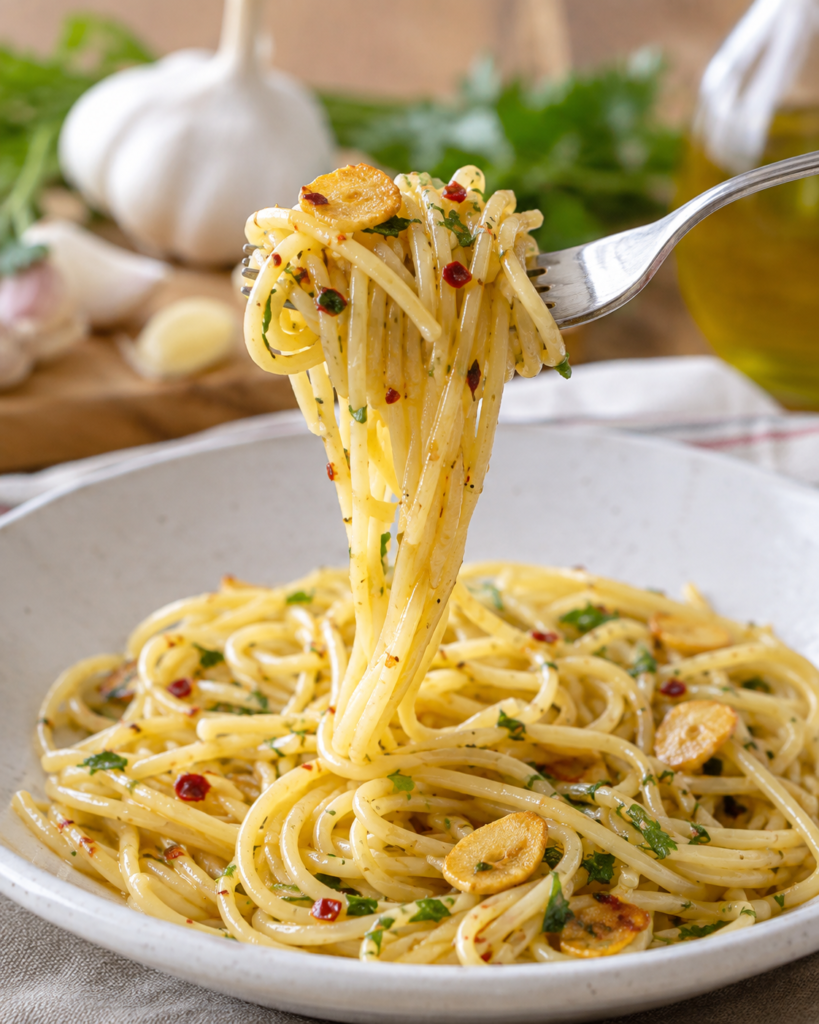
How Spaghetti Aglio e Olio Comes Together
Begin by bringing a large pot of well-salted water to a boil. While the water heats, slice the garlic into thin, even pieces. Chop the parsley and measure the red pepper flakes so everything is ready when needed.
Next, cook the spaghetti until it is slightly firmer than al dente. Before draining, carefully scoop out a generous amount of the starchy cooking water. That reserved liquid gives you control over the sauce’s texture.
While the pasta cooks, combine the sliced garlic and olive oil in a wide skillet. Set the pan over low or medium-low heat. Gentle cooking draws flavor into the oil without scorching the garlic.
Stir or swirl the pan as the slices begin to sizzle. Once the garlic turns pale golden, add the red pepper flakes. The flakes only need a few seconds in the warm oil to release their flavor.
Transfer the drained spaghetti directly to the skillet. Then add a small splash of reserved pasta water and toss continuously. The liquid may look separated at first, but steady movement helps it blend with the olive oil.
Add more pasta water a little at a time until the noodles look glossy. The finished sauce should cling lightly rather than pool in the skillet. Finally, fold in the parsley and adjust the salt or red pepper flakes before serving.
Controlling the Garlic Flavor
Garlic provides the main flavor, yet more garlic does not always produce a better dish. Very thick slices may stay harsh in the center, while tiny pieces can burn before the oil becomes fragrant. Thin, consistent slices offer the most reliable result.
Temperature matters just as much as size. High heat can brown the garlic before its flavor spreads through the oil. Instead, begin slowly and increase the heat only when necessary.
Remove the skillet from the burner if the garlic darkens too quickly. Residual heat will continue cooking the slices. Once burned, garlic tastes bitter and cannot be corrected with extra oil or pasta water.
Getting the Sauce Texture Right
Aglio e olio should taste rich without feeling greasy. To achieve that balance, combine the olive oil with enough starchy water to coat the spaghetti. The exact amount varies because pasta brands and cooking methods release different levels of starch.
Start with a small splash rather than pouring in all the water at once. Toss vigorously and observe the bottom of the skillet. If the pasta appears dry, add another splash. Conversely, keep tossing over gentle heat if the sauce looks watery.
The noodles will continue absorbing liquid after they leave the stove. Therefore, stop cooking while the sauce looks slightly looser than your ideal texture. By the time the pasta reaches the table, it should have a smooth, glossy coating.
Storage and Reheating
Refrigerating Leftovers
Place cooled leftovers in a shallow, airtight container and refrigerate them promptly. For food safety and quality, use refrigerated spaghetti within three to four days.
Freezing
Freezing is possible, but the pasta may become softer after thawing. For better results, divide it into individual portions and use freezer-safe containers. Thaw each portion overnight in the refrigerator before reheating.
Reheating on the Stove
Add the spaghetti to a skillet with a small splash of water. Cover the pan briefly, then toss over medium-low heat until the noodles are hot. A drizzle of fresh olive oil can restore some of the original richness.
Reheating in the Microwave
Place one portion in a microwave-safe dish and sprinkle it with water. Cover loosely, then heat in short intervals. Stir between intervals so the pasta warms evenly and does not dry out.
Food Safety Note
Refrigerate cooked pasta within two hours and use refrigerated leftovers within three to four days. When reheating, warm the spaghetti thoroughly to 165°F.
Do not store a separate homemade mixture of fresh garlic and oil at room temperature. If you prepare extra garlic-infused oil, refrigerate it at 40°F or below and use it within four days, or freeze it for longer storage.
Common Mistakes to Avoid
Burning the Garlic
Dark brown garlic will make the entire dish taste bitter. Use gentle heat, watch the skillet closely, and add the pasta when the slices become pale gold.
Forgetting to Reserve Pasta Water
Plain water cannot provide the same starch concentration. Scoop out the cooking water before draining so you can loosen and emulsify the sauce.
Adding Too Much Oil
Extra olive oil does not guarantee a richer sauce. Instead, too much oil can make the pasta feel heavy and leave a greasy layer on the plate.
Rinsing the Spaghetti
Rinsing removes surface starch that helps the sauce cling. Drain the noodles without rinsing, then transfer them directly to the skillet.
Overcooking the Pasta
Fully cooked spaghetti can become soft while it finishes in the sauce. Drain it slightly early so the noodles remain pleasantly firm.
Letting the Pasta Sit Before Serving
The sauce thickens quickly as it cools. Serve the dish immediately, or loosen it with a spoonful of warm pasta water before plating.
Adding Cold Ingredients at the End
Large amounts of cold cheese, lemon juice, or refrigerated vegetables can cool the pasta. Bring optional additions closer to room temperature or warm them before serving.
Ingredients
- 12 ounces spaghetti
- 1/3 cup extra-virgin olive oil
- 6 garlic cloves, thinly sliced
- 1/4 teaspoon red pepper flakes, or to taste
- 1/2 teaspoon kosher salt
- 1/3 cup chopped fresh parsley
- 1/2 cup grated Parmesan, optional
- 1 tablespoon lemon juice, optional
How to Make Spaghetti Aglio e Olio
- Cook the spaghetti in well-salted boiling water until al dente. Reserve 1 cup pasta water before draining.
- When the pasta is nearly ready, warm the olive oil in a large skillet over medium-low heat.
- Add the sliced garlic and cook slowly for 2 to 4 minutes, stirring often, until pale golden. Do not let it turn dark brown.
- Stir in the pepper flakes and salt, then carefully add 1/2 cup reserved pasta water.
- Add the drained spaghetti and toss over medium heat for 1 to 2 minutes, adding more pasta water a tablespoon at a time until glossy.
- Remove from the heat and toss with parsley, Parmesan, and lemon juice if using. Serve immediately.
Beginner tip: Measure and prepare every ingredient before starting. Use an instant-read thermometer whenever a safe internal temperature is listed.
Mistakenly Delicious Kitchen Picks
Helpful Kitchen Tools for Easier Cooking
These beginner-friendly guides and kitchen picks can make cooking, baking, food-safety checks, and meal prep easier.
Affiliate disclosure: This section contains Amazon affiliate links. As an Amazon Associate, I earn from qualifying purchases at no additional cost to you.
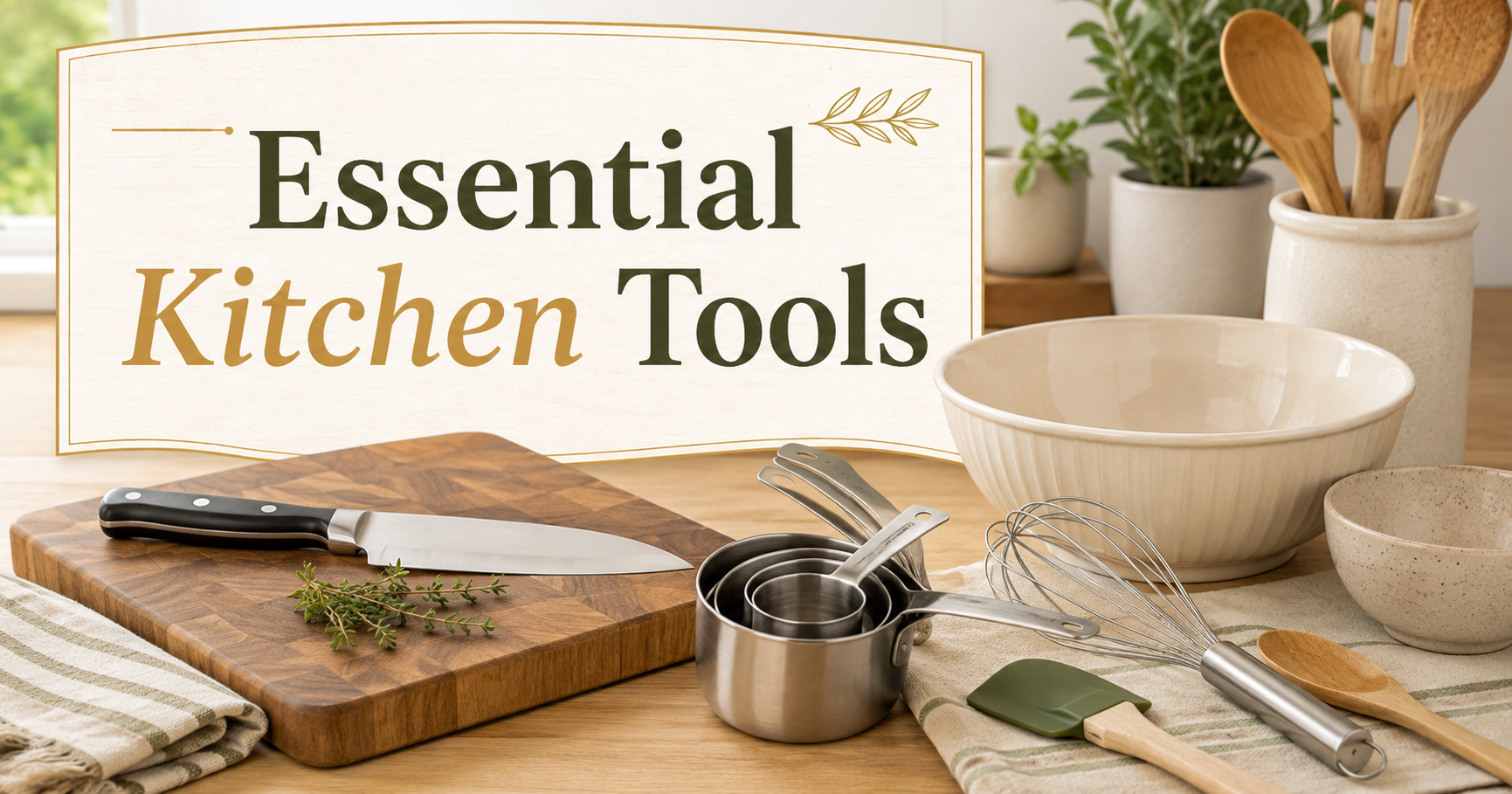
Essential Kitchen Tools for Beginner Cooks
Start with practical everyday tools instead of filling your kitchen with gadgets you may rarely use.
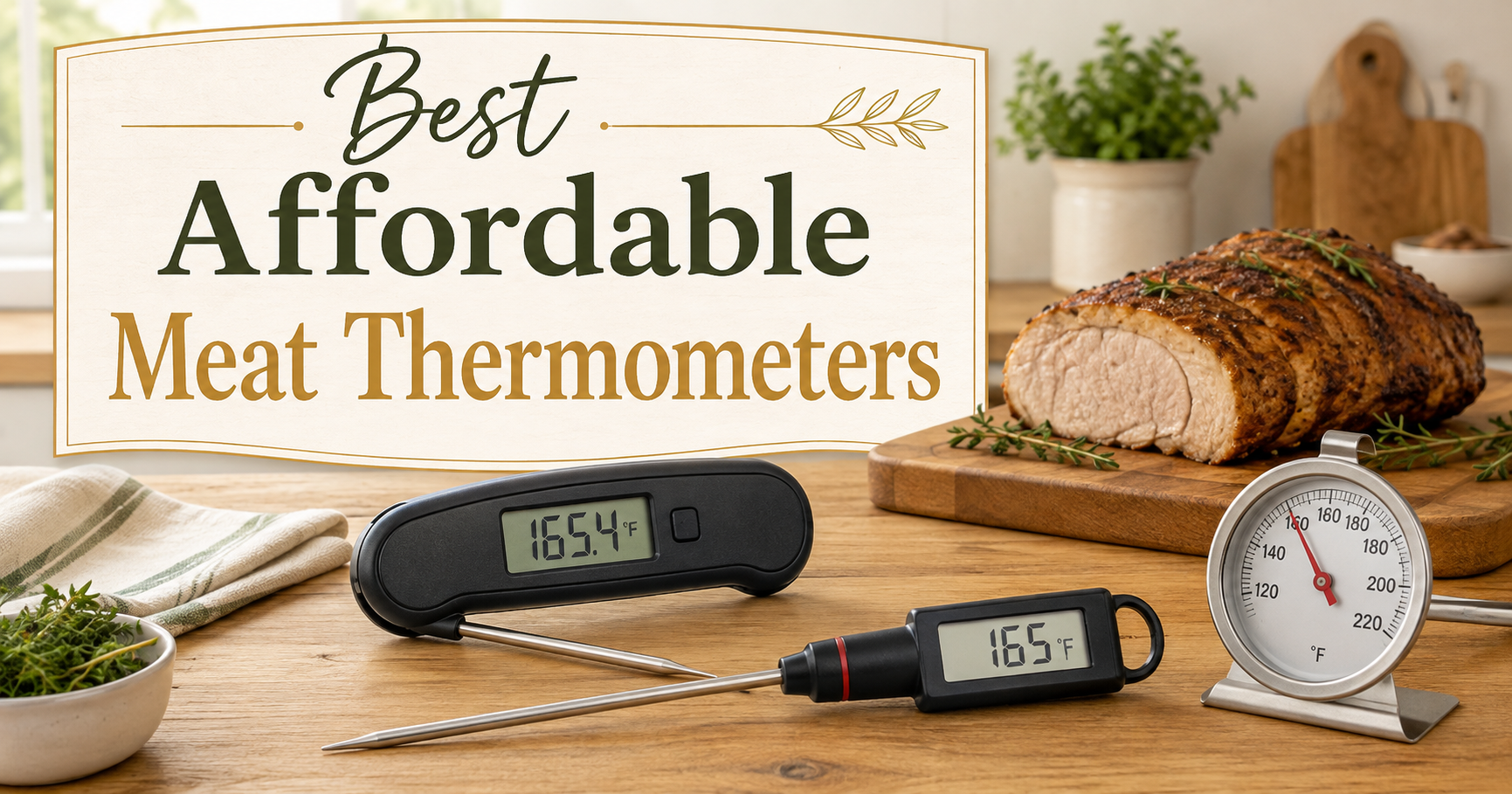
Best Affordable Meat Thermometers
Check chicken, burgers, roasts, and other foods without guessing whether the center is fully cooked.
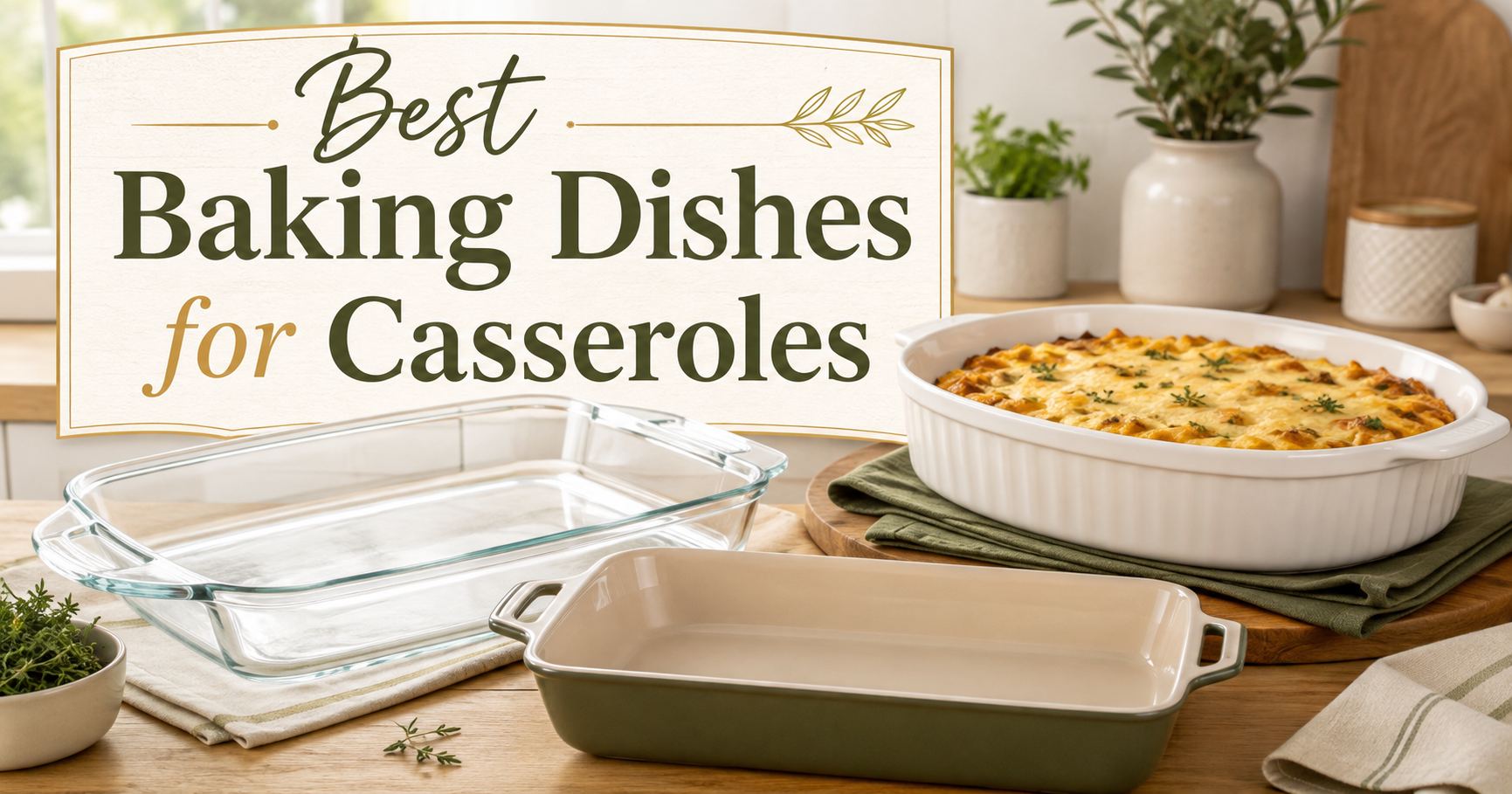
Best Baking Dishes for Casseroles
Compare dependable baking dishes for casseroles, rice bakes, biscuit bakes, desserts, and family meals.
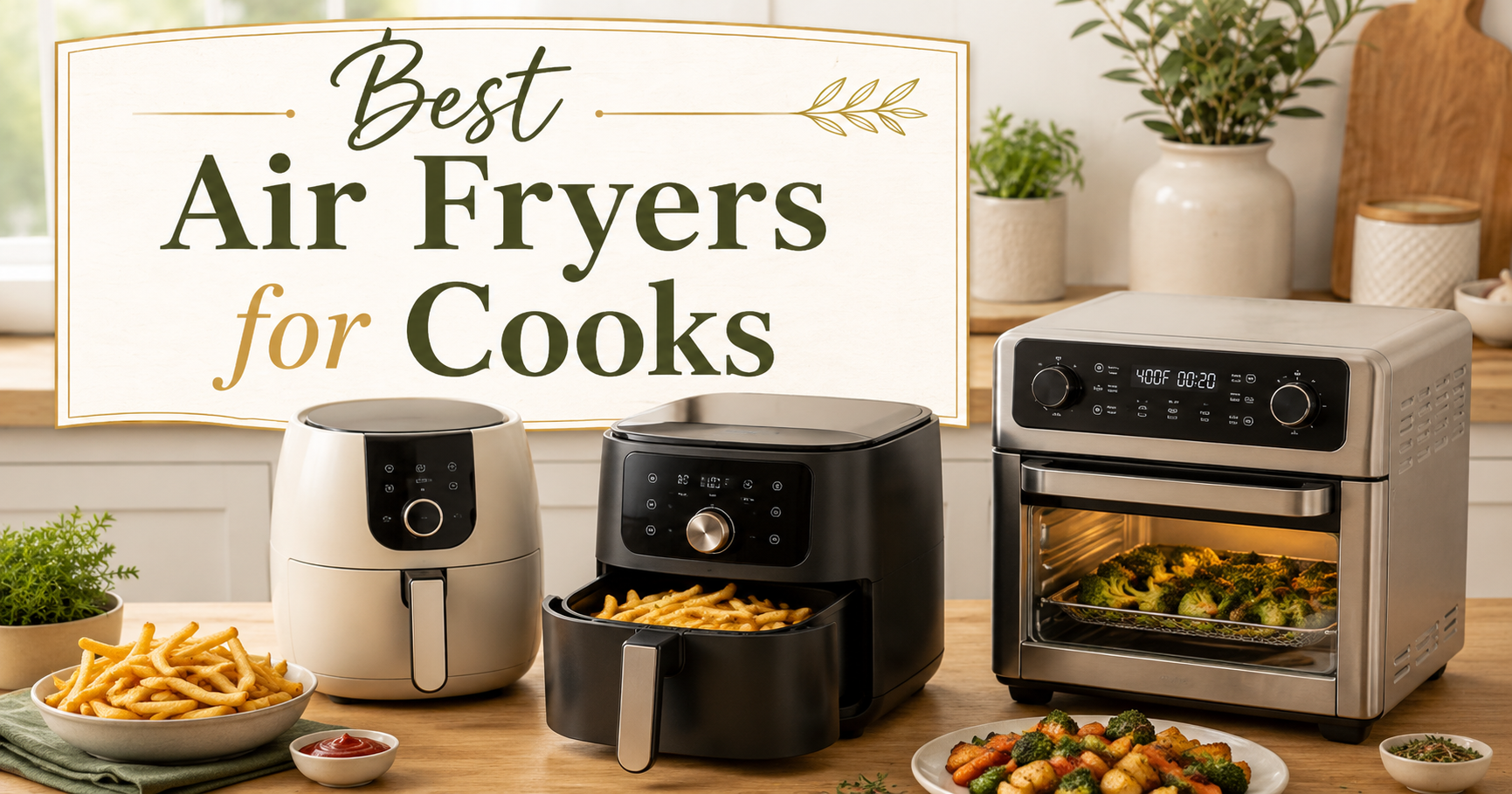
Best Air Fryers for Beginner Cooks
Find a beginner-friendly air fryer for crispy foods, quick dinners, reheating leftovers, and smaller meals.
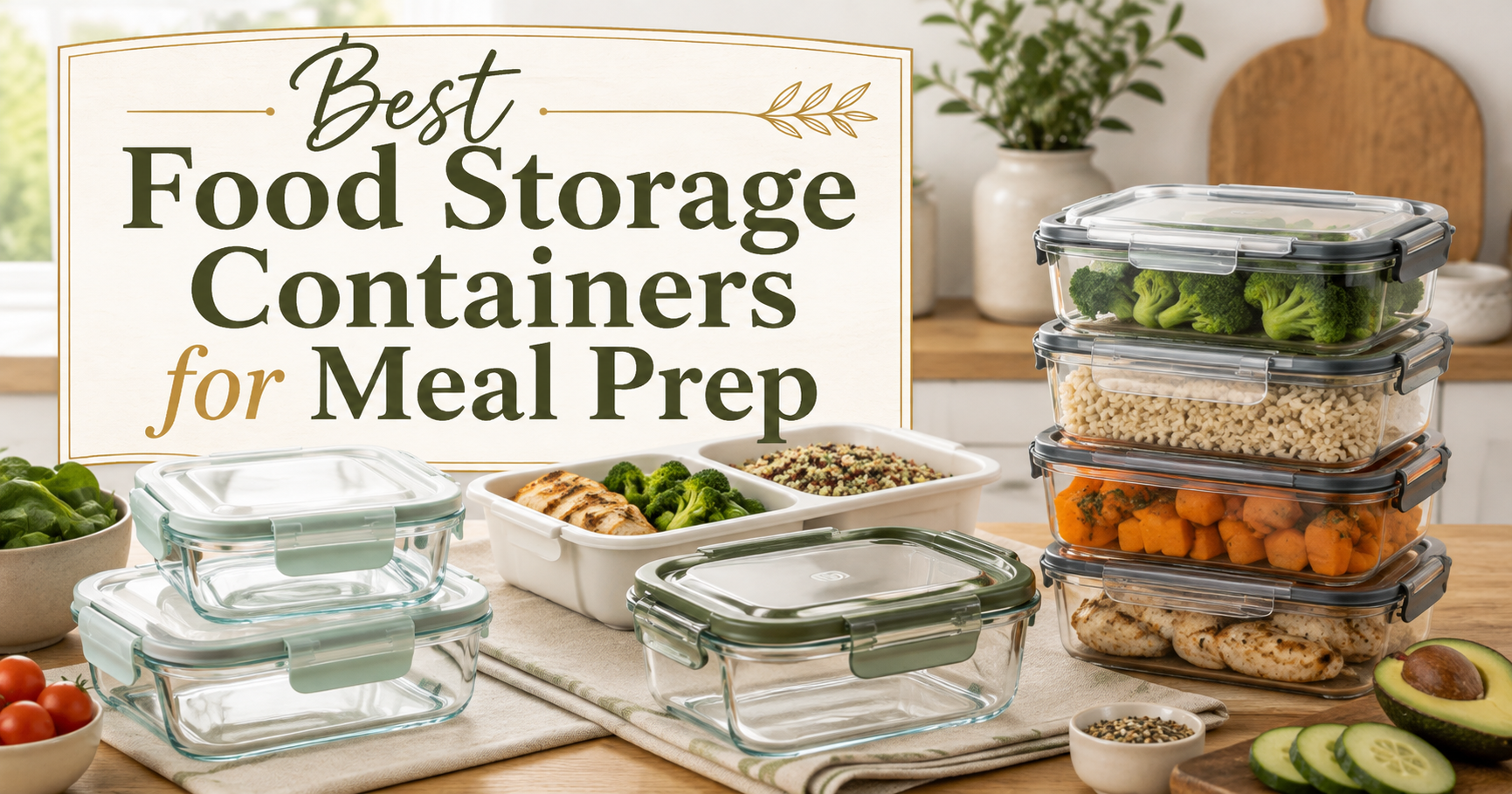
Best Food Storage Containers for Meal Prep
Store leftovers, lunches, freezer meals, and weekly meal-prep portions more neatly.

Featured Kitchen Pick
Explore another practical kitchen pick that can make everyday cooking and food preparation easier.
Spaghetti Aglio e Olio
Method
- Bring a large pot of water to a boil. Add the kosher salt and spaghetti. Cook the pasta for about two minutes less than the package’s recommended al dente time.
- Before draining the spaghetti, carefully reserve at least 1 cup of the starchy pasta cooking water. Drain the pasta without rinsing it.
- While the spaghetti cooks, add the olive oil and sliced garlic to a large, cool skillet. Place the skillet over low to medium-low heat.
- Cook the garlic for 4 to 6 minutes, stirring or swirling the skillet frequently. The garlic should become fragrant and pale golden but not dark brown.
- Add the red pepper flakes and cook for about 15 seconds. Remove the skillet from the heat briefly if the garlic begins browning too quickly.
- Add the drained spaghetti to the skillet. Pour in 1/2 cup of the reserved pasta water and return the skillet to medium heat.
- Toss the spaghetti continuously for 2 to 3 minutes. Add more pasta water, 1 or 2 tablespoons at a time, until the olive oil and water form a glossy sauce that lightly coats the noodles.
- Remove the skillet from the heat. Add the parsley, black pepper, and optional lemon zest. Toss until evenly distributed.
- Taste and add salt if needed. Serve immediately with optional Parmesan or Pecorino Romano
Notes
Start the garlic in a cool skillet with the olive oil. Gradual heating draws out the flavor and reduces the risk of burning.
Pale golden garlic is ideal. Dark brown garlic can make the entire dish taste bitter.
Reserve the pasta water before draining. Its starch helps the olive oil form a smooth sauce.
Add the pasta water gradually because the exact amount needed will vary.
Do not rinse the spaghetti. Surface starch helps the sauce cling to the noodles.
For a milder dish, reduce or omit the red pepper flakes.
Refrigerate leftovers in an airtight container and use them within three to four days.
Do not store homemade fresh garlic and oil mixtures at room temperature.
Nutrition Estimate Serving Size: 1/4 of recipe Calories: 480 Total Fat: 20 g Saturated Fat: 3 g Cholesterol: 0 mg Sodium: 330 mg Total Carbohydrates: 65 g Dietary Fiber: 3 g Total Sugars: 3 g Protein: 12 g Nutrition values are estimates and do not include optional cheese. Actual values will vary according to the pasta, olive oil, salt, and serving size used.
Tried this recipe?
Let us know how it was!Nutrition Information Disclaimer
Nutrition information is provided as an estimate only and may vary based on the ingredients, brands, portion sizes, substitutions, and preparation methods used. Optional toppings and serving suggestions may not be included in the calculation. For the most accurate information, calculate nutrition using the specific ingredients and amounts you use.
Allergy notice: Always check ingredient labels and avoid substitutions that may introduce allergens. This recipe has not been verified as allergen-free.
Spaghetti Aglio e Olio FAQ
What Does Aglio e Olio Mean?
The Italian phrase refers to garlic and oil, the two ingredients that define the dish. Although the recipe is simple, careful heat control and starchy pasta water create its characteristic flavor and texture.
Can I Use Minced Garlic Instead of Sliced Garlic?
Yes, but minced garlic cooks much faster and burns easily. Keep the heat low and stir constantly. Add the pasta as soon as the garlic becomes fragrant and lightly golden.
Why Is My Aglio e Olio Greasy?
The sauce may turn greasy when the olive oil and pasta water do not combine. Add warm, starchy water in small amounts while tossing the spaghetti vigorously. A wide skillet also gives the noodles enough room to move.
Why Is My Garlic Bitter?
Garlic becomes bitter when it cooks too long or turns dark brown. Begin with low heat and remove the skillet from the burner if the slices color too quickly.
How Spicy Is Spaghetti Aglio e Olio?
The heat level depends on the amount and strength of the red pepper flakes. Start with a small quantity for gentle warmth. Additional flakes can be added at the table for anyone who prefers more heat.
Can I Make This Recipe Without Red Pepper Flakes?
Yes. Leave them out for a mild garlic and olive oil pasta. Freshly ground black pepper can provide a softer form of heat, although it changes the traditional flavor slightly.
Can I Add Parmesan Cheese?
Yes. Finely grated Parmesan adds saltiness and a creamy texture. Remove the skillet from direct heat before adding it so the cheese melts smoothly instead of forming clumps.
What Type of Olive Oil Should I Use?
A flavorful extra-virgin olive oil works well because the recipe contains few ingredients. However, an affordable everyday bottle is sufficient. Save very delicate or expensive finishing oils for drizzling over the plated pasta.
Can I Use Another Pasta Shape?
Long pasta shapes such as linguine, bucatini, or thin spaghetti work especially well. Short pasta can also be used, although the finished dish will have a different appearance and eating experience.
How Do I Keep the Parsley Bright?
Add chopped parsley after removing the skillet from strong heat. This timing preserves its fresh flavor and green color. You can also reserve a small amount for garnishing each serving.
Can I Make Aglio e Olio Ahead of Time?
The dish tastes best immediately after cooking because the sauce thickens as it sits. Still, you can prepare the garlic, parsley, and seasonings in advance. Cook the pasta and finish the sauce shortly before serving.
Can I Add Protein?
Yes. Shrimp, chicken, white beans, or canned tuna can turn the pasta into a heartier meal. Cook the protein separately when needed, then add it during the final tossing stage.
What Can I Use Instead of Parsley?
Fresh basil offers a sweeter flavor, while chopped arugula adds a peppery finish. Chives can also work. Dried parsley is less vibrant, so use it sparingly and add it earlier to soften.
Final Notes
Spaghetti aglio e olio transforms a few kitchen staples into a satisfying meal. However, its simplicity makes technique especially important. Gentle heat protects the garlic, while starchy water turns the olive oil into a light sauce.
Prepare the ingredients before the pasta finishes and keep the skillet nearby. Once cooking begins, watch the garlic closely and adjust the sauce one splash of water at a time. These small steps create better flavor without making the recipe complicated.
Serve the pasta as a quick main course or pair it with vegetables and protein. Either way, bring it to the table promptly so the spaghetti stays glossy, warm, and pleasantly firm.
Trusted Resources
Easy Substitutions
- Use half parsley and half basil
- Skip Parmesan for a dairy-free meal
- Add one drained can of white beans for protein
Storage and Reheating
Cool leftovers promptly in shallow containers, refrigerate within 2 hours, and use within 3 to 4 days. Reheat hot leftovers to 165°F; bring soups and gravies to a rolling boil. Freeze suitable portions for up to 2 to 3 months for best quality.
Reheat covered on the stovetop, in a 350°F oven, or in the microwave until the center reaches 165°F. Add a splash of water or broth if the food seems dry.
Frequently Asked Questions
Can I prepare this recipe ahead?
Yes. Prepare the ingredients or complete the recipe ahead when practical, then follow the storage guidance above. For the best texture, keep crisp toppings and fresh garnishes separate until serving.
How do I know it is done?
Use the time as a guide and rely on the texture, color, and temperature cues in the numbered instructions. Ovens and stovetops vary, so check a little early.
Can I double the recipe?
Usually, yes. Use a larger pan or cook in batches so the food is not crowded. Cooking time may increase, so check doneness rather than relying only on the clock.
Image and Publishing Notes
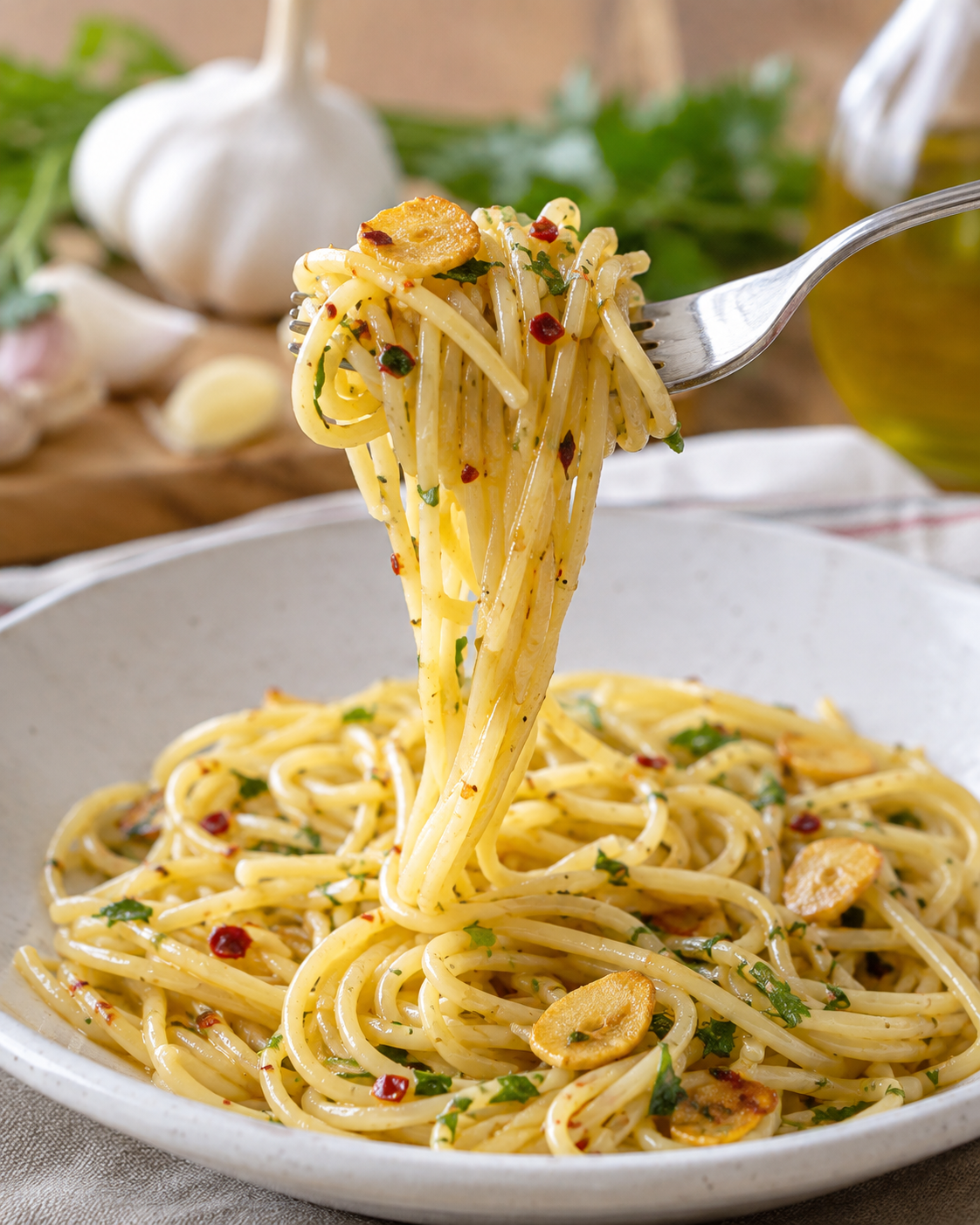
Featured image idea: A bright, natural-light close-up of finished spaghetti aglio e olio in a simple home-kitchen setting.
Suggested alt text: Homemade spaghetti aglio e olio ready to serve.
Schema: Recipe schema through WP Recipe Maker. Copy the ingredient amounts, numbered method, times, servings, and temperature notes into the recipe card placeholder.
Verification: Review package labels, appliance behavior, ingredient availability, and final recipe-card values before publishing. Do not claim the recipe was personally tested unless it was.
Food Safety Sources
For meat and egg temperatures, see the USDA safe minimum internal temperature chart. For cold storage guidance, see the FoodSafety.gov cold food storage chart.
Helpful Recipe Resources
Trusted Food, Cooking, and Recipe References
Mistakenly Delicious uses AI-assisted workflows, but useful recipes still need common sense, food safety checks, and reliable cooking references. These resources can help with ingredients, nutrition, safe temperatures, and the AI workflow behind this site.
Ingredient Data
USDA FoodData Central
A useful reference for checking ingredient and nutrition data when reviewing recipes.
Visit Resource →Cooking Help
Nutrition.gov Cooking Tips
Beginner-friendly guidance for meal prep, cooking basics, shopping, and planning.
Visit Resource →Food Safety
Safe Cooking Temperatures
A helpful food safety chart for checking safe internal temperatures for chicken, meat, seafood, and leftovers.
Visit Resource →Creator Workflow
TechnofluxAI
The AI workflow and creator systems site behind Mistakenly Delicious.
Visit TechnofluxAI →