Beginner-Friendly Recipe
Why We Cook: How Cooking Began and Why Humans Still Do It
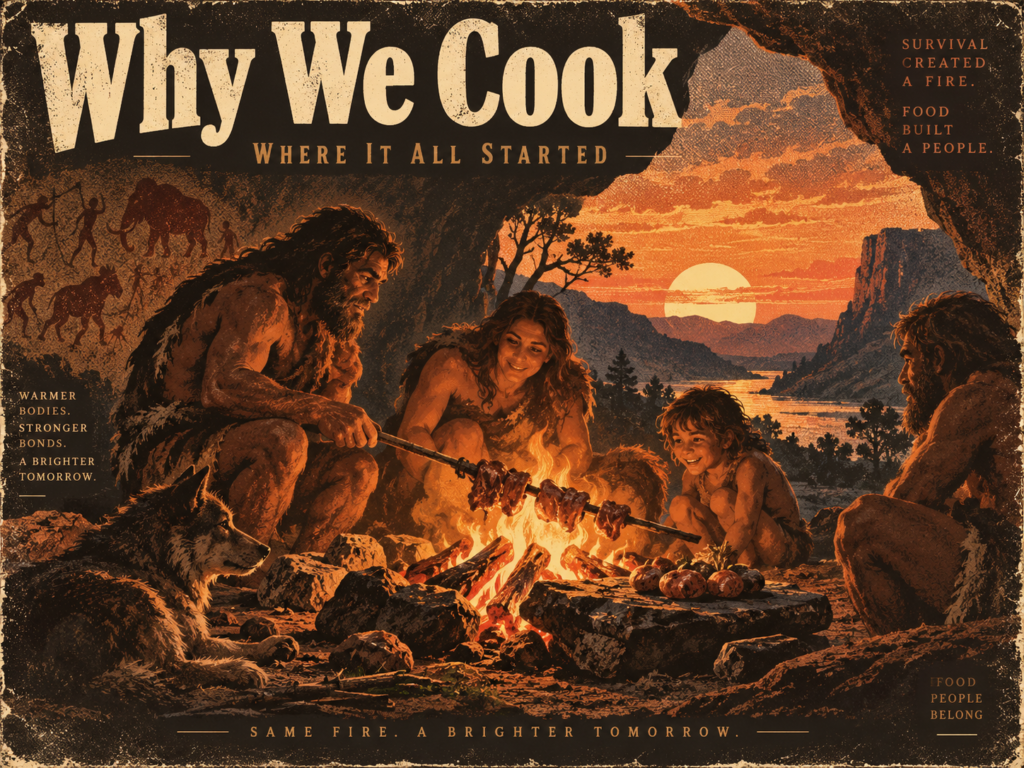
Why We Cook: How Cooking Began and Why It Still Matters
Cooking is such a normal part of everyday life that it is easy to forget just how extraordinary it really is. We take raw ingredients, add heat, time, water, seasoning, or a little patience, and turn them into something completely different.
But humans were cooking long before there were kitchens, ovens, cookbooks, or written recipes. Cooking began around fire, and over hundreds of thousands of years it became connected not only with survival, but with family, community, culture, celebration, and comfort.
Quick Answer: Why Do Humans Cook?
At the most basic level, we cook because heat changes food. Cooking can soften tough foods, make many foods easier to digest, improve flavor and aroma, destroy some harmful microorganisms, and make certain plants safer to eat.
But that is only part of the story. Cooking also gave people a reason to gather. A fire could provide warmth and protection while becoming a place where food was prepared, shared, and eaten together. Over time, cooking became part of how human communities lived and connected.
How Did Cooking Begin?
No one knows who cooked the first meal. There was almost certainly no single person who suddenly “invented” cooking.
Early humans would have encountered naturally occurring fire from lightning strikes, wildfires, and other sources. At some point, our ancestors learned how to preserve, control, and eventually create fire for themselves.
Once people could control fire, putting food near the flames would have been an obvious experiment. Meat could roast. Roots and tubers could soften. Seeds and nuts could become easier to eat. The smell alone may have encouraged people to keep experimenting.
Archaeological evidence from Wonderwerk Cave in South Africa shows burning associated with human activity about one million years ago. Scientists have found burned bone and plant material there, although evidence of fire does not automatically prove that every fire was used for cooking.
One of the strongest examples of early cooking comes from Gesher Benot Ya’aqov in present-day Israel. Researchers studying ancient fish remains found evidence suggesting that humans intentionally cooked fish there approximately 780,000 years ago.
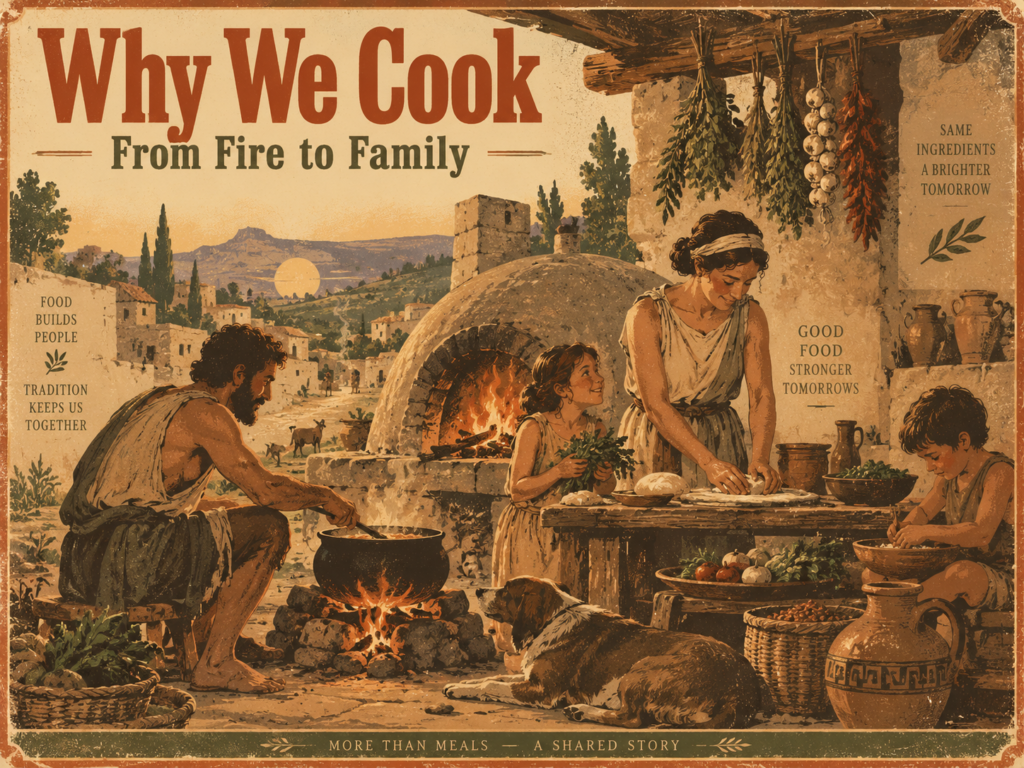
Cooking Made Food Easier to Eat
Imagine trying to live entirely on uncooked roots, tough plants, seeds, and raw meat. Chewing alone could take a great deal of time and effort.
Heating food can soften its structure and make nutrients easier for the body to access. Cooking can also make some foods that are unpleasant or difficult to eat raw far more useful as sources of energy.
This is one reason cooking is considered an important development in human history. Scientists continue to debate exactly when cooked food became a regular part of the human diet and how strongly it influenced human evolution, but there is broad agreement that cooking dramatically changed the way people could use food.
Fire Changed More Than Dinner
A controlled fire offered early humans much more than a hot meal. Fire could provide warmth during cold nights, light after sunset, and some protection from predators.
And something else happened around those fires: people gathered.
When food requires preparation and cooking, eating becomes easier to turn into a shared activity. Someone gathers fuel. Someone watches the fire. Someone prepares food. Others sit nearby, eat, communicate, and spend time together.
The hearth eventually became one of the earliest versions of something we still recognize today: the place where everyone gathers.
Cooking Gave Us Flavor
Early cooking probably began because it was useful, but people eventually discovered something equally important: cooked food can taste wonderful.
Heat creates aromas, browning, crisp edges, caramelized sugars, tender textures, and deeper flavors that do not exist in the same way in raw ingredients.
From there, cooking became more than simply applying heat. Humans learned to roast, boil, bake, smoke, dry, grind, ferment, season, and combine ingredients.
Those discoveries happened in different ways across different environments. People cooked with what they could find locally, creating food traditions shaped by climate, geography, agriculture, trade, migration, and family knowledge.
How Recipes Were Born
For most of human history, there were no printed recipe cards sitting on a kitchen counter.
Cooking knowledge was passed from person to person. Children watched parents and grandparents cook. Communities shared techniques. People remembered how much water to add, how long something should remain near the fire, and how a dish should smell, feel, or taste when it was ready.
Eventually, recipes were written down. Measurements became more standardized, cookbooks became widely available, and modern kitchens filled with appliances our ancestors could never have imagined.
But the basic process remains surprisingly familiar: take ingredients, transform them, and share the result.
Why Every Culture Cooks Differently
There is no single human cooking tradition. Geography helped shape what people ate and how they prepared it.
Coastal communities developed ways to cook and preserve seafood. Farming communities built meals around grains and vegetables. Herding cultures made extensive use of milk and meat. Hot climates, cold climates, mountains, forests, deserts, rivers, and trade routes all influenced the foods that eventually became traditional dishes.
That is why learning about food can also teach us about human history. A familiar dish may contain clues about migration, agriculture, trade, religion, economics, technology, and family tradition.
Mistakenly Delicious Kitchen Picks
Helpful Kitchen Tools for Easier Cooking
These beginner-friendly guides and kitchen picks can make cooking, baking, food-safety checks, and meal prep easier.
Affiliate disclosure: This section contains Amazon affiliate links. As an Amazon Associate, I earn from qualifying purchases at no additional cost to you.
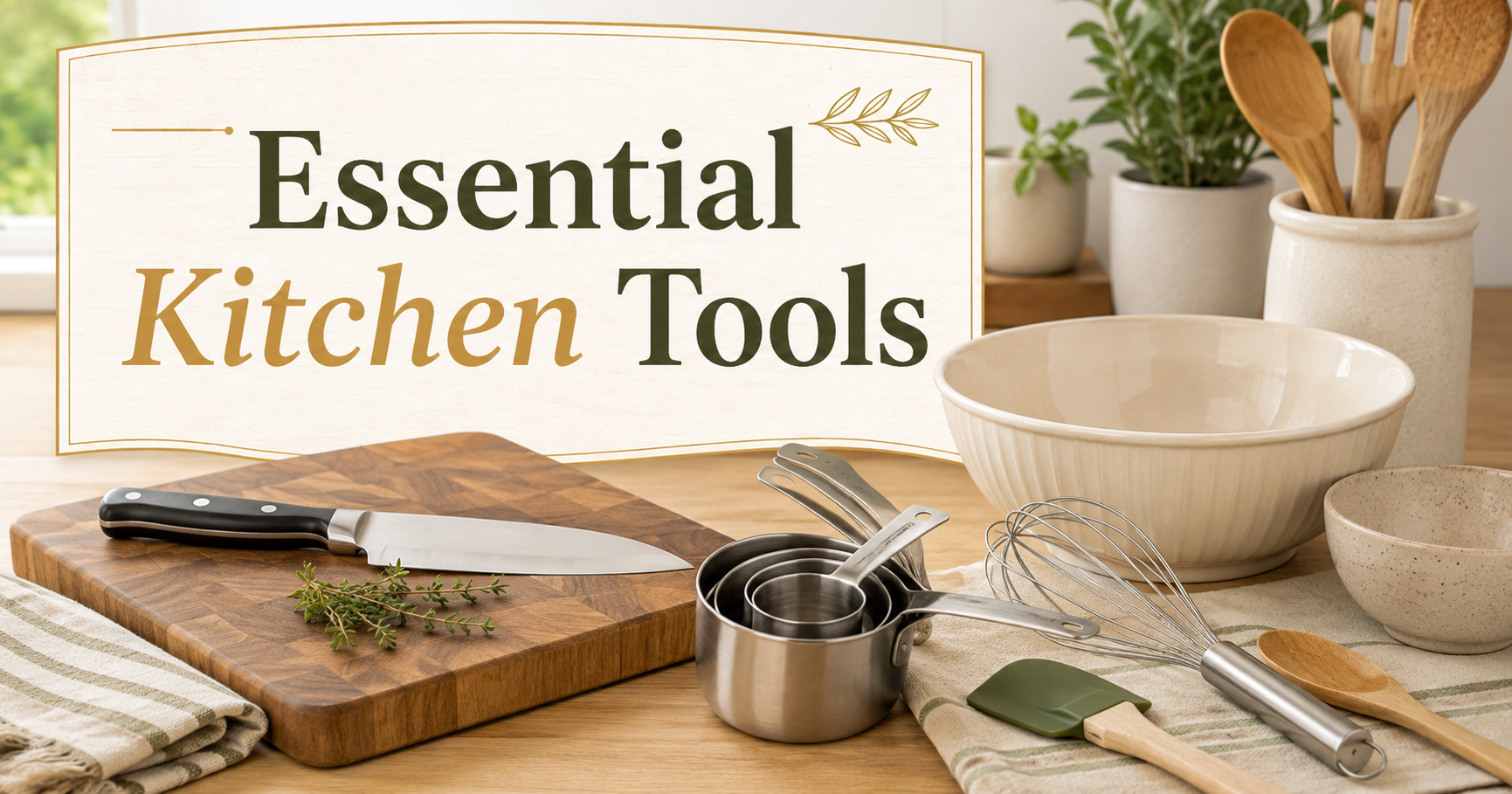
Essential Kitchen Tools for Beginner Cooks
Start with practical everyday tools instead of filling your kitchen with gadgets you may rarely use.

Best Affordable Meat Thermometers
Check chicken, burgers, roasts, and other foods without guessing whether the center is fully cooked.

Best Baking Dishes for Casseroles
Compare dependable baking dishes for casseroles, rice bakes, biscuit bakes, desserts, and family meals.

Best Air Fryers for Beginner Cooks
Find a beginner-friendly air fryer for crispy foods, quick dinners, reheating leftovers, and smaller meals.

Best Food Storage Containers for Meal Prep
Store leftovers, lunches, freezer meals, and weekly meal-prep portions more neatly.

Featured Kitchen Pick
Explore another practical kitchen pick that can make everyday cooking and food preparation easier.
Why Do We Still Cook?
Modern life gives us more alternatives to home cooking than almost any previous generation had. We can buy prepared meals, order restaurant food, heat frozen dinners, or have groceries delivered to the door.
Yet people continue to cook.
Sometimes we cook because it saves money. Sometimes we want more control over ingredients. Sometimes we are trying to use the vegetables sitting in the refrigerator before they go bad.
But people also cook for reasons that have almost nothing to do with hunger.
We bake birthday cakes. We make soup for someone who is sick. We prepare favorite meals when children come home. We recreate dishes our parents or grandparents made. We cook holiday foods because the celebration would not feel quite the same without them.
Food carries memory unusually well. A familiar smell coming from the kitchen can bring back a person, place, or moment almost instantly.
Cooking Is Still a Form of Connection
Hundreds of thousands of years separate a prehistoric fire from a modern kitchen stove, but one part of cooking has barely changed: food brings people together.
The equipment is different. The ingredients may be different. The kitchen may contain an air fryer, microwave, refrigerator, and electric mixer instead of a stone hearth.
But someone still prepares the food. Someone still waits for it to finish. And, when we are lucky, someone sits down with us to eat it.
Common Questions About the History of Cooking
When did humans first start cooking?
Scientists do not know the exact date. Evidence exists for human-associated fire around one million years ago, while research from Israel provides evidence that fish were intentionally cooked approximately 780,000 years ago. Some hypotheses propose that cooking began even earlier, but the archaeological evidence becomes much harder to establish that far back.
Who invented cooking?
There is no known inventor of cooking. It probably developed gradually as different groups of early humans learned to control fire and discovered what happened when foods were heated.
What was the first cooked food?
We do not know. Early humans could have cooked meat, fish, roots, tubers, seeds, or other plants. Archaeologists can only identify foods when enough physical evidence survives for thousands of years.
Why was fire important to early humans?
Fire could provide heat and light, help deter predators, and allow food to be cooked. Hearths also created gathering places where groups could spend time together.
Did cooking help humans evolve?
Cooking has been proposed as an important factor in human evolution because cooked foods can be easier to chew and digest and can provide accessible energy. Researchers continue to debate exactly when habitual cooking began and how large a role it played in specific evolutionary changes.
Final Notes
The story of cooking is ultimately the story of people.
It began long before restaurants, grocery stores, measuring cups, written recipes, or even recorded history. What may have started as a practical way to make food easier to eat eventually became one of the most important parts of human culture.
Today, every time we roast vegetables, simmer soup, bake bread, grill dinner, or teach someone a family recipe, we are participating in an extraordinarily old tradition.
We cook because we need to eat. But after hundreds of thousands of years, cooking has become something much bigger. We cook to care for people, to celebrate, to remember, to experiment, and to sit together around the table.
Helpful Recipe Resources
Trusted Food, Cooking, and Recipe References
Mistakenly Delicious uses AI-assisted workflows, but useful recipes still need common sense, food safety checks, and reliable cooking references. These resources can help with ingredients, nutrition, safe temperatures, and the AI workflow behind this site.
Ingredient Data
USDA FoodData Central
A useful reference for checking ingredient and nutrition data when reviewing recipes.
Visit Resource →Cooking Help
Nutrition.gov Cooking Tips
Beginner-friendly guidance for meal prep, cooking basics, shopping, and planning.
Visit Resource →Food Safety
Safe Cooking Temperatures
A helpful food safety chart for checking safe internal temperatures for chicken, meat, seafood, and leftovers.
Visit Resource →Creator Workflow
TechnofluxAI
The AI workflow and creator systems site behind Mistakenly Delicious.
Visit TechnofluxAI →