Beginner Recipes for Real-Life Kitchens
Estimated reading time: 60 minutes
Mistakenly Smart Note
AI helped organize this beginner recipe guide, but the goal is still practical: simple meals, clear steps, common ingredients, and real-life cooking advice that makes sense in a normal kitchen.
Beginner Recipes for Real-Life Kitchens
Quick Answer
Beginner recipes should be simple, forgiving, and easy to follow. The best beginner recipes use everyday ingredients, basic cooking tools, clear steps, and flexible swaps so you can make real meals without feeling overwhelmed.
AI-assisted. Human-reviewed. Dinner-ready.
Beginner Recipes Should Not Feel Complicated
Cooking should not feel like a final exam.
If you are new to cooking, getting dinner on the table can feel harder than it should. Recipes throw around words like “sauté,” “deglaze,” “fold,” “reduce,” and “season to taste” like everyone was born knowing what they mean.
That is exactly why this beginner recipes page exists.
Mistakenly Delicious is built for real-life kitchens. Not perfect kitchens. No professional kitchens. Not kitchens where every spice jar is alphabetized and the fridge magically has everything you need.
This page is for busy people, beginner cooks, budget-conscious families, and anyone who wants simple meals without getting lost halfway through the instructions.
Here you will find easy beginner recipes, simple dinner ideas, budget meals, quick desserts, air fryer recipes, ingredient swaps, and practical kitchen tips that help you build confidence one meal at a time.
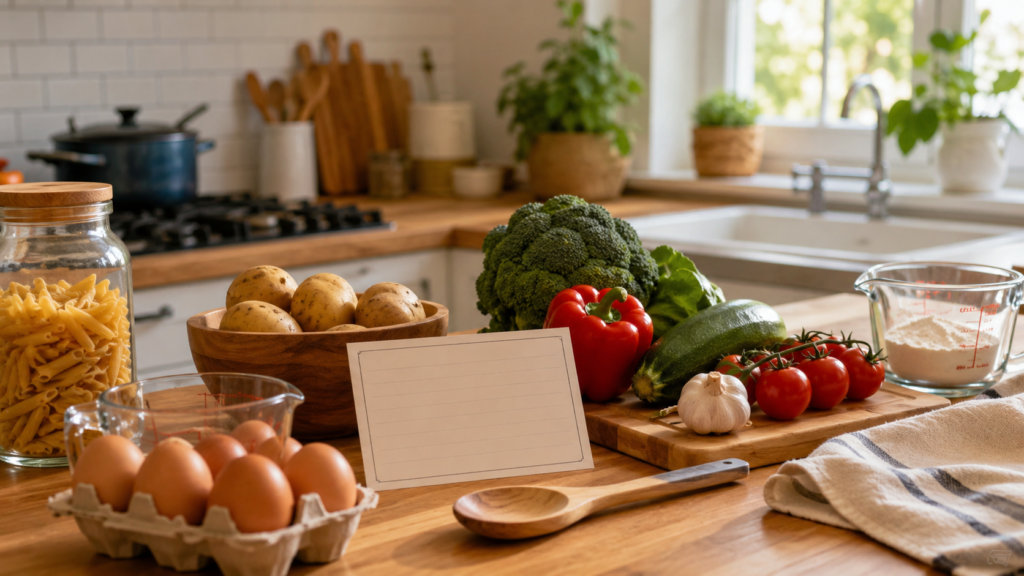
What Makes a Recipe Beginner-Friendly?
A beginner recipe is not just “easy.” It should also be forgiving.
That means the recipe still works if your pan runs a little hot, your chicken pieces are not perfectly even, or you forget to soften the butter ahead of time.
A good beginner recipe usually has simple ingredients, short prep time, clear cooking steps, basic tools, flexible swaps, easy doneness cues, and helpful storage notes.
The best beginner recipes help you learn while you cook. You are not just making one meal. You are learning how heat, timing, seasoning, texture, and simple ingredients work together.
That is the real win.
Need help planning what to cook first? Use the printable shopping list to organize your ingredients before you start.
Start Here: The Easiest Beginner Recipe Categories
If you are building confidence in the kitchen, do not start with complicated meals. Start with recipes that teach useful skills and give you a good chance of success.
Easy Dinners
Easy dinners are the best place to start because they solve a real problem: you need food tonight.
Beginner dinner recipes should use simple proteins, basic vegetables, pasta, rice, potatoes, tortillas, eggs, or pantry staples. Think skillet meals, sheet pan dinners, air fryer chicken, simple pasta, rice bowls, and quick wraps.
Good beginner dinner recipes teach skills like browning meat, cooking pasta, seasoning food, checking doneness, and reheating leftovers safely.
Beginner-friendly examples include:
Garlic Butter Chicken Bites
Ground Beef and Rice Skillet
Easy Chicken Quesadillas
Simple Pasta with Butter and Parmesan
Sheet Pan Sausage and Potatoes
Budget Meals
Budget meals are perfect for beginner cooks because they usually rely on simple, flexible ingredients.
Rice, pasta, beans, eggs, potatoes, canned tomatoes, frozen vegetables, ground beef, chicken thighs, tortillas, and oats can turn into a lot of meals without requiring fancy cooking skills.
The trick is learning how to make affordable ingredients taste good with basic seasoning, sauces, and texture.
Beginner-friendly examples include:
Budget Ground Beef Rice Bowls
Egg Fried Rice for Beginners
Bean and Cheese Quesadillas
Tuna Pasta Skillet
Crispy Potato and Egg Hash
Air Fryer Recipes
Air fryer recipes are great for beginners because they reduce some of the guesswork.
You still need to check doneness, avoid crowding the basket, and pay attention to timing, but an air fryer can make it easier to get crispy textures without deep frying.
Air fryer beginner recipes work especially well for chicken tenders, potatoes, frozen vegetables, salmon, grilled cheese, and reheating leftovers.
Beginner-friendly examples include:
Crispy Air Fryer Potatoes
Easy Air Fryer Chicken Tenders
Air Fryer Grilled Cheese
Air Fryer Frozen Vegetables
Air Fryer Salmon Bites
Quick Desserts
Beginner desserts should be low-stress.
You do not need to start with layered cakes, homemade pastry, or anything that requires a candy thermometer. Start with cookies, no-bake desserts, mug cakes, fruit crisps, brownies, pudding-style desserts, and simple bars.
The goal is to learn measuring, mixing, baking times, and texture without making the recipe feel fragile.
Beginner-friendly examples include:
Banana Oat Cookies
Chocolate Mug Cake
Easy Apple Crisp
No-Bake Peanut Butter Bars
Simple Brownie Bites
Kitchen Tips
Sometimes the thing holding you back is not the recipe. It is the little kitchen questions that recipes assume you already know.
Kitchen tips help beginners understand the basics: how to know when chicken is done, how to season food, how to store leftovers, how to swap ingredients, and what tools are actually worth having.
These small lessons make every future recipe easier.
Beginner Cooking Skills Worth Learning First
You do not need to master everything at once. Start with a few basic skills that show up in recipe after recipe.
1. Read the Whole Recipe First
Before you cook, read the full recipe once from top to bottom.
This helps you catch things like “marinate for 30 minutes,” “preheat the oven,” “use cooked rice,” “chill before serving,” or “cut chicken into small pieces.”
A lot of cooking stress comes from discovering a hidden step too late. Reading first saves you from that little kitchen ambush.
2. Prep Ingredients Before Cooking
You do not need a perfect chef setup, but it helps to measure and chop before the heat is on.
This is especially helpful for fast recipes like stir-fries, scrambled eggs, quesadillas, garlic butter chicken, and skillet meals.
Once food is cooking, things move faster. Having ingredients ready keeps you from burning the garlic while you search for the paprika.
3. Season Simply
Beginner cooking does not need a giant spice cabinet.
Start with salt, black pepper, garlic powder, onion powder, paprika, Italian seasoning, chili powder, and cinnamon for sweet recipes.
Salt makes food taste more like itself. Garlic powder and onion powder add easy savory flavor. Paprika adds color and warmth. Italian seasoning helps pasta, chicken, vegetables, and soups taste more finished.
You can build from there later.
4. Check Doneness Safely
Do not rely only on cooking time.
Pans, ovens, air fryers, ingredient size, and food thickness can all change how long something takes. Chicken, meat, eggs, seafood, casseroles, and leftovers need extra care.
For poultry, the USDA safe minimum internal temperature is 165°F. Leftovers and casseroles should also be reheated to 165°F when checked with a food thermometer.
An instant-read thermometer is one of the most useful tools a beginner cook can own. It removes a lot of guessing.
5. Save Leftovers Safely
Leftovers are one of the best parts of beginner cooking because they save time later.
Let hot food cool slightly, then store it in airtight containers in the fridge. When reheating leftovers, heat them until they are hot all the way through. For safety, USDA recommends reheating leftovers to 165°F.
When in doubt, do not gamble with old food. Saving money is good. Food poisoning is not the bargain we’re looking for.
Simple Ingredients Every Beginner Cook Should Keep Around
You do not need a huge pantry to start cooking. A few basics can cover a lot of easy meals.
Pantry Basics
Pasta
Rice
Oats
Tortillas
Canned beans
Canned tomatoes
Tuna
Peanut butter
Flour
Sugar
Breadcrumbs
Chicken broth or bouillon
Fridge Basics
Eggs
Milk
Butter
Cheese
Yogurt
Lettuce or salad mix
Carrots
Potatoes
Onions
Freezer Basics
Frozen vegetables
Frozen fruit
Chicken tenders or chicken breasts
Ground beef or ground turkey
Frozen fries or potatoes
Bread
Flavor Basics
Salt
Pepper
Garlic powder
Onion powder
Paprika
Italian seasoning
Chili powder
Soy sauce
Hot sauce
Olive oil or vegetable oil
With these ingredients, you can make simple breakfasts, lunches, dinners, snacks, and desserts without starting from zero every time.
Easy Beginner Recipe Ideas
Here are practical recipe ideas that can become the backbone of your beginner cooking routine.
1. Garlic Butter Chicken Bites
Small pieces of chicken cook faster and are easier to manage than whole chicken breasts. Add garlic, butter, seasoning, and a simple side like rice or potatoes.
Good for learning: cutting chicken, pan cooking, seasoning, and checking doneness.
2. Ground Beef and Rice Skillet
A skillet meal is one of the easiest beginner dinners because everything cooks in one pan. Ground beef, rice, broth, seasoning, and vegetables can become a filling meal with very little cleanup.
Good for learning: browning meat, simmering rice, and seasoning a full meal.
3. Crispy Air Fryer Potatoes
Potatoes are cheap, filling, and beginner-friendly. Cut them into small pieces, toss with oil and seasoning, and air fry until crisp outside and tender inside.
Good for learning: air fryer timing, texture, and seasoning.
4. Egg Fried Rice
Fried rice is a great way to use leftover rice and small amounts of vegetables. Eggs add protein, and soy sauce adds quick flavor.
Good for learning: using leftovers, cooking eggs, and quick skillet meals.
5. Chicken Quesadillas
Tortillas, cheese, cooked chicken, and a skillet can turn into a fast lunch or dinner. Quesadillas are forgiving and easy to customize.
Good for learning: using cooked protein, melting cheese, and pan crisping.
6. Simple Buttered Pasta
Pasta does not have to be complicated. Butter, parmesan, garlic powder, black pepper, and a splash of pasta water can make a quick meal.
Good for learning: boiling pasta, saving pasta water, and making simple sauces.
7. Sheet Pan Sausage and Potatoes
Sheet pan meals are beginner-friendly because the oven does most of the work. Sausage, potatoes, onions, and peppers make a filling dinner with easy cleanup.
Good for learning: roasting, cutting ingredients evenly, and checking texture.
8. Banana Oat Pancakes
Banana oat pancakes are simple, filling, and easier than many traditional breakfast recipes. They are also a good way to use ripe bananas.
Good for learning: mixing batter, cooking on medium heat, and flipping.
9. Chocolate Mug Cake
A mug cake is a low-pressure dessert because it makes one serving and cooks quickly. It is perfect when you want something sweet without baking a full batch.
Good for learning: measuring, mixing, and microwave timing.
10. No-Bake Peanut Butter Bars
No-bake desserts are great for beginners because there is no oven timing to worry about. Mix, press, chill, and slice.
Good for learning: simple measuring, texture, and chilling desserts.
Beginner Mistakes to Avoid
Everyone makes kitchen mistakes. The goal is not perfection. The goal is learning what to watch for next time.
Using Heat That Is Too High
High heat feels faster, but it often burns the outside before the inside is done.
For most beginner recipes, medium heat is your friend. It gives you more control and more time to react.
Crowding the Pan
When too much food is packed into a pan or air fryer basket, it steams instead of browns.
If you want crispy potatoes, browned chicken, or roasted vegetables, give the food some space.
Skipping the Thermometer
Color is not always enough to know if food is safe.
A thermometer is especially important for chicken, ground meat, casseroles, and leftovers. It is one of the easiest ways to cook with more confidence.
Not Tasting as You Go
For foods that are safe to taste while cooking, like sauces, rice, pasta, soups, and vegetables, tasting helps you adjust seasoning.
Add a little salt or seasoning at a time. You can always add more, but you cannot easily take it back out.
Trying Too Many New Things at Once
Do not pick a new recipe, new tool, new ingredient, and new cooking method all on the same night.
That is how dinner turns into a side quest.
Start with one new skill at a time.
What Beginner Recipes Should You Try First?
Start with recipes that match your real life.
If you are tired after work, start with easy dinners.
money is tight, start with budget meals.
you like crispy food, start with air fryer recipes.
cooking feels intimidating, start with kitchen tips.
you want a small win, start with quick desserts.
Air Fryer Recipes
Air fryer recipes are great for beginners because they reduce some of the guesswork.
You still need to check doneness, avoid crowding the basket, and pay attention to timing, but an air fryer can make it easier to get crispy textures without deep frying.
Air fryer beginner recipes work especially well for chicken tenders, potatoes, frozen vegetables, salmon, grilled cheese, and reheating leftovers.
Beginner-friendly examples:
- Crispy Air Fryer Potatoes
- Easy Air Fryer Chicken Tenders
- Air Fryer Grilled Cheese
- Air Fryer Frozen Vegetables
- Air Fryer Salmon Bites
Quick Desserts
Beginner desserts should be low-stress.
You do not need to start with layered cakes, homemade pastry, or anything that requires a candy thermometer. Start with cookies, no-bake desserts, mug cakes, fruit crisps, brownies, pudding-style desserts, and simple bars.
The goal is to learn measuring, mixing, baking times, and texture without making the recipe feel fragile.
Beginner-friendly examples:
- Banana Oat Cookies
- Chocolate Mug Cake
- Easy Apple Crisp
- No-Bake Peanut Butter Bars
- Simple Brownie Bites
Kitchen Tips
Sometimes the thing holding you back is not the recipe. It is the little kitchen questions that recipes assume you already know.
Kitchen tips help beginners understand the basics: how to know when chicken is done, how to season food, how to store leftovers, how to swap ingredients, and what tools are actually worth having.
These small lessons make every future recipe easier.
Simple Ingredients Every Beginner Cook Should Keep Around
You do not need a huge pantry to start cooking. A few basics can cover a lot of easy meals.
Pantry Basics
- Pasta
- Rice
- Oats
- Tortillas
- Canned beans
- Canned tomatoes
- Tuna
- Peanut butter
- Flour
- Sugar
- Breadcrumbs
- Chicken broth or bouillon
Fridge Basics
- Eggs
- Milk
- Butter
- Cheese
- Yogurt
- Lettuce or salad mix
- Carrots
- Potatoes
- Onions
Freezer Basics
- Frozen vegetables
- Frozen fruit
- Chicken tenders or chicken breasts
- Ground beef or ground turkey
- Frozen fries or potatoes
- Bread
Flavor Basics
- Salt
- Pepper
- Garlic powder
- Onion powder
- Paprika
- Italian seasoning
- Chili powder
- Soy sauce
- Hot sauce
- Olive oil or vegetable oil
With these ingredients, you can make simple breakfasts, lunches, dinners, snacks, and desserts without starting from zero every time.
Easy Beginner Recipe Ideas
Here are practical recipe ideas that can become the backbone of your beginner cooking routine.
1. Garlic Butter Chicken Bites
Small pieces of chicken cook faster and are easier to manage than whole chicken breasts. Add garlic, butter, seasoning, and a simple side like rice or potatoes.
Good for learning: cutting chicken, pan cooking, seasoning, checking doneness.
2. Ground Beef and Rice Skillet
A skillet meal is one of the easiest beginner dinners because everything cooks in one pan. Ground beef, rice, broth, seasoning, and vegetables can become a filling meal with very little cleanup.
Good for learning: browning meat, simmering rice, seasoning a full meal.
3. Crispy Air Fryer Potatoes
Potatoes are cheap, filling, and beginner-friendly. Cut them into small pieces, toss with oil and seasoning, and air fry until crisp outside and tender inside.
Good for learning: air fryer timing, texture, seasoning.
4. Egg Fried Rice
Fried rice is a great way to use leftover rice and small amounts of vegetables. Eggs add protein, and soy sauce adds quick flavor.
Good for learning: using leftovers, cooking eggs, quick skillet meals.
5. Chicken Quesadillas
Tortillas, cheese, cooked chicken, and a skillet can turn into a fast lunch or dinner. Quesadillas are forgiving and easy to customize.
Good for learning: using cooked protein, melting cheese, pan crisping.
6. Simple Buttered Pasta
Pasta does not have to be complicated. Butter, parmesan, garlic powder, black pepper, and a splash of pasta water can make a quick meal.
Good for learning: boiling pasta, saving pasta water, simple sauces.
7. Sheet Pan Sausage and Potatoes
Sheet pan meals are beginner-friendly because the oven does most of the work. Sausage, potatoes, onions, and peppers make a filling dinner with easy cleanup.
Good for learning: roasting, cutting ingredients evenly, checking texture.
8. Banana Oat Pancakes
Banana oat pancakes are simple, filling, and easier than many traditional breakfast recipes. They are also a good way to use ripe bananas.
Good for learning: mixing batter, cooking on medium heat, flipping.
9. Chocolate Mug Cake
A mug cake is a low-pressure dessert because it makes one serving and cooks quickly. It is perfect when you want something sweet without baking a full batch.
Good for learning: measuring, mixing, microwave timing.
10. No-Bake Peanut Butter Bars
No-bake desserts are great for beginners because there is no oven timing to worry about. Mix, press, chill, and slice.
Good for learning: simple measuring, texture, chilling desserts.
Beginner Mistakes to Avoid
Everyone makes kitchen mistakes. The goal is not perfection. The goal is learning what to watch for next time.
Using Heat That Is Too High
High heat feels faster, but it often burns the outside before the inside is done.
For most beginner recipes, medium heat is your friend. It gives you more control and more time to react.
Crowding the Pan
When too much food is packed into a pan or air fryer basket, it steams instead of browns.
If you want crispy potatoes, browned chicken, or roasted vegetables, give the food some space.
Skipping the Thermometer
Color is not always enough to know if food is safe.
A thermometer is especially important for chicken, ground meat, casseroles, and leftovers. It is one of the easiest ways to cook with more confidence.
Not Tasting as You Go
For foods that are safe to taste while cooking, like sauces, rice, pasta, soups, and vegetables, tasting helps you adjust seasoning.
Add a little salt or seasoning at a time. You can always add more, but you cannot easily take it back out.
Trying Too Many New Things at Once
Do not pick a new recipe, new tool, new ingredient, and new cooking method all on the same night.
That is how dinner turns into a side quest.
Start with one new skill at a time.
FAQ
What are the easiest recipes for beginners?
The easiest beginner recipes are simple meals with short ingredient lists, clear steps, and basic cooking methods. Good options include quesadillas, pasta, rice bowls, scrambled eggs, air fryer potatoes, sheet pan meals, and simple skillet dinners.
What should a beginner cook first?
A beginner should start with forgiving recipes like pasta, eggs, quesadillas, baked potatoes, rice bowls, or simple chicken bites. These recipes teach useful skills without needing advanced techniques.
How do I get better at cooking as a beginner?
Cook simple recipes repeatedly, read the full recipe before starting, prep ingredients first, use medium heat, taste as you go, and learn how to check doneness safely.
Are air fryer recipes good for beginners?
Yes. Air fryer recipes can be great for beginners because they are usually simple, fast, and good for crispy foods. Just avoid overcrowding the basket and check that meat is cooked through.
What kitchen tools does a beginner need?
A beginner cook can start with a skillet, sheet pan, saucepan, cutting board, knife, measuring cups, measuring spoons, mixing bowl, spatula, and an instant-read thermometer.
Beginner Recipe Guide
Start with the hub pages below, or jump straight into an easy recipe, budget meal, air fryer idea, quick dessert, or beginner cooking tip.
Start Here: Hub Pages
Easy Dinner Recipes
- Quick and Easy Weeknight Dinners
- Easy Garlic Butter Chicken Bites
- Creamy Chicken Pasta for Beginners
- Chicken Taco Rice Bowls
- One-Pot Tomato Pasta
- Sheet Pan Sausage and Potatoes
- Easy Egg Fried Rice
- What to Make With Ground Beef and Rice
- Easy Chicken Breast Dinner Ideas
- Simple Chicken Thigh Dinners
- Easy Pork Chop Dinner
- Simple Beef Stroganoff for Beginners
- Easy Pasta Recipes for Beginners
- Simple Lasagna for Beginner Cooks
- Easy Mac and Cheese for Beginners
- Easy Vegetable Soup for Beginners
- Canned Chicken Recipes for Beginners
Budget Meals
- Budget-Friendly Meal Ideas
- Budget Tuna Pasta Bake
- Budget Ground Beef and Rice Skillet
- Cheap Pantry Meals for Beginner Cooks
- Budget Meal Planning for Beginners
- Cheap Dinners with Rice and Beans
- Affordable Meals with Eggs
- Cheap Potato Dinners
- What to Cook When You Are Low on Groceries
- Simple Pantry Soup
- How to Make Cheap Meals Taste Better
Air Fryer Recipes
Quick Desserts and Beginner Baking
Beginner Cooking Guides and Kitchen Tips
Final Takeaway
Beginner recipes should make cooking feel possible.
You do not need fancy tools, perfect skills, or a huge pantry. Start with simple meals, learn one basic skill at a time, and build confidence through repetition.
Mistakenly Delicious is here to help with easy AI-assisted recipes for real-life kitchens: simple dinners, budget meals, quick desserts, air fryer recipes, ingredient swaps, and kitchen tips that actually make sense when you are standing in front of the stove.
Start small. Cook something easy. Then cook it again, but a little better.
That is how real kitchen confidence gets built.
Helpful Recipe Resources
Trusted Food, Cooking, and Recipe References
Mistakenly Delicious uses AI-assisted workflows, but useful recipes still need common sense, food safety checks, and reliable cooking references. These resources can help with ingredients, nutrition, safe temperatures, and the AI workflow behind this site.
Ingredient Data
USDA FoodData Central
A useful reference for checking ingredient and nutrition data when reviewing recipes.
Visit Resource →Cooking Help
Nutrition.gov Cooking Tips
Beginner-friendly guidance for meal prep, cooking basics, shopping, and planning.
Visit Resource →Food Safety
Safe Cooking Temperatures
A helpful food safety chart for checking safe internal temperatures for chicken, meat, seafood, and leftovers.
Visit Resource →Creator Workflow
TechnofluxAI
The AI workflow and creator systems site behind Mistakenly Delicious.
Visit TechnofluxAI →