Beginner-Friendly Recipe
Homemade Hamburger Helper That Stays Creamy, Not Soupy
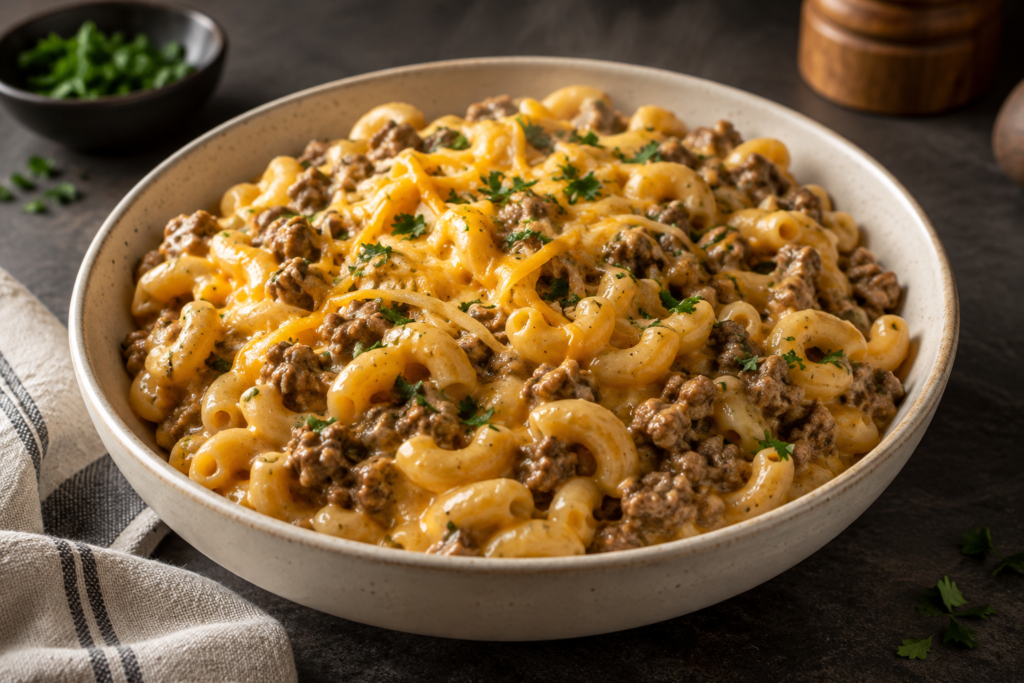
Homemade Hamburger Helper should be creamy enough to cling to every piece of macaroni, not leave a puddle of thin sauce at the bottom of the pan. This homemade hamburger helper recipe uses one pot, everyday ingredients, and a simple liquid-to-pasta ratio that gives the noodles enough moisture to cook without turning dinner into soup.
The other difference happens at the end. Instead of stirring cheese into a bubbling pot, let the pasta finish absorbing and reducing its cooking liquid first. Lower the heat, then add the cheddar. That small change gives you a smoother, creamier cheese sauce.
Mistakenly Smart Note: If the pasta is tender but the sauce still looks loose, do not add more cheese to fix it. Simmer uncovered for another 1 to 3 minutes first. Reducing excess liquid before adding the cheese is what keeps the finished sauce creamy rather than watery.
Quick Answer: How Do You Keep Homemade Hamburger Helper From Getting Soupy?
Use only enough liquid to cook the pasta, keep the pot at a steady simmer rather than a hard boil, and finish cooking uncovered so excess moisture can evaporate. Once the macaroni is tender and the sauce looks slightly looser than you want the finished dish, reduce the heat and stir in freshly shredded cheddar. The pasta starch and cheese will thicken the remaining liquid as everything comes together.
Ingredients Overview
This one-pot dinner starts with lean ground beef so the finished sauce stays rich without becoming greasy. Onion, garlic, tomato paste, paprika, mustard powder, and Worcestershire sauce build the savory cheeseburger-style flavor before the pasta goes into the same pot.
Elbow macaroni works especially well because its size lets it cook directly in the sauce without requiring an excessive amount of liquid. Beef broth adds savory depth, while milk softens the tomato and beef flavors and helps create a creamier finish.
For the cheese, sharp or medium cheddar gives the sauce plenty of flavor without requiring a complicated cheese sauce. Freshly shredded cheddar generally melts more smoothly than pre-shredded cheese because packaged shredded cheeses often contain anti-caking ingredients.
Printable shopping list: Jump to the recipe card below for the complete ingredient amounts and print options.
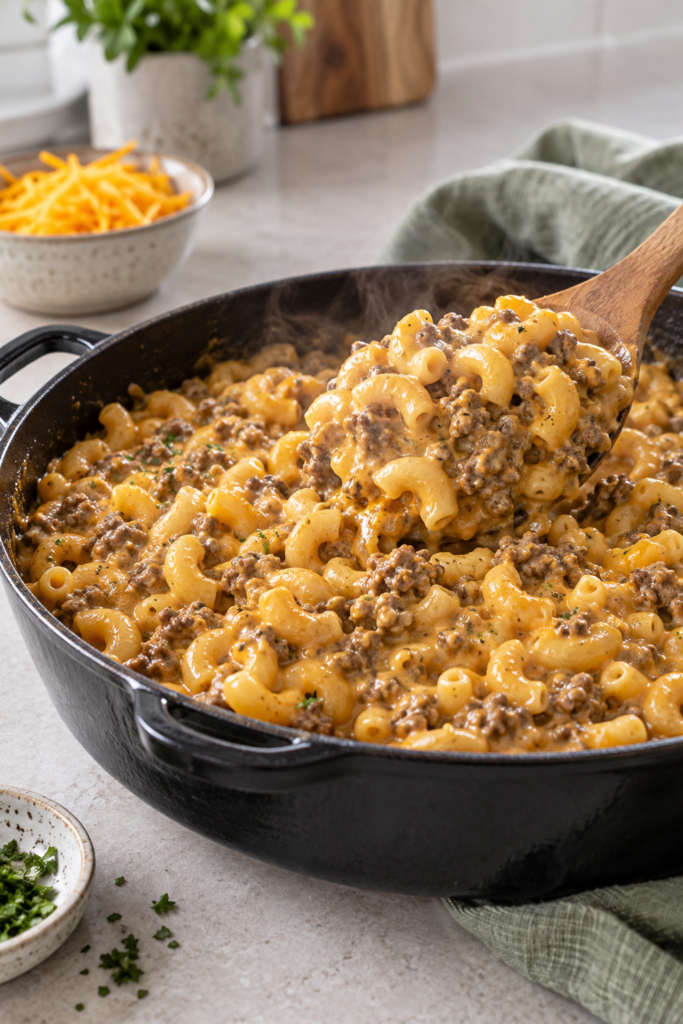
Why This Homemade Hamburger Helper Recipe Works
The biggest challenge with one-pot cheeseburger macaroni is balancing enough liquid to cook the pasta with a sauce that is thick enough to coat it afterward. This version handles that in stages instead of trying to create the final sauce all at once.
Browning the beef first builds flavor. Letting the ground beef actually brown instead of steaming it gives the finished dish a deeper savory flavor. If there is a noticeable pool of grease after browning, drain the excess before moving on.
Tomato paste gets cooked before the liquid goes in. Stirring the tomato paste into the hot beef for about a minute removes some of its raw taste and concentrates its flavor.
The pasta cooks directly in the seasoned liquid. As the macaroni cooks, it releases starch into the broth and milk. That starch is useful because it naturally helps thicken the sauce.
The final minutes are uncovered. This is one of the most important steps. Once the pasta is close to tender, leaving the pot uncovered allows extra moisture to evaporate instead of remaining trapped in the skillet.
The cheese goes in after the heat is reduced. High heat can make a cheese sauce oily, grainy, or separated. Stirring the cheddar in after reducing or removing the pot from the heat lets it melt into the starchy sauce more gently.
Tips for Creamy Hamburger Helper, Not Soupy Hamburger Helper
- Use a wide pot or deep skillet. A wider cooking surface helps excess liquid evaporate more efficiently.
- Do not skip browning. Break the beef into small pieces, but give it enough contact with the hot pan to develop color.
- Measure the pasta and liquid. Eyeballing either one can dramatically change the consistency of a one-pot pasta.
- Keep the simmer controlled. You want steady bubbling, not an aggressive boil that cooks away the liquid before the macaroni becomes tender.
- Stir periodically. Pasta can settle against the bottom of the pan, especially as the sauce thickens.
- Judge the sauce before adding cheese. It should look creamy but slightly loose, not watery.
- Shred the cheese from a block when possible. It usually produces a smoother melt.
- Let it rest for a few minutes. The sauce will continue to thicken as the pasta stands.
Easy Meal Ideas and Swaps
This homemade Hamburger Helper is filling enough to serve on its own, but a simple green vegetable makes an easy addition. Try steamed broccoli, roasted green beans, peas, or a basic green salad.
For extra vegetables in the pot, stir in frozen peas near the end of cooking or fold in baby spinach just before adding the cheese. Avoid adding large amounts of watery vegetables unless you adjust the liquid, since vegetables such as mushrooms and zucchini can release moisture as they cook.
Ground turkey can replace the ground beef, although the flavor will be lighter. If using ground turkey, cook it to the appropriate safe temperature and consider adding a little extra Worcestershire sauce for savory depth.
Small shells can replace elbow macaroni if needed. Different pasta shapes and brands absorb liquid at different rates, so watch the skillet closely during the final few minutes rather than relying only on the clock.
How This Recipe Comes Together
Start by browning the ground beef with the onion in a large skillet or Dutch oven. Once the meat develops good color, drain excess grease if necessary. Add the garlic, tomato paste, seasonings, and Worcestershire sauce and cook briefly so those flavors bloom in the hot pan.
Next, add the broth, milk, and dry macaroni. Bring everything to a gentle boil, then reduce it to a steady simmer. Stir occasionally while the pasta cooks so nothing sticks to the bottom.
As the macaroni approaches al dente, cook uncovered and watch the consistency. The sauce should visibly thicken and coat the pasta, but there should still be enough moisture for the cheese to melt into.
Reduce the heat to low or remove the pot from the burner before stirring in the cheddar. Once the cheese is melted and smooth, let the skillet stand for about 3 minutes. That short rest gives the pasta and sauce time to settle into the creamy consistency you want.
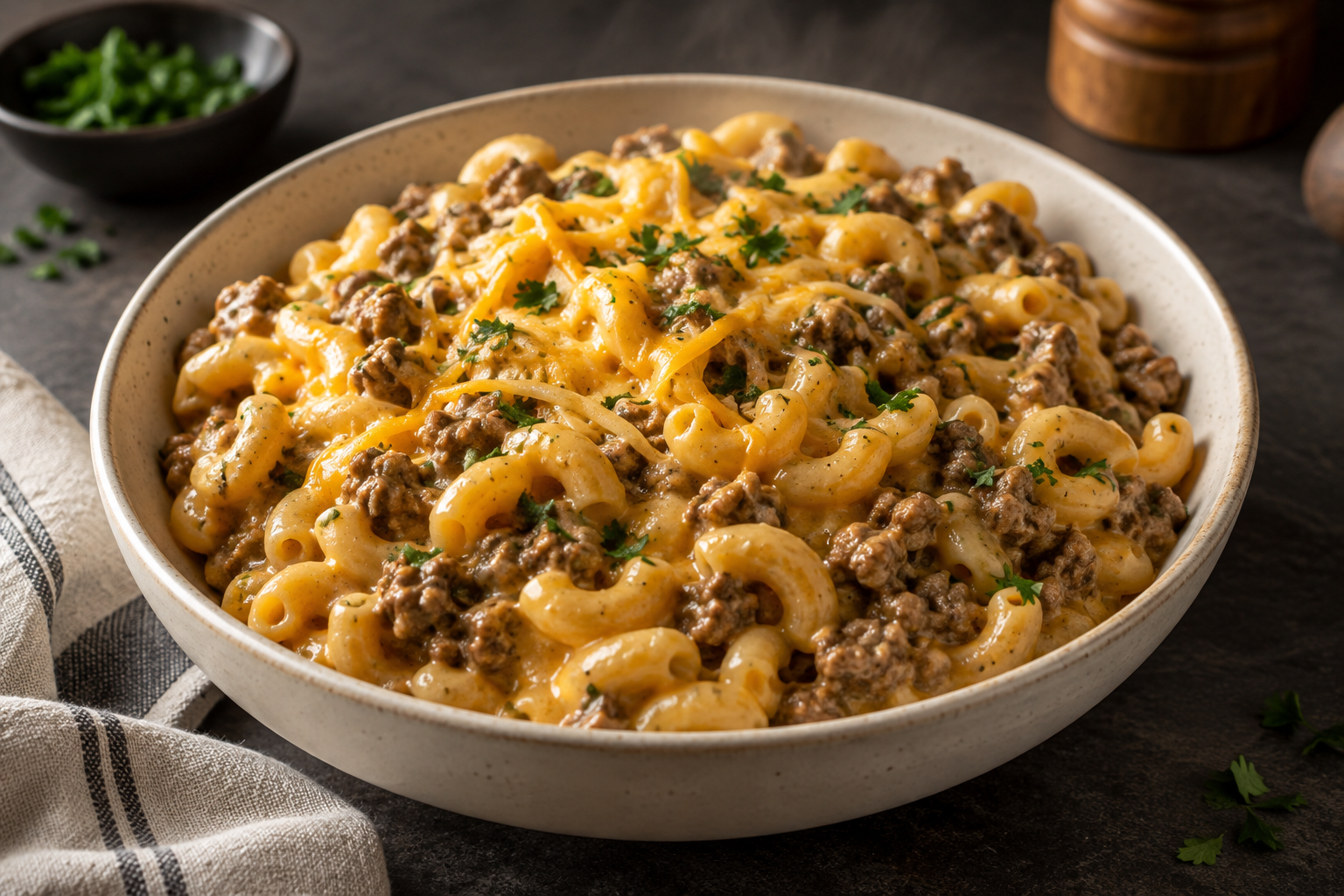
Homemade Hamburger Helper That Stays Creamy, Not Soupy
Method
- Heat a large deep skillet or Dutch oven over medium-high heat. Add the ground beef and onion. Cook for 5 to 7 minutes, breaking the beef into small pieces, until browned and the onion is softened. Drain excess grease if there is more than a thin coating in the pan.
- Add the garlic and cook for about 30 seconds, just until fragrant.
- Stir in the tomato paste, paprika, mustard powder, salt, black pepper, and Worcestershire sauce. Cook for about 1 minute, stirring constantly, until the tomato paste darkens slightly.
- Pour in the beef broth and milk. Stir well and scrape up any browned bits from the bottom of the skillet.
- Add the dry elbow macaroni. Bring the mixture to a gentle boil, then reduce the heat to maintain a steady simmer.
- Cook for about 9 to 12 minutes, stirring every couple of minutes. Keep the pan uncovered during the final several minutes so excess liquid can evaporate. The macaroni should be just tender and the remaining sauce should look creamy but slightly loose.
- If the pasta is still firm after most of the liquid has been absorbed, add warm broth or water 1/4 cup at a time and continue cooking.
- Reduce the heat to low or remove the skillet from the burner. Add the shredded cheddar a handful at a time, stirring until smooth before adding more.
- Taste and adjust the salt and pepper. Let the Hamburger Helper rest for about 3 minutes before serving. The sauce will thicken as it stands.
- If the sauce becomes thicker than you prefer, stir in 1 to 2 tablespoons of warm milk at a time until creamy.
Notes
For a sauce that becomes too thick: Add milk or broth a tablespoon or two at a time.
For smoother cheese sauce: Shred cheddar from a block and add it over low or no direct heat.
For less grease: Use lean ground beef and drain excess rendered fat after browning.
Pasta variations: Small shells can work, but cooking time and liquid requirements may vary.
Ground turkey: Substitute 1 pound ground turkey and cook it to 165°F.
Food safety: Ground beef should reach 160°F. Refrigerate leftovers promptly and reheat to 165°F.
Tried this recipe?
Let us know how it was!Nutrition Information Disclaimer
Nutrition information is provided as an estimate only and may vary based on the ingredients, brands, portion sizes, substitutions, and preparation methods used. Optional toppings and serving suggestions may not be included in the calculation. For the most accurate information, calculate nutrition using the specific ingredients and amounts you use.
Allergy notice: Always check ingredient labels and avoid substitutions that may introduce allergens. This recipe has not been verified as allergen-free.
Mistakenly Delicious Kitchen Picks
Helpful Kitchen Tools for Easier Cooking
These beginner-friendly guides and kitchen picks can make cooking, baking, food-safety checks, and meal prep easier.
Affiliate disclosure: This section contains Amazon affiliate links. As an Amazon Associate, I earn from qualifying purchases at no additional cost to you.

Essential Kitchen Tools for Beginner Cooks
Start with practical everyday tools instead of filling your kitchen with gadgets you may rarely use.

Best Affordable Meat Thermometers
Check chicken, burgers, roasts, and other foods without guessing whether the center is fully cooked.

Best Baking Dishes for Casseroles
Compare dependable baking dishes for casseroles, rice bakes, biscuit bakes, desserts, and family meals.

Best Air Fryers for Beginner Cooks
Find a beginner-friendly air fryer for crispy foods, quick dinners, reheating leftovers, and smaller meals.

Best Food Storage Containers for Meal Prep
Store leftovers, lunches, freezer meals, and weekly meal-prep portions more neatly.

Featured Kitchen Pick
Explore another practical kitchen pick that can make everyday cooking and food preparation easier.
Storage and Reheating
Transfer leftovers to a shallow airtight container and refrigerate promptly. For best texture, use refrigerated leftovers within 3 to 4 days.
The pasta will continue absorbing sauce while it sits, so refrigerated Hamburger Helper will be considerably thicker than it was straight from the skillet. When reheating, add a small splash of milk or broth and stir as it warms. This loosens the sauce without making it watery.
You can reheat individual portions in the microwave or warm a larger amount gently on the stovetop. Add extra liquid a tablespoon or two at a time rather than pouring in a large amount at once.
Food Safety Note
Cook ground beef to a minimum internal temperature of 160°F as measured with a food thermometer. Refrigerate perishable leftovers promptly, and reheat leftovers to 165°F. Do not rely on meat color alone to determine whether ground beef has reached a safe temperature.
Common Mistakes
Adding Too Much Broth
One-pot pasta does not need the same amount of water you would use to boil pasta separately. Too much broth leaves you trying to rescue a soupy skillet at the end.
Covering the Pan the Entire Time
A lid traps steam. That can help the pasta cook initially, but the sauce needs an opportunity to reduce. Finish the pasta uncovered so extra moisture can escape.
Adding Cheese While the Sauce Is Still Watery
Cheese adds richness, but it is not a substitute for reducing excess cooking liquid. If the skillet looks watery, simmer first and add the cheese afterward.
Boiling the Cheese
Once the cheddar is in the pot, high heat can cause the sauce to separate and become greasy. Lower the heat before adding it and stir just until smooth.
Overcooking the Macaroni
The pasta keeps softening slightly as the dish rests. Stop cooking once the macaroni is just tender rather than waiting until it feels very soft in the pan.
Leaving Too Much Beef Fat in the Pan
A little fat adds flavor, but a large pool of rendered grease can make the cheese sauce feel oily. Drain excess fat after browning if needed.
Frequently Asked Questions
Why is my homemade Hamburger Helper watery?
The most common causes are too much cooking liquid, insufficient evaporation, or adding cheese before the sauce has reduced. Continue simmering uncovered for a minute or two and stir frequently. Remember that the sauce will also thicken slightly as it rests.
How do I thicken Hamburger Helper without flour?
You usually do not need flour. Starch released by the pasta naturally thickens the cooking liquid. An uncovered simmer followed by melted cheddar and a short resting period should create a creamy sauce.
What if the pasta is still hard but the liquid is gone?
Add a small amount of warm broth or water, about 1/4 cup at a time, and continue simmering. Pasta brands and pan dimensions can change how quickly the liquid evaporates.
Can I add more milk for an extra-creamy sauce?
Yes, but add it carefully. Stir in a small splash after the cheese has melted rather than increasing the cooking liquid substantially at the beginning. That gives you more control over the final consistency.
Can I make this homemade Hamburger Helper with ground turkey?
Yes. Ground turkey works well as a substitute for beef. The finished flavor will be a little lighter, and ground poultry should be cooked to 165°F.
Can I use pre-shredded cheddar?
It will work, but freshly shredded cheese generally melts more smoothly. If using pre-shredded cheddar, keep the heat low when stirring it into the sauce.
Does Hamburger Helper thicken as it sits?
Yes. The pasta continues absorbing moisture after cooking, so the sauce usually becomes noticeably thicker during a short rest and even thicker after refrigeration.
Final Notes
The secret to a dependable homemade hamburger helper recipe is not adding more cheese or using a complicated thickener. It is controlling moisture from beginning to end. Brown the beef well, measure the cooking liquid, give the pasta time to release its starch, reduce the sauce uncovered, and add the cheddar after lowering the heat.
The result is a fast one-pot ground beef dinner with tender macaroni and a creamy cheddar sauce that actually coats the pasta instead of collecting at the bottom of the bowl.
Trusted Resources
- USDA Food Safety and Inspection Service: Ground Beef and Food Safety
- USDA Food Safety and Inspection Service: Safe Minimum Internal Temperature Chart
- USDA Food Safety and Inspection Service: Leftovers and Food Safety
Helpful Recipe Resources
Trusted Food, Cooking, and Recipe References
Mistakenly Delicious uses AI-assisted workflows, but useful recipes still need common sense, food safety checks, and reliable cooking references. These resources can help with ingredients, nutrition, safe temperatures, and the AI workflow behind this site.
Ingredient Data
USDA FoodData Central
A useful reference for checking ingredient and nutrition data when reviewing recipes.
Visit Resource →Cooking Help
Nutrition.gov Cooking Tips
Beginner-friendly guidance for meal prep, cooking basics, shopping, and planning.
Visit Resource →Food Safety
Safe Cooking Temperatures
A helpful food safety chart for checking safe internal temperatures for chicken, meat, seafood, and leftovers.
Visit Resource →Creator Workflow
TechnofluxAI
The AI workflow and creator systems site behind Mistakenly Delicious.
Visit TechnofluxAI →