Beginner-Friendly Recipe
Easy Chicken Alfredo
A practical, beginner-friendly easy chicken alfredo recipe with clear steps, useful substitutions, and dependable storage tips.
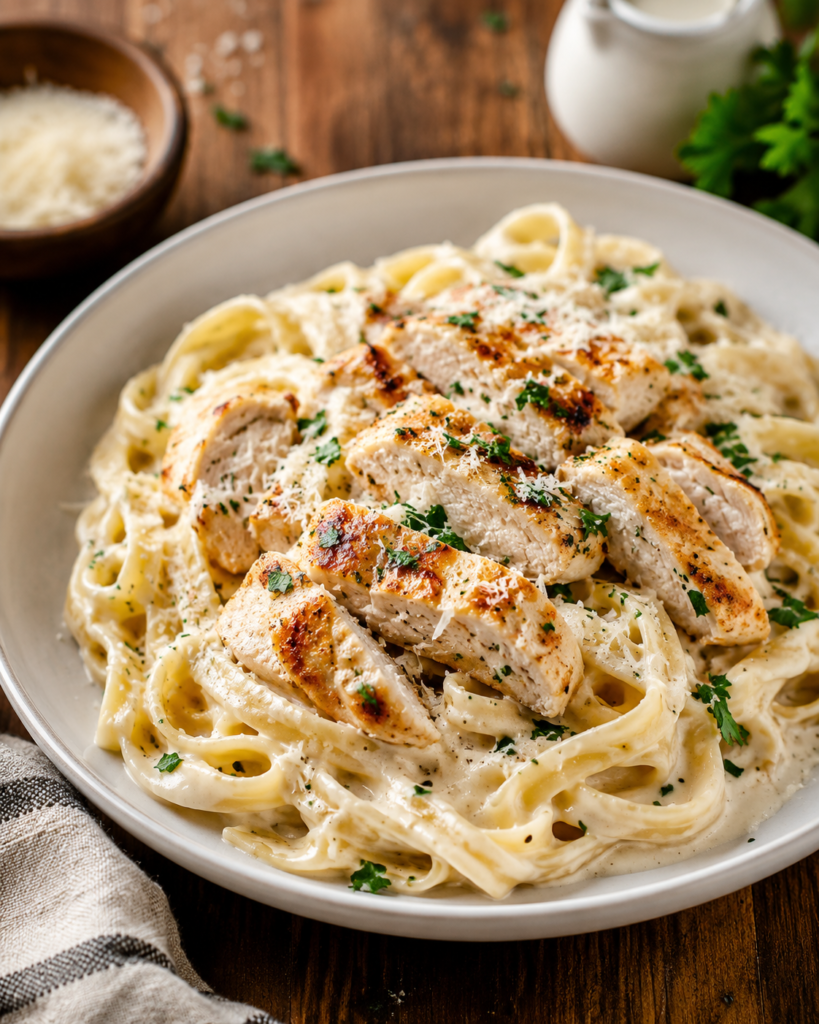
Easy chicken Alfredo brings tender seasoned chicken, fettuccine, and a creamy Parmesan sauce together in one comforting dinner. Better yet, the entire meal can be ready in about 40 minutes with familiar ingredients and straightforward steps.
The homemade sauce tastes rich without requiring a jar of prepared Alfredo sauce. Butter, garlic, heavy cream, Parmesan, and starchy pasta water create a smooth coating that clings to every strand of pasta.
Although this dish feels restaurant-worthy, it fits easily into a weeknight routine. Serve it with a crisp salad or roasted vegetables for a complete meal that works for both family dinners and casual entertaining.
Quick Answer
To make easy chicken Alfredo, season and pan-cook thin chicken breasts until they reach 165°F. Cook the fettuccine until al dente, then prepare a sauce with butter, garlic, heavy cream, Parmesan, and reserved pasta water. Toss the pasta with the sauce and serve it with sliced chicken.
Easy Chicken Alfredo Ingredients Overview
This recipe begins with boneless, skinless chicken breasts. Using thin, evenly sized pieces helps the chicken cook quickly without drying out. A simple blend of salt, black pepper, garlic powder, and Italian seasoning provides plenty of flavor.
Fettuccine is the traditional choice because its broad shape holds creamy sauce well. However, linguine, spaghetti, or another sturdy pasta can also work. Cook the noodles only until al dente so they remain pleasantly firm after being tossed in the skillet.
The Alfredo sauce uses butter, fresh garlic, heavy cream, and finely grated Parmesan. Freshly grated Parmesan melts more smoothly than pre-shredded cheese, which may contain anti-caking ingredients.
Reserved pasta water completes the sauce. Its starch helps the cream and cheese coat the noodles while also allowing you to adjust the consistency.
View the printable recipe and shopping list.
Why This Chicken Alfredo Recipe Works
Thin Chicken Pieces Cook Evenly
Chicken breasts often have one thick end and one thin end. Slicing them into thinner cutlets or pounding them to an even thickness promotes faster, more consistent cooking. As a result, the center reaches a safe temperature before the edges become dry.
The Chicken and Sauce Share One Skillet
Cooking the chicken first leaves flavorful browned bits in the pan. Butter, garlic, and cream loosen those bits and carry their savory flavor into the sauce. Fewer pans also mean easier cleanup.
Fresh Parmesan Creates a Smoother Sauce
Finely grated Parmesan melts quickly and distributes evenly. In contrast, thick shreds require more heat and may form chewy clumps. Gradual mixing creates the creamiest result.
Pasta Water Controls the Consistency
Alfredo sauce naturally thickens as it cools. Therefore, adding reserved pasta water a little at a time keeps the sauce fluid enough to coat the fettuccine. It also helps the sauce cling instead of pooling at the bottom of the skillet.
The Pasta Finishes in the Sauce
Tossing the fettuccine directly in the skillet allows it to absorb flavor. Meanwhile, the starch on the pasta helps bring the sauce together. This final step produces a more cohesive dish than pouring sauce over plain noodles.
Tips for Creamy Chicken Alfredo
- Use evenly sized chicken: Thin cutlets cook more consistently than thick, uneven breasts.
- Preheat the skillet: A properly heated pan gives the chicken a flavorful golden exterior.
- Do not crowd the pan: Leave space between the chicken pieces so they sear instead of steaming.
- Reserve pasta water early: Scoop out at least one cup before draining the fettuccine.
- Grate the cheese finely: Small Parmesan shreds melt faster and are less likely to clump.
- Lower the heat before adding cheese: High heat can cause the sauce to separate or become grainy.
- Toss instead of stirring: Tongs help coat the long noodles without breaking them.
- Serve immediately: Alfredo sauce thickens quickly once it leaves the stove.
Meal Ideas and Easy Swaps
Pair chicken Alfredo with a green salad, steamed broccoli, roasted asparagus, or garlic green beans. Garlic bread is another classic choice, although a fresh vegetable helps balance the rich sauce.
Boneless chicken thighs can replace chicken breasts. They may require a slightly longer cooking time, so check the thickest portion with a food thermometer. Cooked rotisserie chicken also works when you need an especially fast dinner.
For a vegetable variation, add broccoli florets, peas, mushrooms, spinach, or chopped roasted red peppers. Cook watery vegetables before adding them so excess moisture does not thin the sauce.
Linguine, spaghetti, penne, and rigatoni can stand in for fettuccine. Gluten-free pasta is also suitable, although its cooking water may behave differently. Add that water gradually while watching the sauce.
Heavy cream creates the most dependable texture. Half-and-half can produce a lighter sauce, but it is more likely to separate if boiled. Keep the heat gentle and avoid substituting regular milk unless the recipe is adjusted with a thickener.
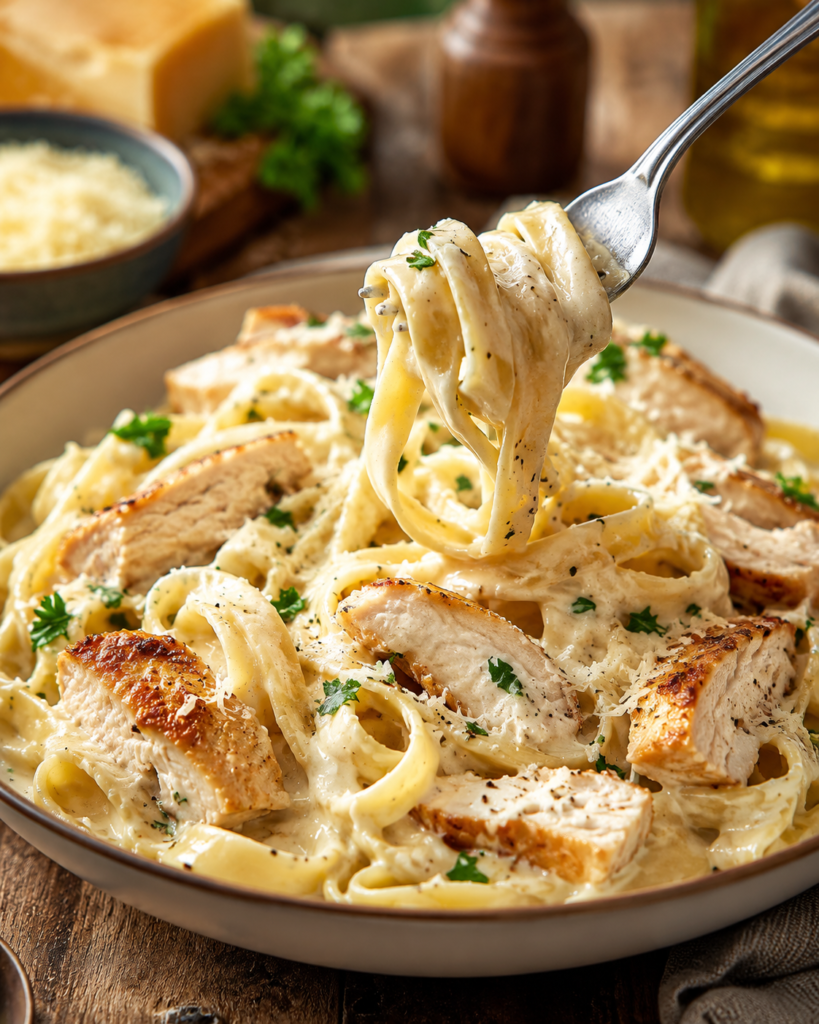
How Easy Chicken Alfredo Comes Together
Begin by preparing the chicken. Slice thick chicken breasts horizontally into thinner cutlets, then pat them dry. Season both sides before heating the skillet.
Next, cook the chicken in a small amount of olive oil. Leave each piece undisturbed long enough to develop a golden crust. Once the thickest portion reaches 165°F, transfer the chicken to a clean plate and let it rest.
Meanwhile, boil the fettuccine in well-salted water. Stop cooking when the noodles are al dente because they will soften slightly in the sauce. Before draining, reserve at least one cup of the starchy cooking water.
Use the same skillet to prepare the Alfredo sauce. Melt the butter over medium-low heat, then add the garlic. A brief cooking time softens its raw edge without allowing it to burn.
Pour in the heavy cream and bring it to a gentle simmer. Avoid a rapid boil because high heat can cause the sauce to separate. After the cream thickens slightly, remove the skillet from direct heat.
Add the Parmesan in small handfuls, stirring after each addition. Once the cheese melts, return the drained pasta to the skillet. Toss continuously while adding reserved pasta water until the sauce looks smooth and glossy.
Finally, slice the rested chicken and arrange it over the pasta. Spoon extra sauce from the skillet over the top, then finish the dish with parsley, black pepper, or additional Parmesan.
How to Keep Alfredo Sauce Smooth
A smooth sauce depends on temperature, cheese, and timing. First, use finely grated Parmesan at room temperature. Cold cheese lowers the sauce temperature, while large shreds may not melt before the mixture begins to cool.
Next, avoid boiling the sauce after adding the Parmesan. Cheese proteins can tighten under intense heat, which creates a grainy or separated texture. Gentle residual heat is usually enough to melt finely grated cheese.
Pasta water provides the final adjustment. Add one or two tablespoons at a time, then toss before adding more. The sauce should lightly coat the fettuccine without appearing watery.
Keep in mind that Alfredo sauce thickens as it stands. Stop cooking when it looks slightly looser than you want on the plate. By serving time, the consistency should be creamy rather than runny.
How to Prevent Dry Chicken
Even thickness is the first key to juicy chicken. A thick center takes longer to cook, which means the thin edges may overcook first. Cutting or pounding the breasts solves that problem.
Cooking time also depends on the skillet, burner, and exact thickness of the meat. For that reason, use an instant-read thermometer rather than relying only on color. Remove each piece once the thickest part reaches 165°F.
Resting matters as well. Give the chicken about five minutes before slicing so its juices can settle. Cutting immediately may cause more moisture to run onto the plate.
Storage and Reheating
Refrigerating Leftovers
Transfer cooled chicken Alfredo to shallow, airtight containers and refrigerate it within two hours. Use properly refrigerated leftovers within three to four days.
Freezing
Cream-based sauces can separate after freezing and thawing. Although freezing is possible, refrigeration provides a better texture. If needed, freeze individual portions in airtight containers and thaw them overnight in the refrigerator.
Reheating on the Stove
Place the pasta in a skillet with a splash of milk, cream, or water. Cover it briefly and warm it over low heat. Toss often, adding more liquid in small amounts until the sauce becomes creamy again.
Reheating in the Microwave
Add one portion to a microwave-safe dish with a small splash of milk or water. Cover loosely and heat at reduced power in short intervals. Stir between intervals to prevent the sauce from overheating around the edges.
Food Safety Note
Cook chicken to a minimum internal temperature of 165°F, measured in the thickest portion with a food thermometer. Place cooked chicken on a clean plate rather than returning it to a surface that held raw poultry.
Refrigerate leftovers within two hours of cooking. Store them at 40°F or below, use them within three to four days, and reheat them to 165°F.
Common Mistakes to Avoid
Using Uneven Chicken Breasts
Thick, irregular pieces do not cook at the same rate. Slice or pound them into even cutlets before seasoning.
Moving the Chicken Too Soon
Chicken may stick when it first touches the hot skillet. Let it cook undisturbed until a crust forms and it releases more easily.
Overcooking the Fettuccine
Soft pasta can become mushy when tossed in the hot sauce. Drain the noodles while they still have a firm al dente texture.
Using Pre-Shredded Parmesan
Packaged shredded cheese may contain ingredients that prevent clumping in the bag. Unfortunately, those same ingredients can interfere with smooth melting.
Boiling the Sauce After Adding Cheese
Intense heat may cause the Parmesan to seize or separate. Remove the skillet from direct heat before adding the cheese.
Adding All the Pasta Water at Once
Too much liquid can turn a creamy sauce into soup. Add small amounts, toss well, and evaluate the consistency before continuing.
Making the Sauce Too Thick
The sauce continues thickening as it cools. Leave it slightly loose in the skillet so it remains creamy at the table.
Waiting Too Long to Serve
Fettuccine absorbs sauce while it sits. Plate the pasta promptly, then add a small splash of warm pasta water if later servings need loosening.
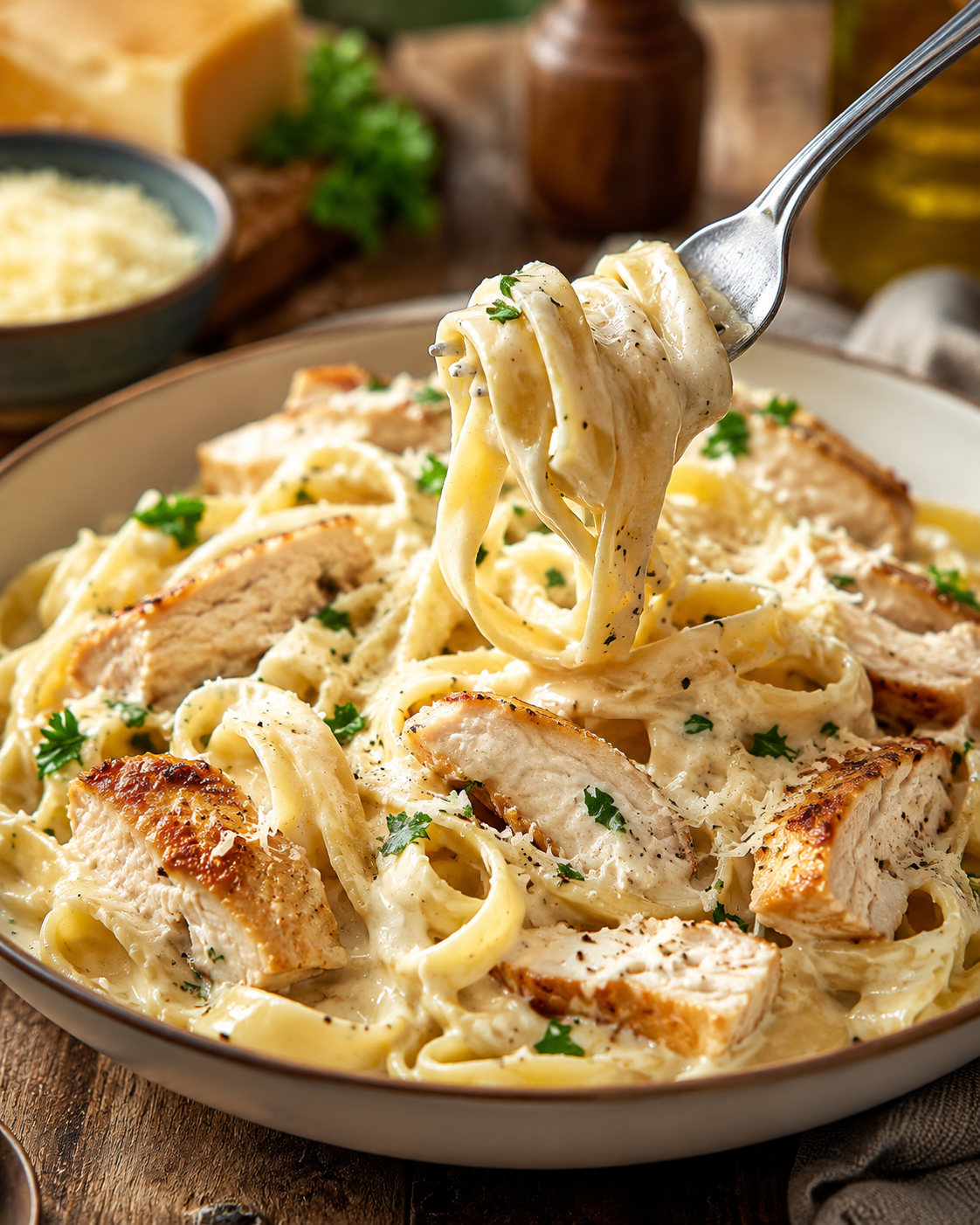
Easy Chicken Alfredo
Method
- Slice thick chicken breasts horizontally into thin cutlets. Pat the chicken dry with paper towels.
- Season both sides with the Italian seasoning, garlic powder, salt, and black pepper.
- Heat the olive oil in a large skillet over medium to medium-high heat. Add the chicken in a single layer.
- Cook the chicken for 4 to 6 minutes on the first side. Turn each piece and cook for another 3 to 5 minutes, or until the thickest portion reaches 165°F.
- Transfer the cooked chicken to a clean plate. Let it rest for at least 5 minutes before slicing.
- Meanwhile, bring a large pot of well-salted water to a boil. Add the fettuccine and cook until al dente according to the package directions.
- Before draining the pasta, carefully reserve at least 1 cup of its cooking water. Drain the fettuccine without rinsing it.
- Reduce the skillet heat to medium-low. Add the butter and scrape up any flavorful browned bits left by the chicken.
- Stir in the garlic and cook for about 30 seconds, or just until fragrant. Do not let it brown.
- Pour in the heavy cream. Bring it to a gentle simmer and cook for 3 to 4 minutes, stirring occasionally. Do not allow the cream to boil rapidly.
- Remove the skillet from direct heat. Add the Parmesan in several small handfuls, stirring until each addition melts before adding more.
- Stir in the black pepper and optional nutmeg. Add the drained fettuccine and toss until evenly coated.
- Add reserved pasta water 1 or 2 tablespoons at a time while tossing. Continue until the sauce becomes smooth, glossy, and loose enough to coat the pasta.
- Taste and adjust the salt or pepper as needed. Slice the rested chicken and arrange it over the fettuccine.
- Garnish with parsley and additional Parmesan, if desired. Serve immediately.
Notes
Chicken is safely cooked when its thickest portion reaches 165°F.
Freshly grated Parmesan melts more smoothly than packaged pre-shredded cheese.
Keep the heat low after adding the cream, and remove the skillet from direct heat before mixing in the cheese.
Alfredo sauce thickens quickly as it cools. Leave it slightly loose before serving.
Reserve the pasta water before draining because it is essential for adjusting the sauce.
Add steamed broccoli, peas, spinach, or sautéed mushrooms for extra vegetables.
Rotisserie chicken can replace freshly cooked chicken. Add it near the end and heat it thoroughly.
Refrigerate leftovers within two hours and use them within three to four days.
Reheat gently with a splash of milk, cream, or water.
Nutrition Estimate Serving Size: 1/4 of recipe Calories: 890 Total Fat: 51 g Saturated Fat: 29 g Cholesterol: 230 mg Sodium: 870 mg Total Carbohydrates: 64 g Dietary Fiber: 3 g Total Sugars: 5 g Protein: 48 g Nutrition values are estimates and may vary according to the chicken, cream, Parmesan, pasta, brands, and serving size used.
Tried this recipe?
Let us know how it was!Nutrition Information Disclaimer
Nutrition information is provided as an estimate only and may vary based on the ingredients, brands, portion sizes, substitutions, and preparation methods used. Optional toppings and serving suggestions may not be included in the calculation. For the most accurate information, calculate nutrition using the specific ingredients and amounts you use.
Allergy notice: Always check ingredient labels and avoid substitutions that may introduce allergens. This recipe has not been verified as allergen-free.
Mistakenly Delicious Kitchen Picks
Helpful Kitchen Tools for Easier Cooking
These beginner-friendly guides and kitchen picks can make cooking, baking, food-safety checks, and meal prep easier.
Affiliate disclosure: This section contains Amazon affiliate links. As an Amazon Associate, I earn from qualifying purchases at no additional cost to you.
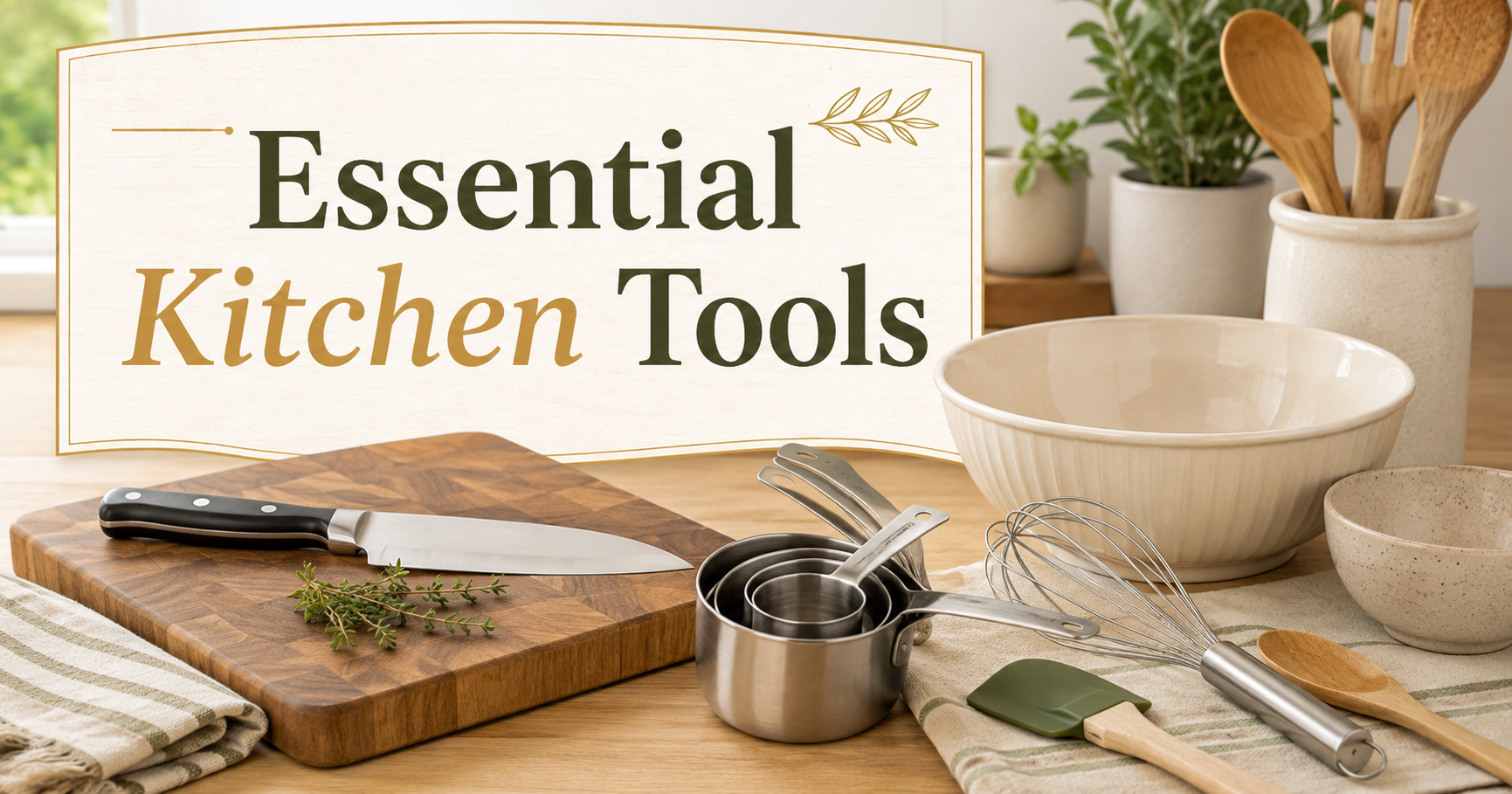
Essential Kitchen Tools for Beginner Cooks
Start with practical everyday tools instead of filling your kitchen with gadgets you may rarely use.

Best Affordable Meat Thermometers
Check chicken, burgers, roasts, and other foods without guessing whether the center is fully cooked.
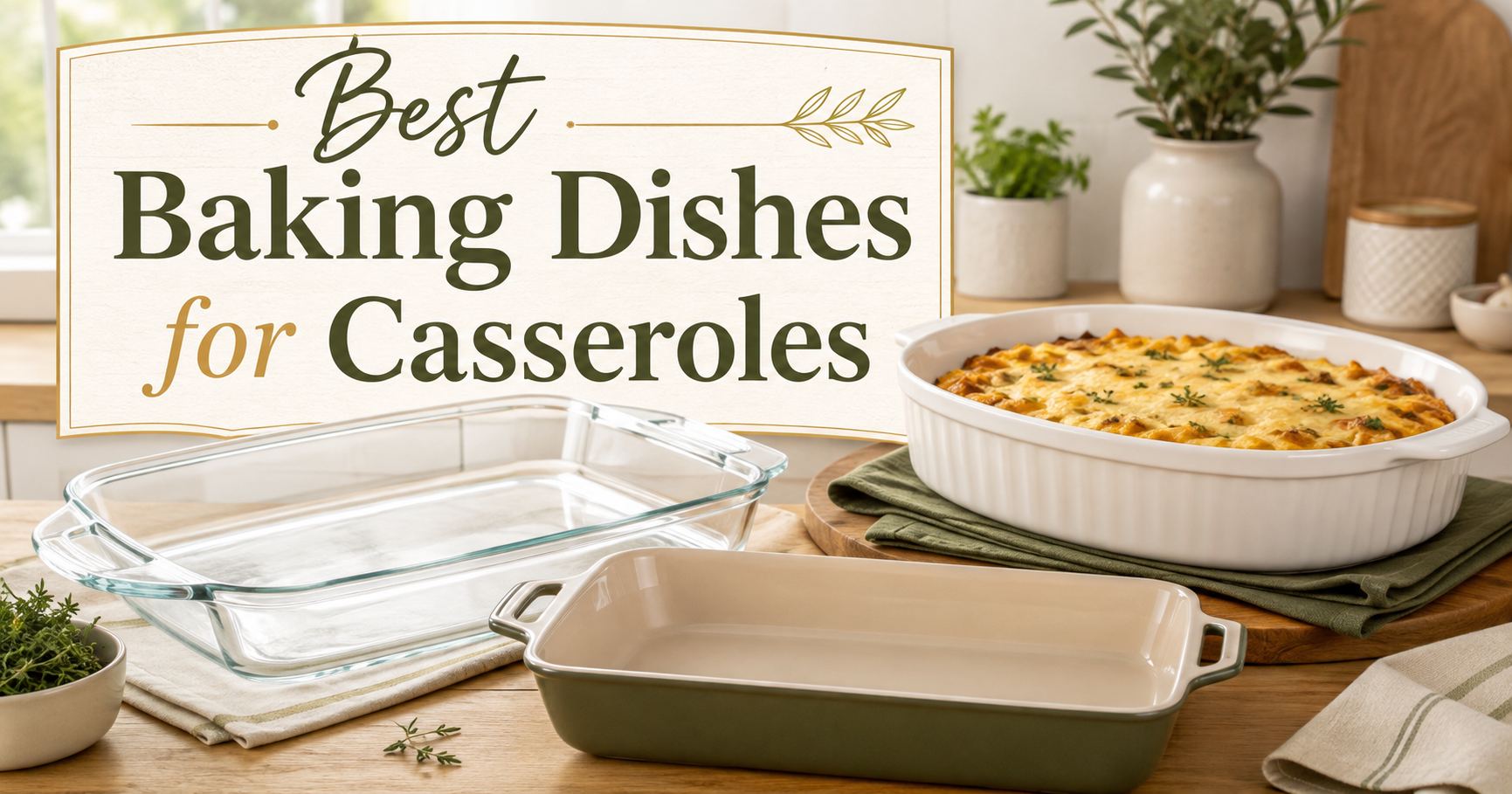
Best Baking Dishes for Casseroles
Compare dependable baking dishes for casseroles, rice bakes, biscuit bakes, desserts, and family meals.

Best Air Fryers for Beginner Cooks
Find a beginner-friendly air fryer for crispy foods, quick dinners, reheating leftovers, and smaller meals.
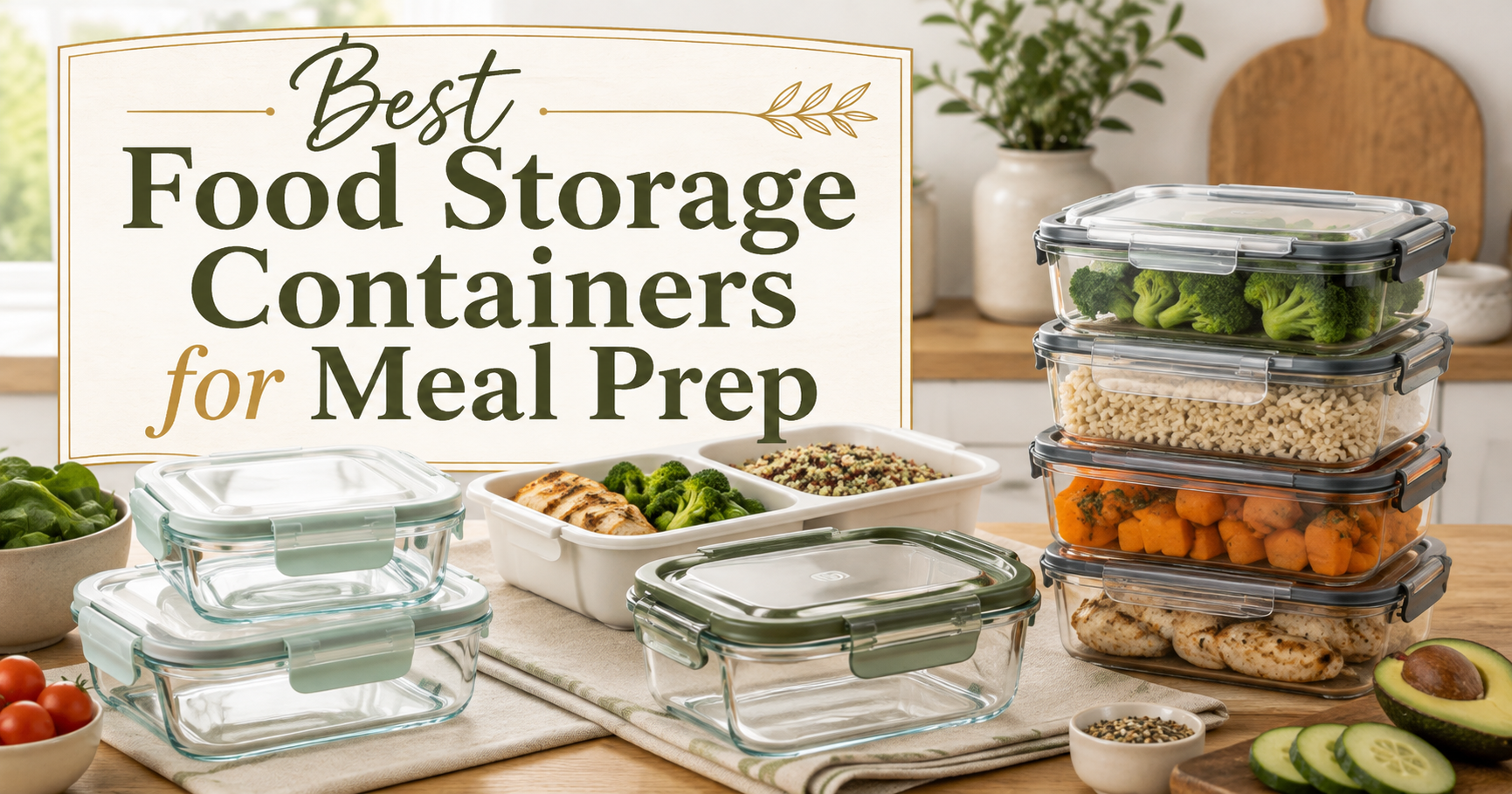
Best Food Storage Containers for Meal Prep
Store leftovers, lunches, freezer meals, and weekly meal-prep portions more neatly.

Featured Kitchen Pick
Explore another practical kitchen pick that can make everyday cooking and food preparation easier.
Easy Chicken Alfredo FAQ
What Is Chicken Alfredo Sauce Made From?
This homemade version uses butter, garlic, heavy cream, Parmesan, black pepper, and reserved pasta water. The ingredients create a rich sauce without flour or a separate roux.
Can I Use Milk Instead of Heavy Cream?
Regular milk does not provide the same richness or stability as heavy cream. Half-and-half is a better substitute, although it should be heated gently. Avoid boiling it because lower-fat dairy separates more easily.
Why Did My Alfredo Sauce Turn Grainy?
Grainy sauce usually results from excessive heat, pre-shredded cheese, or adding Parmesan too quickly. Remove the skillet from the burner and mix in freshly grated cheese a little at a time.
How Can I Fix Alfredo Sauce That Is Too Thick?
Add warm pasta water, milk, or cream one tablespoon at a time. Toss the pasta after each addition until the sauce reaches the desired consistency.
How Can I Fix Alfredo Sauce That Is Too Thin?
Let the sauce stand over low heat for a minute while tossing the pasta. It will thicken as the noodles absorb liquid. A small amount of additional Parmesan can also help, but avoid adding too much because the sauce may become salty.
Can I Use Rotisserie Chicken?
Yes. Remove the skin and shred or slice the cooked meat. Add it near the end, allowing enough time for the chicken to heat thoroughly without becoming dry.
Can I Add Broccoli to Chicken Alfredo?
Yes. Steam or blanch small broccoli florets until crisp-tender, then add them while tossing the pasta with the sauce. Cooking the broccoli separately gives you better control over its texture.
What Pasta Is Best for Alfredo Sauce?
Fettuccine is the classic choice because its broad strands hold creamy sauce well. Linguine, spaghetti, tagliatelle, penne, and rigatoni are also suitable.
Can I Make Chicken Alfredo Ahead of Time?
The dish tastes best immediately after preparation. However, you can cook and slice the chicken in advance, grate the cheese, and measure the remaining ingredients. Prepare the pasta and sauce shortly before serving.
Can I Double the Recipe?
Yes, although you may need to cook the chicken in batches. Crowding the skillet lowers its temperature and prevents proper browning. Use a large pot or Dutch oven when combining a double batch of pasta and sauce.
Is Chicken Alfredo Traditionally Italian?
The creamy chicken version is generally associated with Italian American cooking. It was inspired by fettuccine Alfredo, but adding chicken, garlic, and heavy cream reflects the style commonly served in American restaurants and homes.
What Can I Serve With Chicken Alfredo?
Good choices include Caesar salad, roasted broccoli, asparagus, green beans, sautéed spinach, or a simple tomato salad. Garlic bread also pairs well with the creamy Parmesan sauce.
Can I Make This Recipe Spicy?
Yes. Add red pepper flakes with the garlic or finish each serving with cracked black pepper. Start with a small amount because the heat becomes more noticeable in a rich cream sauce.
How Do I Know When the Chicken Is Done?
Insert an instant-read thermometer into the thickest portion of each piece. The chicken is safely cooked when it reaches 165°F.
Final Notes
Easy chicken Alfredo turns a few dependable ingredients into a satisfying pasta dinner. The recipe feels indulgent, yet the preparation remains manageable enough for an ordinary weeknight.
For the best texture, use thin chicken cutlets, freshly grated Parmesan, and plenty of reserved pasta water. In addition, keep the heat gentle once the cheese enters the sauce.
Bring the finished pasta to the table promptly. A fresh salad or green vegetable provides a welcome contrast to the creamy sauce and completes the meal without adding much extra work.
Trusted Resources
Helpful Recipe Resources
Trusted Food, Cooking, and Recipe References
Mistakenly Delicious uses AI-assisted workflows, but useful recipes still need common sense, food safety checks, and reliable cooking references. These resources can help with ingredients, nutrition, safe temperatures, and the AI workflow behind this site.
Ingredient Data
USDA FoodData Central
A useful reference for checking ingredient and nutrition data when reviewing recipes.
Visit Resource →Cooking Help
Nutrition.gov Cooking Tips
Beginner-friendly guidance for meal prep, cooking basics, shopping, and planning.
Visit Resource →Food Safety
Safe Cooking Temperatures
A helpful food safety chart for checking safe internal temperatures for chicken, meat, seafood, and leftovers.
Visit Resource →Creator Workflow
TechnofluxAI
The AI workflow and creator systems site behind Mistakenly Delicious.
Visit TechnofluxAI →